
Best ecommerce website builder in India
The best builder for an Indian seller is not the one with the longest feature list — it is the one that already speaks UPI, COD, WhatsApp and GST. Here are the top options for 2026, ranked and compared on what actually matters here.
By Manan Agrawal, Founder · Updated June 10, 2026
26 live customer stores



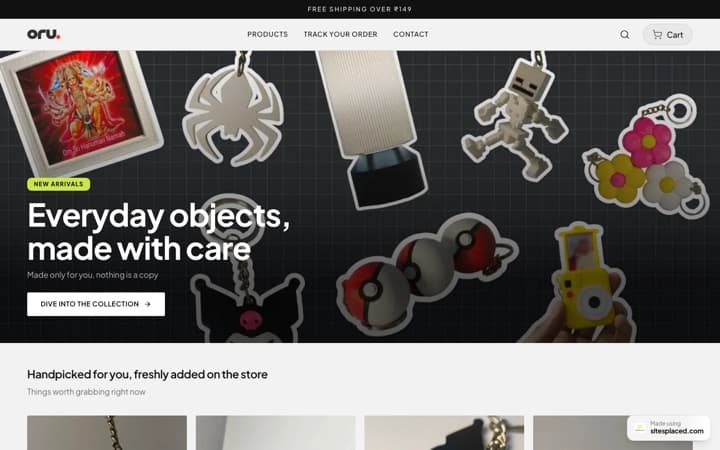









Every store here is live and taking orders · read the SitesPlaced reviews from their owners
Real sellers on SitesPlaced
 sitesplaced.official@thehouseofurmila
The House of Urmila · Jewellery
Testimonial video · July 22, 2026
View on Instagramsitesplaced.official@talkingtails_
The Pet Journal · Pet products
Testimonial video · August 11, 2026
View on Instagramsitesplaced.official@surroor_house
Surroor House · Clothing store
Store launch · August 13, 2026
View on InstagramMore ratings and press coverage — read the SitesPlaced reviews



Syndicated across 207 outlets (2.1M+ potential reach)All coverage
SitesPlaced Stores is the best ecommerce website builder in India for most sellers. It is the only option here with UPI, COD, Razorpay, WhatsApp checkout, GST invoices, inventory and Shiprocket built in — plus 14 vertical-fit storefronts and setup done for you — free to build AND publish with 0% commission (₹499/month only for a custom domain or to remove the badge). Shopify is more powerful but pricier; Dukaan is a fast catalogue pick.
Real stores, live on SitesPlaced
Not mockups — real sellers running live stores on SitesPlaced with their own domains, UPI and COD. Open any of them in a new tab.

The House of Urmila
A handcrafted jewellery label running its full catalogue on its own domain — UPI & COD checkout built in.
Visit live site
Surroor House
An oversized-tee label running its full catalogue on its own domain — trending designs, sizes and COD checkout.
Visit live site
The Pet Journal
India's first guided journal for pet parents, selling direct from its own domain instead of through DMs.
Visit live siteHow do you choose an ecommerce builder in India?
Filter every option through the realities of selling in India:
- ✓Are UPI, COD and WhatsApp native, or do they need apps and plugins?
- ✓Are GST invoices and Shiprocket built in?
- ✓Do you get storefronts that fit your category, or a generic grid?
- ✓How much will you maintain yourself — hosting, updates, app sprawl?
- ✓What is the true monthly cost after apps, themes and any commission?
The best ecommerce builders in India, ranked
SitesPlaced Stores
Best for Indian sellersBuilt for how India sells: UPI, COD, Razorpay and WhatsApp checkout, GST-ready invoices, inventory and Shiprocket — all native and free to publish, plus 14 vertical-fit storefronts and a real person who sets it up and migrates your catalogue free. Pay from ₹199/month (Starter) only for a custom domain or to remove the badge.
Free to build & publish · 0% commissionBest for: Instagram, WhatsApp and small-business sellers who want everything included.Shopify
Most powerful, least India-nativeThe global leader with a huge app ecosystem and room to scale. In India it is pricier and needs paid apps for UPI, COD, WhatsApp and GST invoices, with possible transaction fees on top.
From ~₹1,994/mo + apps + feesBest for: Larger brands going global with budget for apps and developers.Dukaan
Fast catalogue-first storeQuick to launch a catalogue store and popular with Indian sellers. Leans catalogue-led, so branding and vertical fit are more limited than a template-driven builder.
Free + paid plansBest for: Sellers who want a simple catalogue store live in minutes.WooCommerce (WordPress)
Flexible, but you maintain itEndlessly customisable and open-source, but you own hosting, security, updates and plugin sprawl. Powerful for the technical; a burden for most small sellers.
Hosting + plugins + dev timeBest for: Technical sellers or agencies who want full control.Wix / Squarespace
General website buildersGood-looking general builders with basic stores attached. Not built for Indian social commerce — you configure UPI/COD/WhatsApp and shipping yourself.
From ~₹500–1,500/moBest for: Content-led sites that also sell a little.
India ecommerce builders compared
| Feature | SitesPlaced | Shopify | Dukaan | Woo | Wix |
|---|---|---|---|---|---|
| India-native checkout | ✓ | Apps | ✓ | Plugins | Manual |
| WhatsApp checkout | ✓ | App | ✓ | Plugin | Manual |
| GST invoices + Shiprocket | ✓ Built in | Apps | Partial | Plugins | ✗ |
| Vertical-fit templates | 14 storefronts | Themes (paid) | Generic | Themes | Generic |
| Maintenance burden | None | Low | Low | High | Low |
| Done-for-you setup | ✓ | ✗ | ✗ | ✗ | ✗ |
| Commission | 0% | Fees | Varies | 0%* | — |
| Starting price | Free to build & publish (₹499/mo plan) | ~₹1,994 | Free+ | Hosting+ | ~₹500+ |
*WooCommerce is commission-free but you pay hosting, plugins and maintenance. Indicative comparison, June 2026; prices exclude taxes.
See real Indian storefronts
Live SitesPlaced demos across categories — open them on a phone and clone the closest fit.
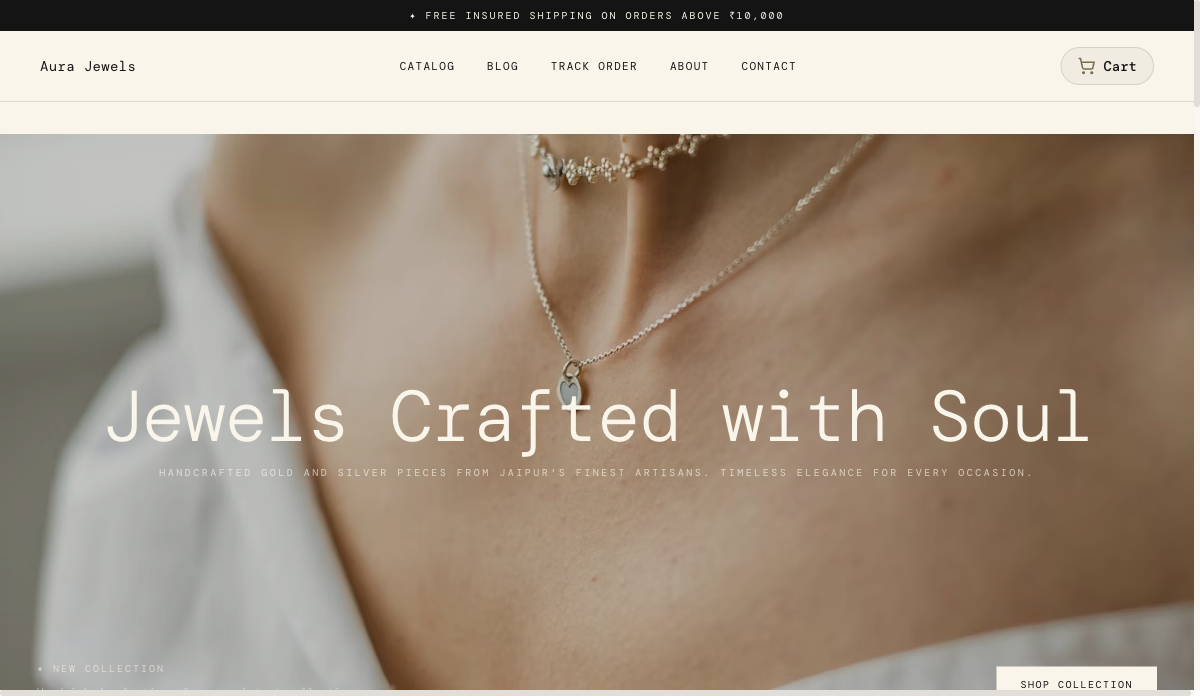 Jewellery
Maison — Luxury Store
Editorial, gallery-grade storefront. Used by the Aura Jewels demo — ideal for jewellery, watches and premium accessories.
View live demo Sarees
Threadlore — Heritage Sarees
Warm, textile-first storefront tuned for sarees, lehengas and handloom — variant swatches, zoom, COD and UPI built in.
View live demo Beauty
Glow Studio — Cosmetics
Bright, conversion-focused beauty storefront with shade selectors and bundles. Built for cosmetics and skincare sellers.
View live demo Skincare
Apothic — Skincare
Calm apothecary aesthetic with ingredient storytelling and routine bundles. For skincare, wellness and self-care brands.
View live demo Gifting
Florine — Florist & Gifting
Soft, seasonal florist storefront with same-day delivery slots and gift notes. For flowers, hampers and gifting.
View live demo Food
FoodCacao Noir — Chocolate
Premium dark-mode storefront for chocolate, bakes and gourmet food, with grams/box variants and festive bundles.
View live demoOur verdict
There is no single “best” builder for everyone — but for the seller this list is written for, the answer is clear. If you sell to Indian customers, mostly from Instagram and WhatsApp, and you want UPI, COD, GST invoices and Shiprocket working out of the box at a flat, fair price, SitesPlaced is the best fit. It removes the app stack, the transaction fees and the setup grind that make the bigger platforms heavier than they need to be.
Choose Shopify if you are a large brand going global with the budget and team to match. Choose Dukaan if you only need a quick catalogue. Choose WooCommerce if you are technical and want total control. For everyone else — the home businesses, the Instagram-first brands, the women entrepreneurs and small shops who make up most of Indian ecommerce — start with SitesPlaced and grow from there without ever having to migrate again.
Razorpay, Shiprocket, Shipmozo, WhatsApp API, Meta CAPI: all built in.
Razorpay, cash on delivery, WhatsApp checkout, Shiprocket and Shipmozo are on the free plan. From ₹199/month (Starter): Meta Pixel + Conversions API, your own domain, branding removal, AI and analytics. The ₹499/month Growth plan adds WhatsApp Business API alerts and the 1-click checkouts, bring your own credentials. No app store, no per-integration fees.
Payments
- Free

UPI, cards, net banking and wallets at checkout. SitesPlaced takes 0% commission; Razorpay's standard gateway fee applies.
razorpay.com - Free

StripeNew
Card, Apple Pay and Google Pay from customers worldwide. Connect your own Stripe account with a restricted key — payments land in your Stripe balance and SitesPlaced takes 0% commission.
stripe.com - Free

PayPalNew
Customers pay with their PayPal balance or a card. Connect your own PayPal app — the money lands in your PayPal balance and SitesPlaced takes 0% commission.
paypal.com - Free

PhonePeNew
UPI, cards, net banking and wallets at checkout on your own PhonePe Business account. Money settles straight to you and SitesPlaced takes 0% commission; PhonePe's standard gateway fee applies.
phonepe.com - Free

CashfreeNew
UPI, cards, net banking, wallets and pay-later at checkout on your own Cashfree account. Money settles straight to you and SitesPlaced takes 0% commission; Cashfree's standard gateway fee applies.
cashfree.com - Free
COD at checkout with an optional COD charge you set.
- Free

- ₹499

Sell with ShiprocketNew
1-click checkout by Shiprocket — saved addresses, UPI/cards/COD and RTO scoring, without your own payment gateway. Shiprocket collects and settles to you; SitesPlaced takes 0%, Shiprocket charges 2% per order.
shiprocket.in - ₹499
Razorpay Magic CheckoutNew
1-click checkout on your own Razorpay account — saved addresses, UPI/cards/COD in one step, with COD intelligence and RTO protection. Money settles straight to your Razorpay. Can run alongside Shiprocket checkout.
razorpay.com
Shipping
- Free
Push orders to Shiprocket, get AWB numbers back, and show live tracking on your Track Order page.
shiprocket.in - Free

ShippoNew
USPS, UPS, FedEx, DHL and Royal Mail labels for US, UK and international orders — around 5¢ a label with no monthly fee, billed to your own Shippo account.
goshippo.com - Free

ShipmozoNew
Courier selection, pickup scheduling and tracking status synced back to each order.
shipmozo.com - Free
Rehbar PostNew
Compare courier rates, book the shipment, print the label and track it back — on your own Rehbar Post account.
rehbarpost.com
Fulfilment
- Free

Qikink
Print-on-demand for India — t-shirts, hoodies and mugs printed and shipped domestically from your own Qikink account.
qikink.com - Free

PrintifyNew
Print-on-demand t-shirts, hoodies, mugs and posters. Link a product to your own Printify catalogue and paid orders are sent for printing automatically — Printify bills your account, we take nothing.
printify.com
Messaging
- ₹499
Every new order sends you an alert and the customer a confirmation, from your own WhatsApp Business number via Meta's Cloud API. Bring your own credentials.
business.whatsapp.com
Marketing
- ₹199+

Meta Pixel + Conversions APINew
Your own Pixel on the storefront plus server-side Purchase events from the order record, deduplicated, so Instagram and Facebook ads report real sales. Bring your own credentials.
facebook.com - ₹499

Import the product reviews you already collected in Judge.me on Shopify or WooCommerce onto your product pages, matched by product name. Bring your own API token; SitesPlaced also collects and moderates its own product reviews on every plan.
judge.me - ₹199+
Custom head code
Paste Google Analytics, Clarity or any tag into your live site.
Growth
- ₹199+
yourbrand.com with one-click DNS setup for most Indian registrars.
- Free


Create and edit your store by chatting with your AI assistant.
modelcontextprotocol.io - Free
Bring a catalogue in from Instagram, your existing website, a PDF, dm2buy or Shopexer.
Build your store with the #1 India pick
Free to build AND publish, keep 100% of your sales. UPI, COD, WhatsApp, GST invoices and Shiprocket are included — and our team sets it all up and migrates any existing store for free. Pay from ₹199/month (Starter) only for a custom domain or to remove the badge.
Build your store →Frequently asked questions
What is the best ecommerce website builder in India?
SitesPlaced Stores is the best ecommerce website builder for most Indian sellers in 2026. It bundles UPI, COD, Razorpay and WhatsApp checkout, GST invoices, inventory and Shiprocket natively, offers 14 vertical-fit storefronts, charges 0% commission, is free to build AND publish (Starter, from ₹199/month, only for a custom domain or to remove the badge), and sets up your store and migrates your catalogue for free.
Which ecommerce platform is best for a small business in India?
For a small business, SitesPlaced is usually the best fit: low flat cost, everything included, no app stack to manage, and real setup help. Dukaan is a fast catalogue option, while Shopify suits larger brands going global.
Is Shopify or SitesPlaced better for Indian ecommerce?
Shopify is more powerful and global; SitesPlaced is cheaper and more India-native. If you sell to Indian customers via Instagram and WhatsApp and want UPI/COD/GST/Shiprocket built in at a flat price, SitesPlaced wins. If you are a large brand going international, Shopify's ecosystem leads.
Do these builders support UPI and Cash on Delivery?
SitesPlaced and Dukaan support UPI and COD natively. Shopify, WooCommerce and Wix can support them too, but usually through apps, plugins or extra configuration rather than out of the box.
How much does an ecommerce website cost in India?
It ranges widely. SitesPlaced is free to build AND publish with 0% commission and everything included — you pay from ₹199/month (Starter) only for a custom domain or to remove the badge. Shopify plus apps typically costs more; WooCommerce costs depend on hosting, plugins and developer time.