
Jewellery website examples that actually convert
Before you build, see what good looks like. These are real, clickable jewellery and lifestyle storefronts — plus a breakdown of the five design styles that sell jewellery online, and which one fits your range.
By Manan Agrawal, Founder · Updated June 10, 2026
The best jewellery website examples share three traits: gallery-grade photography, real variants, and India-native checkout. The live demos below — led by the Aura Jewels (Maison) storefront — show these in action across luxury, minimal, heritage and lifestyle styles. Each one is a SitesPlaced template you can clone and publish free with 0% commission — pay from ₹199/month (Starter) only when you want a custom domain or to remove the badge.
Real stores, live on SitesPlaced
Not mockups — real sellers running live stores on SitesPlaced with their own domains, UPI and COD. Open any of them in a new tab.
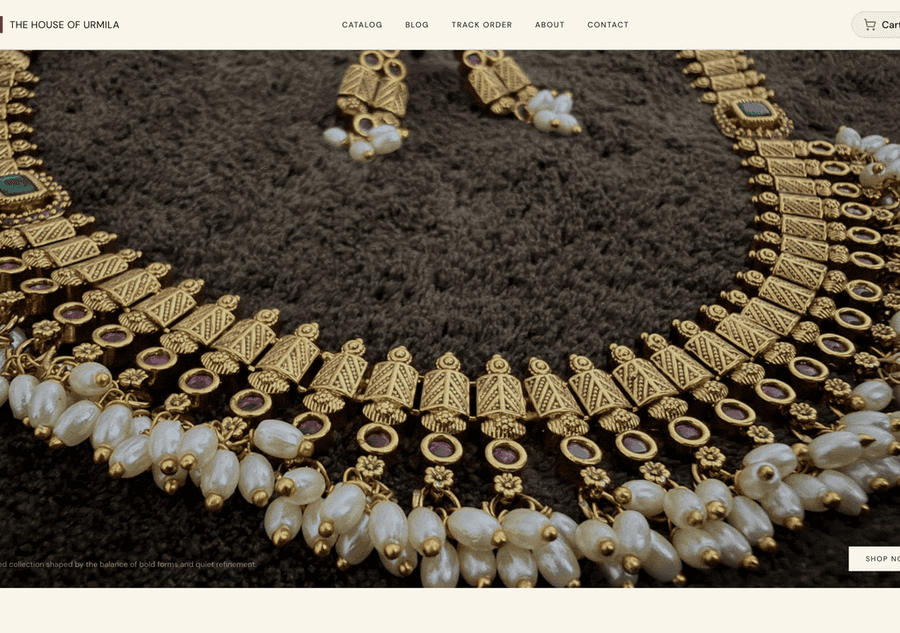
The House of Urmila
A handcrafted jewellery label running its full catalogue on its own domain — UPI & COD checkout built in.
Visit live site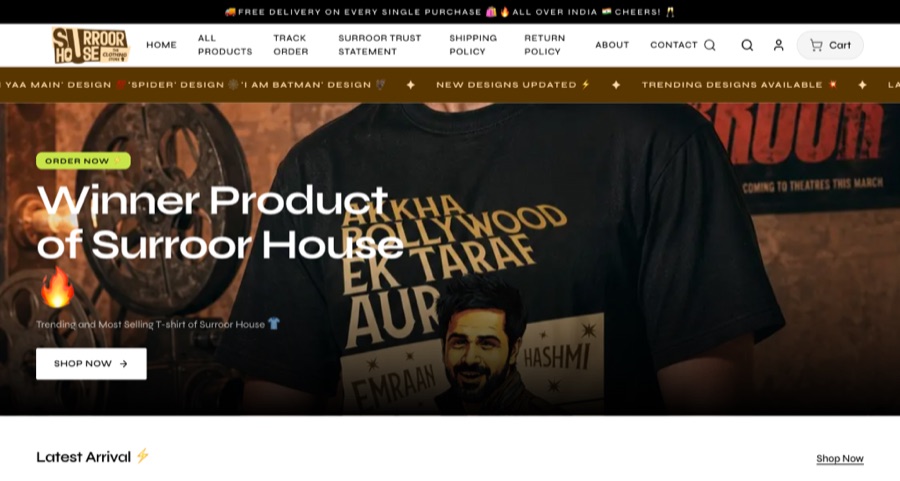
Surroor House
An oversized-tee label running its full catalogue on its own domain — trending designs, sizes and COD checkout.
Visit live site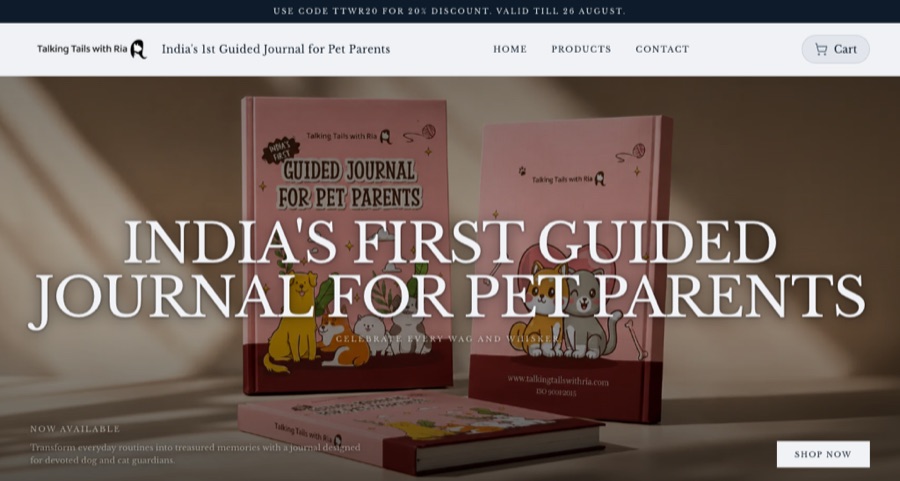
The Pet Journal
India's first guided journal for pet parents, selling direct from its own domain instead of through DMs.
Visit live siteLive jewellery storefront examples
These are not screenshots — they are working stores you can open and click through on your phone. Notice how the photography leads, how variants are presented, and how trust details and checkout are handled.
 Jewellery
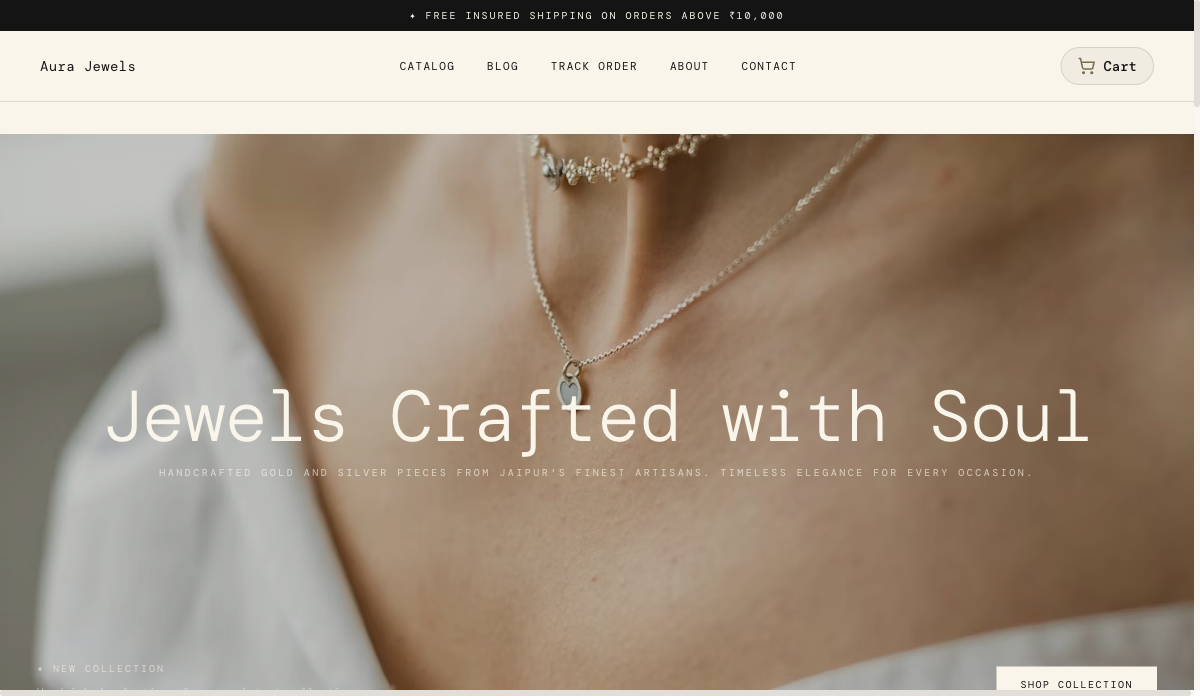
Maison — Luxury Store
Editorial, gallery-grade storefront. Used by the Aura Jewels demo — ideal for jewellery, watches and premium accessories.
View live demo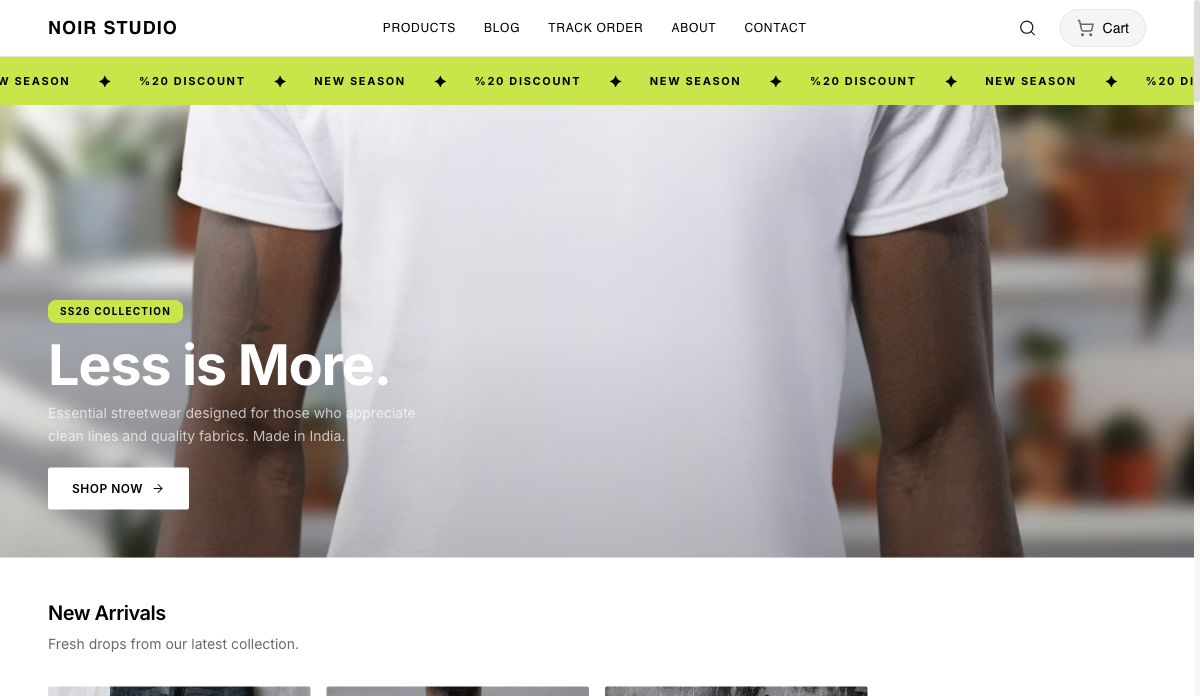 Fashion
Minna — Minimal Fashion
Clean, monochrome fashion storefront with big imagery and a fast mobile checkout. Great for apparel and lifestyle brands.
View live demo Sarees
Threadlore — Heritage Sarees
Warm, textile-first storefront tuned for sarees, lehengas and handloom — variant swatches, zoom, COD and UPI built in.
View live demo Gifting
Florine — Florist & Gifting
Soft, seasonal florist storefront with same-day delivery slots and gift notes. For flowers, hampers and gifting.
View live demo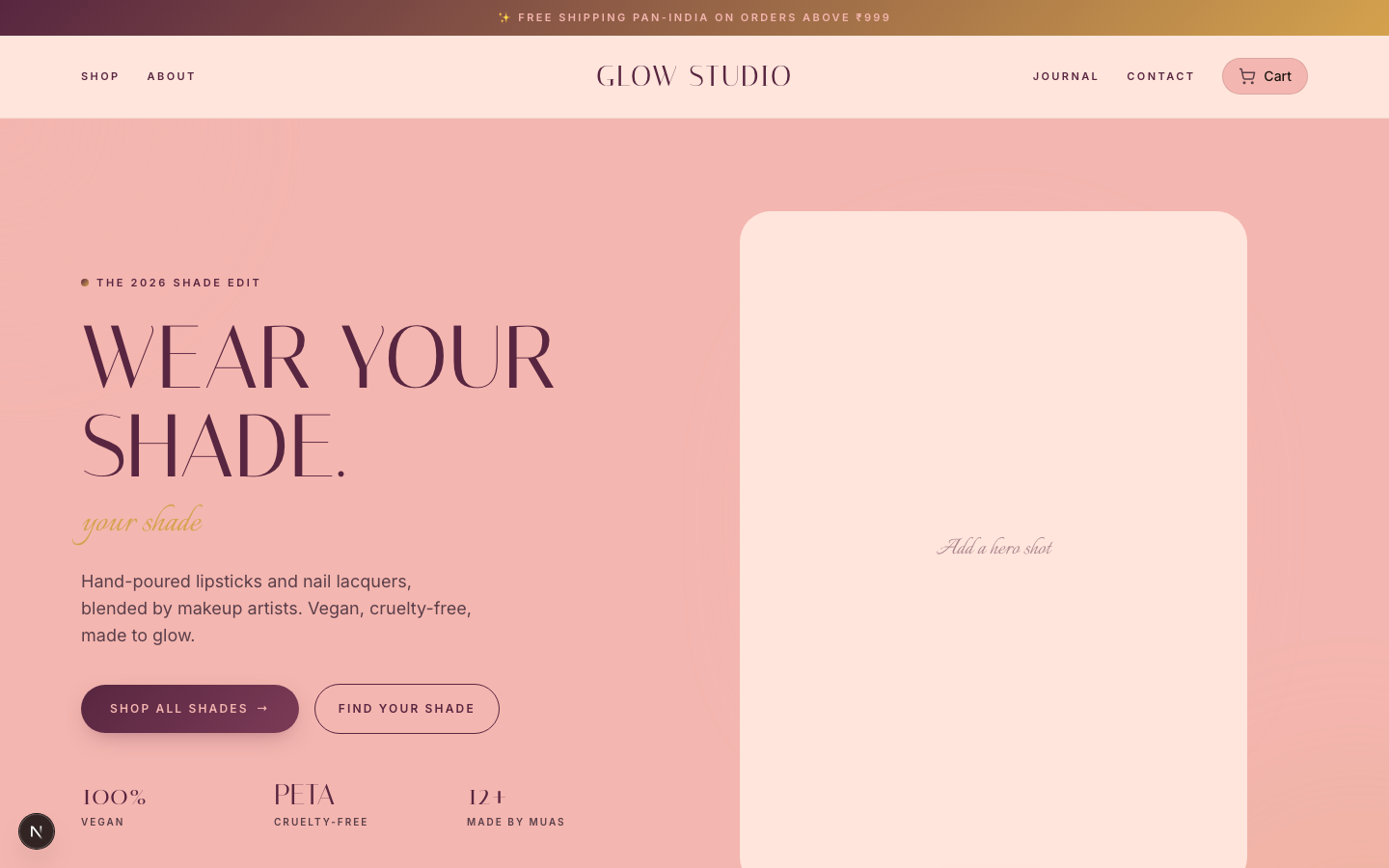 Beauty
Glow Studio — Cosmetics
Bright, conversion-focused beauty storefront with shade selectors and bundles. Built for cosmetics and skincare sellers.
View live demo Skincare
Apothic — Skincare
Calm apothecary aesthetic with ingredient storytelling and routine bundles. For skincare, wellness and self-care brands.
View live demo5 jewellery website styles that sell
Luxury gallery (Aura Jewels / Maison)
Best for: Fine, bridal and high-ticket jewelleryFull-bleed photography, generous whitespace and slow, deliberate scroll make each piece feel precious. Variants for metal and stone sit cleanly beside the gallery, and trust blocks (hallmark, materials, care) reassure buyers spending big.
Minimal modern
Best for: Contemporary, everyday and stacking jewelleryA clean, monochrome layout lets colourful or delicate pieces pop. Fast mobile checkout and clear pricing suit impulse-friendly, lower-ticket ranges sold mostly off Instagram.
Heritage & textile-led
Best for: Temple, kundan, oxidised and ethnic jewelleryWarm tones and editorial storytelling pair jewellery with the occasions and outfits it belongs to. Great for collections tied to weddings and festivals.
Collection-first
Best for: Sellers with distinct drops or seasonal rangesOrganises the store around named collections rather than a flat grid, so each launch gets its own moment and customers shop by theme.
Bold lifestyle
Best for: Imitation, trendy and Gen-Z focused jewelleryLifestyle imagery, models and stronger colour create energy and social proof. Bundles and offers convert browsers who arrived from a Reel.
What does every great jewellery website get right?
- ✓Photography leads — full-bleed images, zoom and multiple angles per piece
- ✓Variants map to real pieces — metal, plating, stone, size, each priced and stock-tracked
- ✓Trust sits on the product page — hallmarking, materials, sizing, care and reviews
- ✓Checkout is frictionless and Indian — UPI, COD and Razorpay, in as few taps as possible
- ✓Collections give structure — named drops beat one endless grid
- ✓It is fast on mobile — because that is where Instagram traffic lands
How do you choose the right style for your jewellery?
Picking a style is less about taste and more about your price point and customer. The higher the ticket, the more room and restraint a piece needs; the more impulse-led the range, the more energy and social proof help. Use this as a quick guide:
- ✓Fine, bridal or high-ticket → luxury gallery: slow scroll, big imagery, strong trust blocks
- ✓Everyday and stacking pieces → minimal modern: clean layout, fast checkout, clear pricing
- ✓Temple, kundan and ethnic → heritage and textile-led: occasion-driven storytelling
- ✓Distinct drops and seasonal ranges → collection-first: shop by theme, not one flat grid
- ✓Imitation and trend-led → bold lifestyle: models, colour, bundles and offers
- ✓Mixed range → start with the style that fits your hero products, then organise the rest into collections
Whichever you choose, the storefront is not locked in — you can switch templates, reorganise collections and refine your photography over time as you learn what your customers respond to. The point is to start from a finished, jewellery-appropriate design rather than a blank page, so your first version already looks like a brand worth buying from.
Turn an example into your store
Pick the example closest to your range, clone it, and add your own pieces. Build and publish for free with 0% commission — pay from ₹199/month (Starter) only for a custom domain or to remove the badge — and our team helps you set up variants, payments, shipping and your domain.
Build your jewellery store →Want the full feature rundown? See the jewellery website builder.
Frequently asked questions
What makes a good jewellery website?
Three things: photography that shows each piece in detail (full-bleed images, zoom, multiple angles), variants that match real pieces (metal, stone, size with their own price and stock), and trust plus easy checkout (hallmarking and materials on the page, UPI/COD/Razorpay at checkout). SitesPlaced templates like Maison / Aura Jewels are built around exactly this.
Can I use these jewellery website examples as templates?
Yes. The examples on this page are live SitesPlaced demos you can clone. Pick the closest fit, swap in your own photos, prices and variants, and publish on your own domain — no coding required.
What kind of jewellery do these templates suit?
All of it — fine and bridal, silver, oxidised, temple, kundan, and imitation or fashion jewellery. The layouts scale from a few hundred rupees to high-ticket pieces, with variants and trust blocks that fit each range.
How much does a jewellery website like these cost?
On SitesPlaced you build and publish for free with 0% commission — online card + UPI via Razorpay, COD, WhatsApp checkout, shipping, GST invoices and inventory are all included on the free plan. Your store goes live at yourname.sitesplaced.com with a small “Made using sitesplaced.com” badge. The ₹199/month Starter plan is optional, for a custom domain, removing the badge, AI and higher limits.
Do I need professional photos for my jewellery website?
Good photos help, especially for higher-ticket pieces, but you can start with clean, well-lit phone photos on a plain background and improve over time. The gallery layouts are designed to make even simple product shots look premium.
Should my jewellery website be minimal or bold?
It depends on your price point and customer. Minimal, monochrome layouts let delicate or colourful pieces stand out and suit everyday and fine jewellery. Bold, lifestyle-led designs with models and colour create energy and social proof, which works well for trend-led imitation and fashion jewellery. The safest approach is to match the style to your hero products and keep it consistent across the store.
How many products should I show on my jewellery website?
Quality beats quantity. Lead with a curated set of your best-sellers on the homepage rather than dumping your whole catalogue into one grid. Organise the rest into named collections so customers can shop by theme or occasion. A focused, well-photographed range almost always converts better than an overwhelming wall of thumbnails.