
The best way to start an online business in India
Four routes are realistic in 2026: your own store, Instagram and WhatsApp, a marketplace, or reselling. Here is what each actually costs, what it takes from you, and which one fits the common case.
By Manan Agrawal, Founder · Updated August 24, 2026
The best way to start an online business in India in 2026 is to sell where you already have attention — Instagram or WhatsApp — while taking orders through your own store, so you keep the customer and pay no commission. Marketplaces reach more buyers but charge per-sale fees and own the relationship. Start free, then add a domain.
45 live customer stores
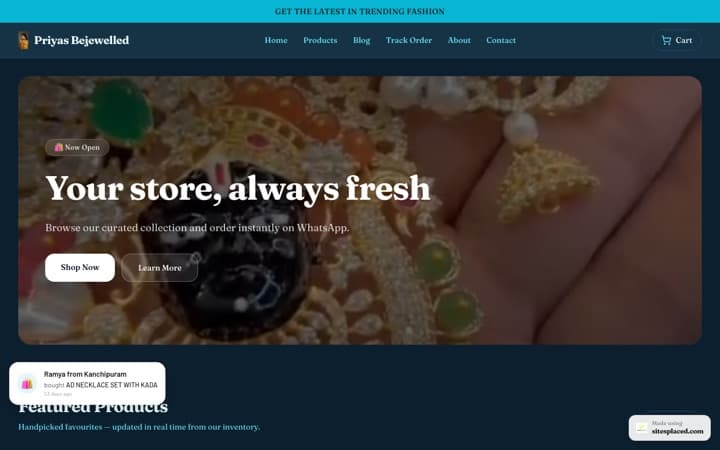


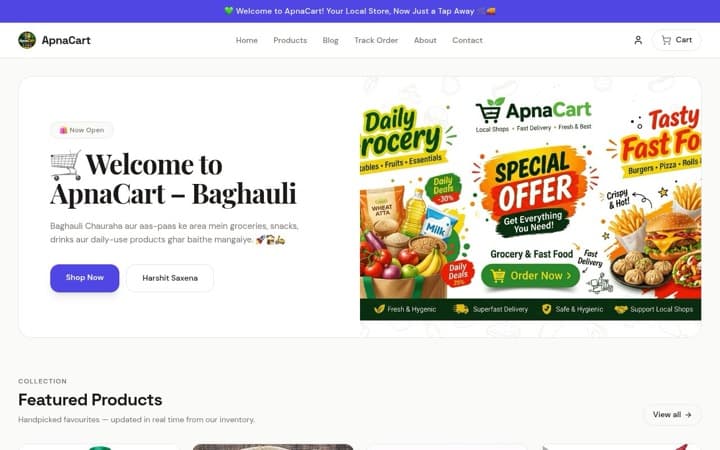
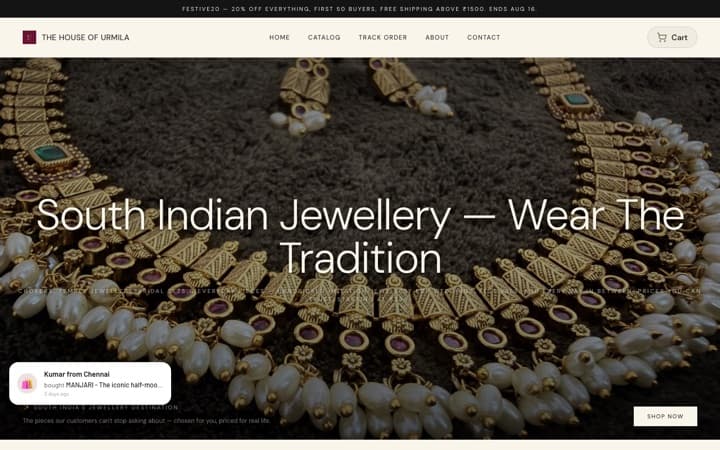
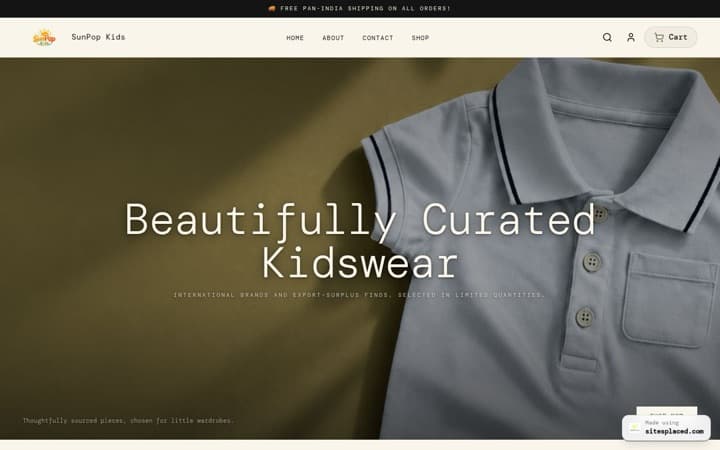
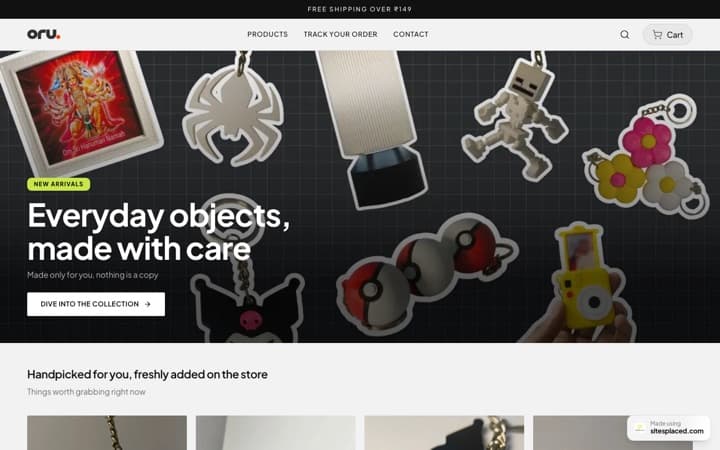
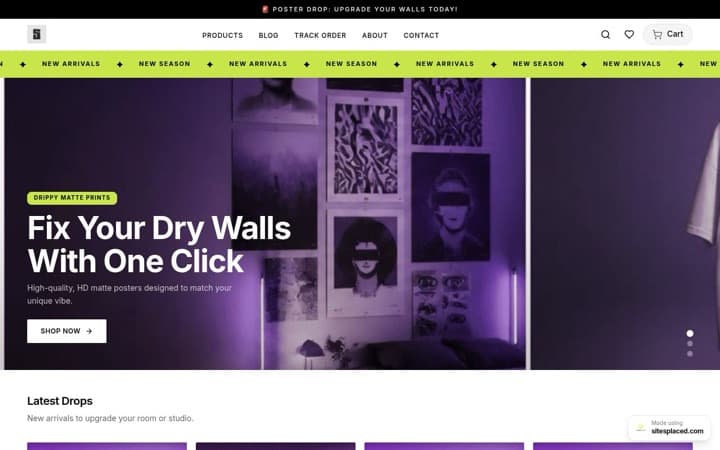

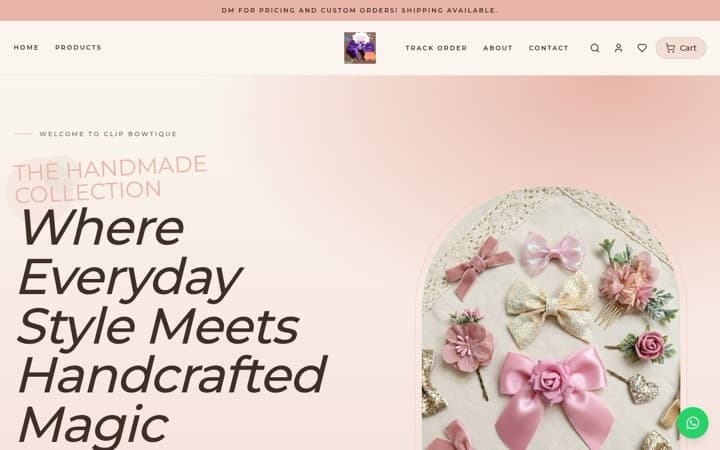

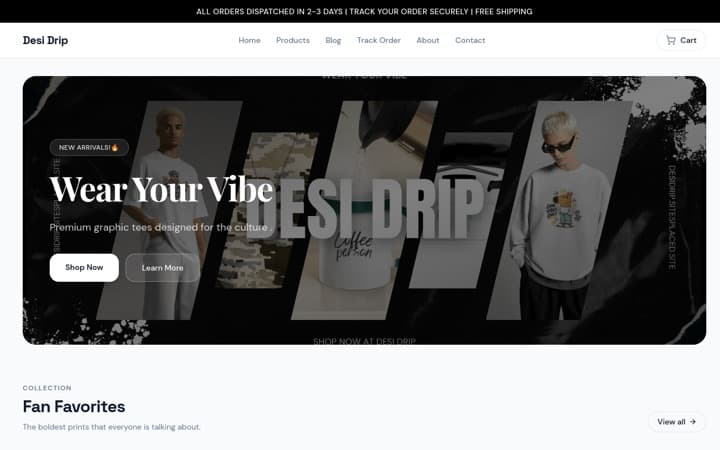
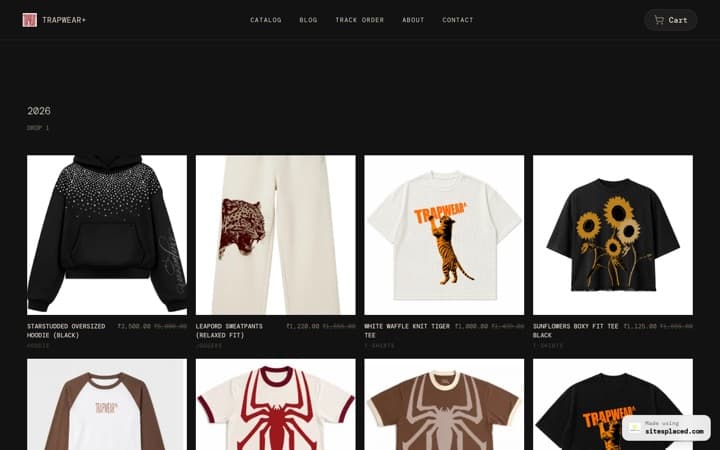
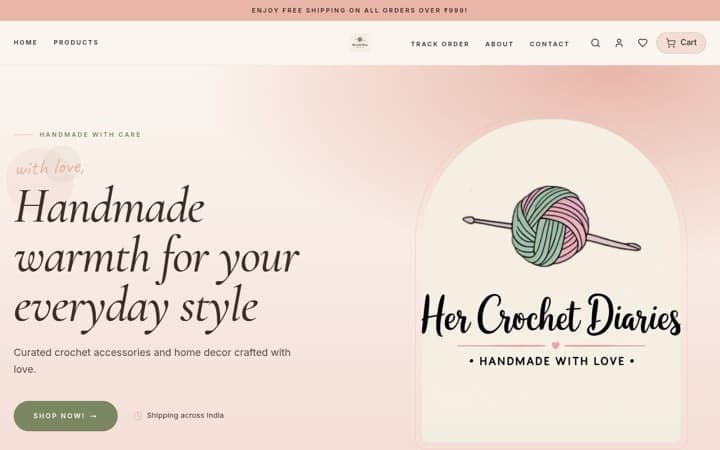

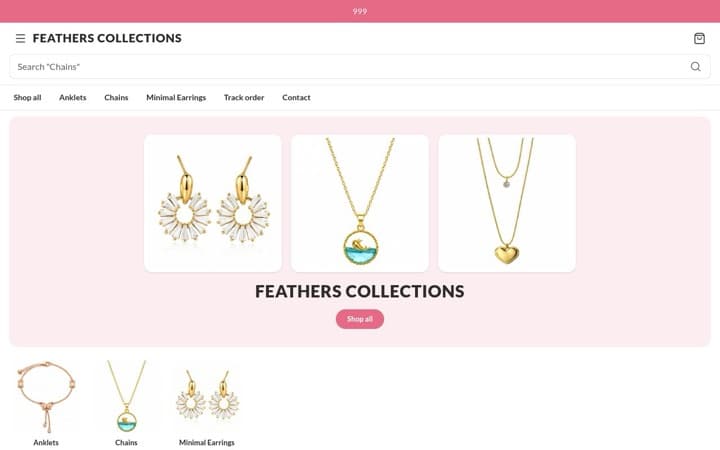
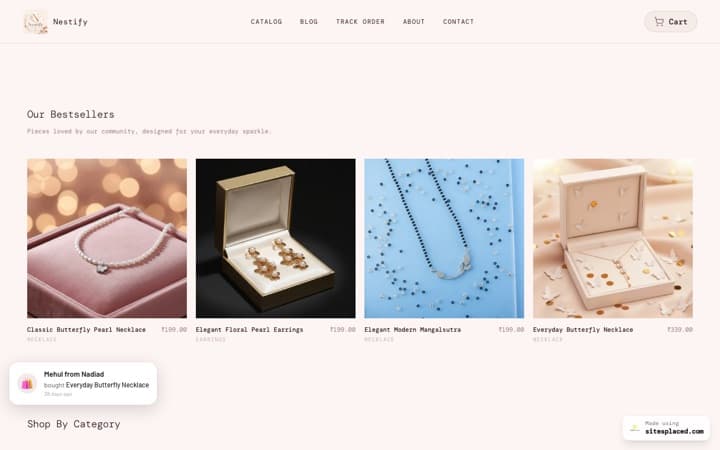
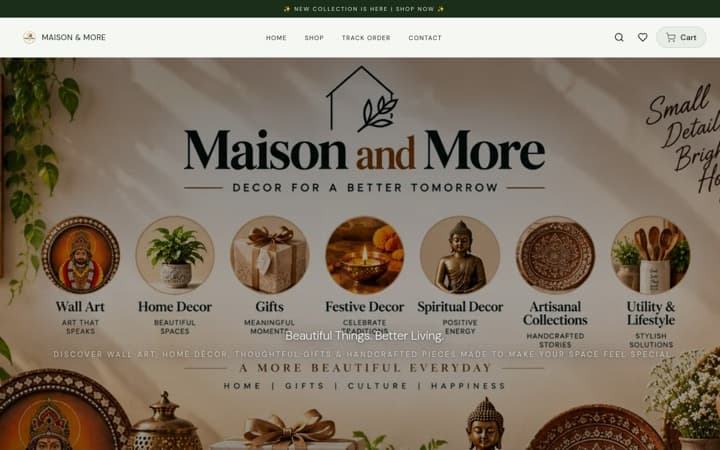


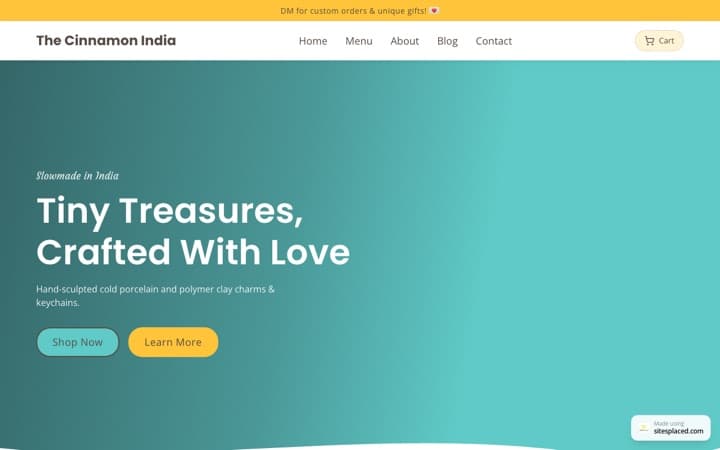
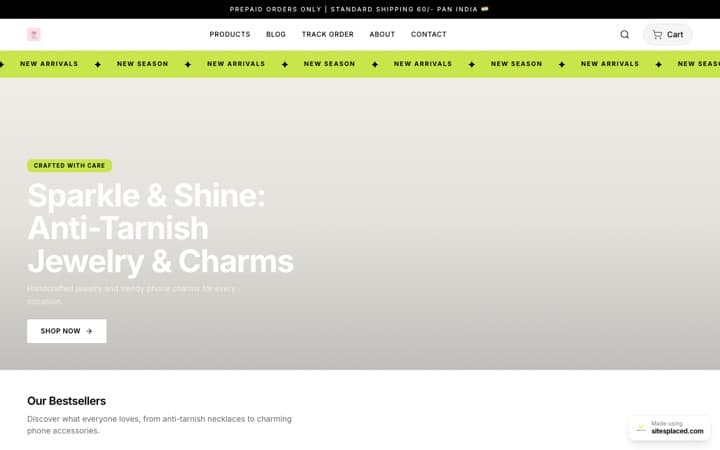

Every store here is live and taking orders · read the SitesPlaced reviews from their owners
The honest answer depends on one question
Where will your first hundred customers come from? Every other decision follows from that, and almost every bad decision comes from getting it backwards.
If the answer is people who already know you — your Instagram followers, your WhatsApp contacts, your neighbourhood, your existing clients — then you do not have a demand problem, you have an operations problem, and the right move is your own store. If the answer is strangers searching for a product and you have no audience at all, you have a demand problem, and a marketplace solves it faster than anything you can build. Most people reading this are in the first group and behave as though they are in the second.
The four routes below are ranked for that first group, because it is the common case in India. If you are genuinely in the second, read the marketplace entry first — it is ranked second here, not because it is worse in absolute terms, but because it is worse for someone who already has attention and would be paying a commission for demand they do not need.
The four routes, ranked for the common case
Your own store, promoted from where you already are
Best for most first-time sellersKeep finding customers on Instagram, WhatsApp and word of mouth, but send them to a store that takes the order properly: prices, stock, a real checkout, an order ID and a delivery address collected once. You carry the whole burden of demand — nobody is going to browse your store by accident — but you pay no commission, you keep the customer list, and your operations stop being a chat thread. This is the route most Indian sellers should start on because the cost of being wrong is close to zero: publishing a store on SitesPlaced is free, with unlimited products, Razorpay, cash on delivery, WhatsApp checkout and Shiprocket included.
₹0 to publish on SitesPlaced · 0% commission · payment-gateway fee appliesBest for: Anyone already getting DMs who is losing orders in chat.A marketplace (Amazon, Flipkart, Meesho and the category ones)
Best when you need demand more than marginThe one route that brings you customers on day one. Millions of people are already searching there, the payment and delivery infrastructure exists, and a first-time seller does not have to explain why a stranger should trust them. The price is steep in three currencies: a per-sale commission that can take a large slice of a thin margin, a search results page where the lever is price, and no ownership of the customer — you cannot email or message a buyer who bought from you. Selling through a marketplace can also change your registration position, so check the GST rules for e-commerce operators before you list.
Free to list; category commission plus fulfilment, closing and payment fees on every saleBest for: Commodity products with room in the margin, or anyone who needs volume to test demand fast.Instagram and WhatsApp alone, with no store
Fastest start, lowest ceilingThis is how an enormous number of Indian businesses genuinely begin, and there is nothing wrong with it for the first month. Post the product, take the DM, send a UPI ID, ship it. It costs nothing and needs no setup. It stops working at roughly the point it starts working: orders and addresses live in chat threads, payment confirmation is a screenshot you have to trust, stock lives in your head, and there is no way to answer the question of what you actually sold last month. Treat it as a starting point, not a destination.
₹0 — you pay in time and lost ordersBest for: Testing whether anyone wants the product at all, before spending anything.Reselling or dropshipping someone else's catalogue
Lowest capital, hardest economicsYou sell products you do not hold, and a supplier or aggregator ships them. It removes the largest cost of starting — inventory — and the largest risk, which is unsold stock. What it does not remove is competition: you are selling the same catalogue, at similar prices, as everyone else with the same supplier, so the margin is thin and the differentiation has to come entirely from your audience or your service. Quality control and delivery timelines are also someone else's decisions, and returns land on you either way.
Little or no stock investment; margins are set by your supplierBest for: Sellers with an existing audience and no capital, who can accept thin margins.
The routes compared
| What matters | Your own store | Marketplace | Instagram / WhatsApp only | Reselling |
|---|---|---|---|---|
| Who brings the customer | You | The marketplace | You | You |
| Commission on each sale | 0% on SitesPlaced (your payment gateway charges its own fee) | Category commission plus fees | 0% | 0%, but the supplier sets your margin |
| Cost to start | ₹0 to publish | Free to list, fees on sale | ₹0 | Little or none |
| Do you own the customer? | Yes | No | Yes | Yes |
| Order record | Every order has an ID, address and status | Marketplace dashboard | Chat threads | Depends on the supplier |
| Payments | UPI, cards, net banking, COD, WhatsApp checkout | Handled, paid out on a settlement cycle | Manual UPI and screenshots | Depends on where you list |
| Speed to first sale | Days | Days to weeks (approval, listing, ranking) | Same day | Days |
| Registration exposure | Turnover-driven — verify on the GST portal | Selling via an e-commerce operator can compel registration — verify | Turnover-driven — verify | Turnover-driven — verify |
| Realistic ceiling | High, if you can keep driving traffic | High reach, compressed margin | Low — operations break before revenue does | Low margin, high competition |
Comparison for a first-time Indian seller, August 2026. Marketplace commissions and fees vary by category and change over time — check the current rate card for your category before you plan a margin around it. GST positions are indicative only; verify on the official GST portal.
The recommendation, stated plainly
For the majority of people asking how to start an online business in India: start selling on Instagram or WhatsApp today, publish a free store this week, and only consider a marketplace once you know which products sell and what margin they carry. That order costs you almost nothing, and it means the audience you build belongs to you rather than to a platform that can change its rate card.
Start with your own store if…
- • You already get enquiries in DMs or on WhatsApp
- • Your margin cannot absorb a double-digit commission
- • You want the customer list, so repeat buyers are yours
- • Your products are made to order, personalised or small batch
- • You want one link to put in a bio, a status and a QR code
Start on a marketplace if…
- • Nobody knows you yet and you need buyers this month
- • Your product is a commodity people actively search for
- • There is enough margin to survive a commission
- • You are testing demand across many products quickly
- • You are willing to compete mainly on price and reviews
Online business ideas that hold up in India in 2026
The ideas that survive share a shape rather than a category: low or no inventory, a buyer you can already reach, and a margin that survives a courier charge. These are the shapes that keep working.
- ✓Made-to-order or small-batch physical products — jewellery, apparel, home and gifting. Inventory risk is low and the story is the differentiator.
- ✓Food, where you can meet the FSSAI requirements for your scale. Repeat purchase rates are the highest of any category and the buyers are local, which keeps shipping cheap.
- ✓Services and consulting — design, tutoring, accounting, fitness, photography. Zero inventory, and a website exists mainly to answer the trust question.
- ✓Digital products and courses. No shipping, no returns, and margin that survives being sold to one person at a time.
- ✓Local services with an online booking or enquiry front, where the internet is the shopfront and the delivery is physical and nearby.
- ✓Resale, but only where you have a real audience advantage — otherwise you are competing with everyone who has the same supplier.
If you want the legal and registration side of this — structure, Udyam, PAN, GST, licences — that is a separate job and we wrote it up separately in how to start a business in India.
Launching in a week, realistically
Pick the ten products you would actually defend
Not the whole catalogue. Ten products you can photograph well, price with a real margin and ship reliably. A narrow store that ships on time beats a broad one that does not.
Price with shipping, packaging and gateway fees inside the number
Work out the landed cost per order before you set a price, including the courier charge, the packaging, the payment-gateway percentage and an allowance for returns. This is where most first-year Indian ecommerce margin disappears.
Publish a store and connect payments
Get the store live with UPI and cards through your own Razorpay account, cash on delivery if your category expects it, and WhatsApp checkout for buyers who want to ask before they pay. Publishing is free on SitesPlaced and there is no product cap.
Write the delivery and return policy before anyone asks
Two short paragraphs stating dispatch time, delivery time and what happens if something is wrong. This removes the single largest objection a first-time buyer in India has.
Point every channel you already have at one link
Instagram bio, WhatsApp status, your status message, the local groups, your existing customers. One link, one place orders land, one record of what sold.
Ship the first ten orders yourself and ask every buyer why they bought
The first ten orders are research. What they tell you about price, objections and which product should have been on the homepage is worth more than another week of design.
What each route actually costs
The software is rarely the expensive part any more, which is why comparing monthly plan prices is the wrong way to make this decision. The costs that decide whether an Indian online business works are the courier charge per order, the packaging, the payment-gateway percentage, the returns, and — on a marketplace — the commission.
- ✓Marketplace: no upfront cost, but a category commission plus fulfilment, closing and payment fees on every order. Model this at your real average order value before you list, not at your best-case one.
- ✓Your own store: on SitesPlaced, ₹0 to publish with unlimited products and 0% commission. Your Razorpay account charges its standard gateway fee on online payments. The ₹499/month Growth plan — an early-bird price for the first 50 stores, ₹999 after — adds a custom domain, badge removal, AI copy, store analytics, Meta Pixel with the Conversions API, and WhatsApp Business API order alerts from your own number.
- ✓Instagram and WhatsApp only: free in rupees, expensive in hours, and the cost shows up as orders you lost track of rather than as an invoice.
- ✓Reselling: little capital, but the supplier sets the margin and you inherit their delivery times and quality.
Before you commit to any of them, run your actual numbers through the free profit margin calculator and, if you are quoting tax-inclusive prices, the GST calculator. A route that looks cheap at list price often is not once a commission and a return sit on top of it.
Razorpay, Shiprocket, Shipmozo, WhatsApp API, Meta CAPI: all built in.
Razorpay, cash on delivery, WhatsApp checkout, Shiprocket and Shipmozo are on the free plan. From ₹199/month (Starter): Meta Pixel + Conversions API, your own domain, branding removal, AI and analytics. The ₹499/month Growth plan adds WhatsApp Business API alerts and the 1-click checkouts, bring your own credentials. No app store, no per-integration fees.
Payments
- Free

UPI, cards, net banking and wallets at checkout. SitesPlaced takes 0% commission; Razorpay's standard gateway fee applies.
razorpay.com - Free

StripeNew
Card, Apple Pay and Google Pay from customers worldwide. Connect your own Stripe account with a restricted key — payments land in your Stripe balance and SitesPlaced takes 0% commission.
stripe.com - Free

PayPalNew
Customers pay with their PayPal balance or a card. Connect your own PayPal app — the money lands in your PayPal balance and SitesPlaced takes 0% commission.
paypal.com - Free

PhonePeNew
UPI, cards, net banking and wallets at checkout on your own PhonePe Business account. Money settles straight to you and SitesPlaced takes 0% commission; PhonePe's standard gateway fee applies.
phonepe.com - Free

CashfreeNew
UPI, cards, net banking, wallets and pay-later at checkout on your own Cashfree account. Money settles straight to you and SitesPlaced takes 0% commission; Cashfree's standard gateway fee applies.
cashfree.com - Free

- Free
COD at checkout with an optional COD charge you set.
- Free

- ₹499

Sell with ShiprocketNew
1-click checkout by Shiprocket — saved addresses, UPI/cards/COD and RTO scoring, without your own payment gateway. Shiprocket collects and settles to you; SitesPlaced takes 0%, Shiprocket charges 2% per order.
shiprocket.in - ₹499
Razorpay Magic CheckoutNew
1-click checkout on your own Razorpay account — saved addresses, UPI/cards/COD in one step, with COD intelligence and RTO protection. Money settles straight to your Razorpay. Can run alongside Shiprocket checkout.
razorpay.com
Shipping
- Free
Push orders to Shiprocket, get AWB numbers back, and show live tracking on your Track Order page.
shiprocket.in - Free

ShippoNew
USPS, UPS, FedEx, DHL and Royal Mail labels for US, UK and international orders — around 5¢ a label with no monthly fee, billed to your own Shippo account.
goshippo.com - Free

ShipmozoNew
Courier selection, pickup scheduling and tracking status synced back to each order.
shipmozo.com - Free
Rehbar PostNew
Compare courier rates, book the shipment, print the label and track it back — on your own Rehbar Post account.
rehbarpost.com
Fulfilment
- Free

Qikink
Print-on-demand for India — t-shirts, hoodies and mugs printed and shipped domestically from your own Qikink account.
qikink.com - Free

PrintifyNew
Print-on-demand t-shirts, hoodies, mugs and posters. Link a product to your own Printify catalogue and paid orders are sent for printing automatically — Printify bills your account, we take nothing.
printify.com
Messaging
- ₹499
Every new order sends you an alert and the customer a confirmation, from your own WhatsApp Business number via Meta's Cloud API. Bring your own credentials.
business.whatsapp.com
Marketing
- ₹199+

Meta Pixel + Conversions APINew
Your own Pixel on the storefront plus server-side Purchase events from the order record, deduplicated, so Instagram and Facebook ads report real sales. Bring your own credentials.
facebook.com - ₹499

Import the product reviews you already collected in Judge.me on Shopify or WooCommerce onto your product pages, matched by product name. Bring your own API token; SitesPlaced also collects and moderates its own product reviews on every plan.
judge.me - ₹499

Resend emailNew
Email the subscribers your store collected — a new drop, a reopening — from your own domain through your own Resend account. Bring your own API key; sending, limits and unsubscribes stay on your Resend account.
resend.com - ₹199+
Custom head code
Paste Google Analytics, Clarity or any tag into your live site.
Growth
- ₹199+
yourbrand.com with one-click DNS setup for most Indian registrars.
- Free


Create and edit your store by chatting with your AI assistant.
modelcontextprotocol.io - Free
Bring a catalogue in from Instagram, your existing website, a PDF, dm2buy or Shopexer.
- Free
A public API for your store. A custom website with no backend of its own can read your products, send a shopper to your checkout with a prepared cart, read and update orders, look up tracking and receive webhooks.
- Free
WooCommerceNew
Keep your WooCommerce shop. A plugin copies every order into SitesPlaced, so you get the order dashboard, the mobile app, courier booking and a tracking page. WooCommerce stays in charge of payment, stock and cancellation.
- Free
ShopifyNew
Early access, not open to everyone yet. Keep your Shopify shop and copy its orders into SitesPlaced for the order dashboard, courier booking and a tracking page. Ask us for access.
Mistakes that decide the outcome early
- ✓Choosing a route by monthly plan price instead of by cost per order, including commission, shipping and returns.
- ✓Building only on a platform you do not control, and discovering in year two that you have no customer list.
- ✓Launching a hundred products instead of ten, so nothing is photographed well and nothing ships on time.
- ✓Treating a marketplace listing as a brand. It is a search result — the moment you stop paying for placement or dropping price, it stops.
- ✓Not checking whether your route changes your GST position. Selling through an e-commerce operator has historically been treated differently from selling on your own store — verify before you list.
- ✓Waiting for a perfect store. A live store with ten honest listings outperforms a beautiful one nobody has seen.
Start with the route that costs nothing to be wrong about
Publish a store free — unlimited products, Razorpay for UPI and cards, cash on delivery, WhatsApp checkout, Shiprocket and Shipmozo shipping, PDF invoices, 0% commission. If it does not work, you have lost an afternoon. Pay from ₹199/month (Starter) only when you want your own domain, the badge removed and AI copy.
Open a free store →Free to publish on a sitesplaced.com URL with a small badge. Import an existing Instagram or catalogue in one paste.
Frequently asked questions
What is the best way to start an online business in India?
For most first-time sellers, the best way is to keep finding customers where you already have attention — Instagram, WhatsApp, word of mouth — while taking the orders through your own store rather than in chat. That combination costs almost nothing to set up, pays no per-sale commission, and leaves you owning the customer list. A marketplace is the better first move only when you need demand more than margin, because it brings buyers on day one in exchange for a commission and the customer relationship.
Can I start an online business with no money in India?
Effectively yes, if you choose a route with no inventory. Services, made-to-order products, digital products and reselling all avoid the biggest cost of starting, which is stock. On the tooling side the floor has genuinely dropped: publishing a store on SitesPlaced is free with unlimited products and 0% commission, a Razorpay account costs nothing until you take a payment, and Udyam registration is free on the official government portal. What you will still spend is time, and a small amount on packaging and photography.
Is it better to sell on Amazon or on my own website in India?
They solve different problems. A marketplace gives you demand you did not have to create, and charges a category commission plus fees for it while keeping the customer relationship. Your own store gives you zero commission, the customer list and control over presentation, but you have to bring every visitor yourself. Many Indian sellers run both: the marketplace for discovery and volume, their own store for repeat buyers and better margin. If you are choosing only one and you already have an audience, start with your own store.
Do I need GST to sell online in India?
It depends on turnover, on what you sell and on how you sell it, not simply on the fact that the sale is online. As of 2026 the commonly cited thresholds are around ₹40 lakh a year for goods and ₹20 lakh for services, with lower limits in some states — but supplying across state lines and selling through certain marketplace operators have historically compelled registration regardless of turnover. Verify the current rules on the official GST portal or with a chartered accountant before you list anywhere.
What online business ideas actually work in India in 2026?
The ones that survive share a shape rather than a category: low or no inventory, a clear buyer you can already reach, and a margin that survives shipping. In practice that means made-to-order or small-batch products such as jewellery, apparel and home goods; food where you can meet FSSAI requirements; services and consulting; digital products and courses; local services with an online booking front; and resale where you have a genuine audience advantage. Chasing a trending category without a way to reach its buyers is the most common failure.
How much does it cost to start an online business in India?
If you sell services, digital products or made-to-order items, close to nothing: a free store, a payment gateway that charges only on transactions, and free Udyam registration. If you hold stock, inventory is almost always the largest line in year one, followed by packaging and photography. On SitesPlaced the software cost only starts when you want your own domain, the badge removed and AI copy, at ₹499 a month — an early-bird price for the first 50 stores, moving to ₹999 after that.
Should I start on Instagram or build a website first?
Start on Instagram, but do not stay there alone. Instagram answers the only question that matters at the beginning — does anyone want this — at zero cost. The store becomes necessary the moment orders start arriving faster than you can track them in DMs, which for most sellers is within the first month or two. Because publishing a store is free, there is no real reason to postpone it once the DMs are coming.
How long does it take to start selling online in India?
The selling part can be days. A store with ten products, photographs, prices and a connected payment gateway is an afternoon of work plus the time it takes your gateway to verify your documents. The parts that take longer are the ones outside the software: sourcing or making stock, any licence your category needs, and building enough of an audience that the link has somewhere to be shared.


