


Marketplace vs your own website: where should you actually sell?
One brings you shoppers and takes a cut of every sale. The other keeps your margin and your customers — but starts with zero traffic. Here’s the honest framework, with the maths done for you.
Sell on a marketplace when you need discovery; sell on your own website when margin, brand and the customer relationship matter. Marketplaces genuinely win for pure discovery — they put your product in front of shoppers you could never reach alone, and charge roughly 5–25% per sale for it. Your own website keeps ~15–25% more of every order plus the buyer’s contact details, but you bring the traffic. Most sellers end up hybrid: marketplace for finding new customers, own store for keeping them.
The fee maths: one ₹800 order, both channels
Percentages hide the real difference, so here’s a worked example — a ₹800 product sold once on a typical marketplace and once on your own store.
| Per order | Marketplace | Your own store |
|---|---|---|
| Selling price | ₹800 | ₹800 |
| Commission / referral fee (~18%) | − ₹144 | ₹0 |
| Closing + payment collection fees | − ₹40 (approx.) | − ₹16 (~2% gateway; ₹0 on UPI/COD) |
| You keep (before shipping) | ≈ ₹616 | ≈ ₹784 |
| Difference at 100 orders/month | — | ≈ ₹16,800/month more margin |
Illustrative figures — commission slabs, closing fees and collection fees vary by marketplace, category and price band as of 2026. Shipping costs apply on both channels and are excluded here.
The fair reading isn’t “marketplaces are a rip-off” — that ₹180-odd per order is buying you a customer you didn’t have. The unfair part is paying it againon the same customer’s second, third and tenth order. That’s the problem your own website exists to solve.
Who owns the customer?
On a marketplace, the answer is: the marketplace. The buyer’s phone number and email are masked or withheld, you can’t message them about a new drop, and your listing page shows competitors’ products — sometimes as ads on your own listing. You’re renting shelf space in someone else’s shop, and the shop keeps the loyalty card.
On your own store, every order comes with the customer’s number and address. In practice that means a WhatsApp relationship: order updates, a message when new stock lands, an easy reorder. For small brands, repeat buyers on WhatsApp are usually the difference between a shop and a business.
The discoverability trade-off — where marketplaces honestly win
A new website starts at zero visitors. A marketplace listing sits in front of millions of shoppers on day one, with search, reviews and trusted checkout already built. If strangers finding you is the whole game — commodity products people search for by name — the marketplace earns its commission, full stop.
But most small sellers don’t start with strangers; they start with an audience. In SitesPlaced store-analytics data, social (Instagram + Facebook) sends about 4.6× more visitorsto small stores than search does — traffic a marketplace listing can’t capture for you, and traffic you shouldn’t pay 20% on. The playbook for converting it commission-free is in how to sell online without marketplace commissions.
The hybrid answer most sellers land on
- 1. Use the marketplace as a discovery channel. List your bestsellers where the search traffic is, and treat the commission as the cost of acquiring a first-time customer.
- 2. Run your own store for everything you don’t owe a commission on. Instagram bio, WhatsApp status, reels, packaging inserts — audience you built points at your own checkout.
- 3. Move repeat buyers to your store. A thank-you card with your store link and a small repeat-order code shifts second orders to the channel where you keep the margin.
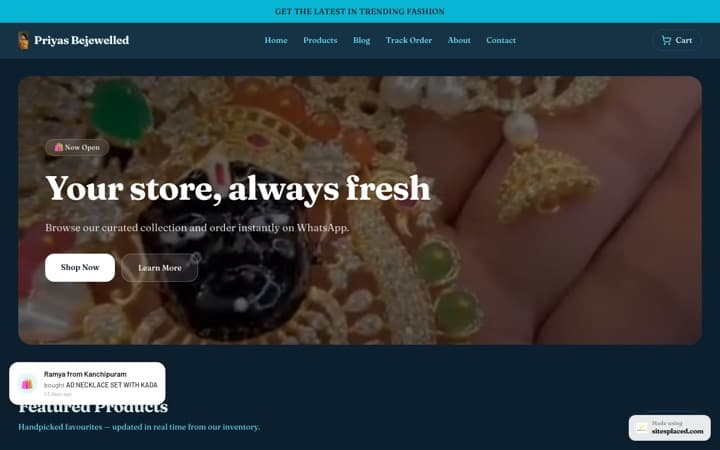
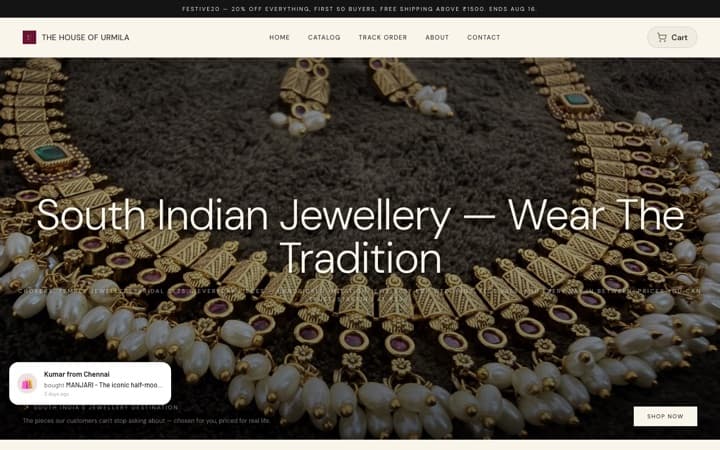
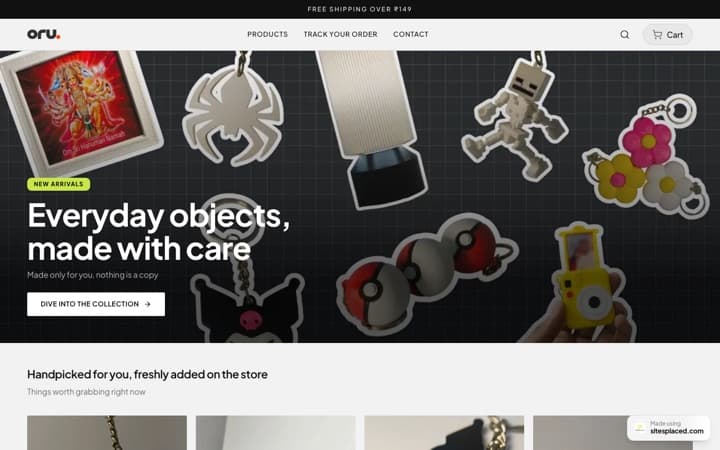
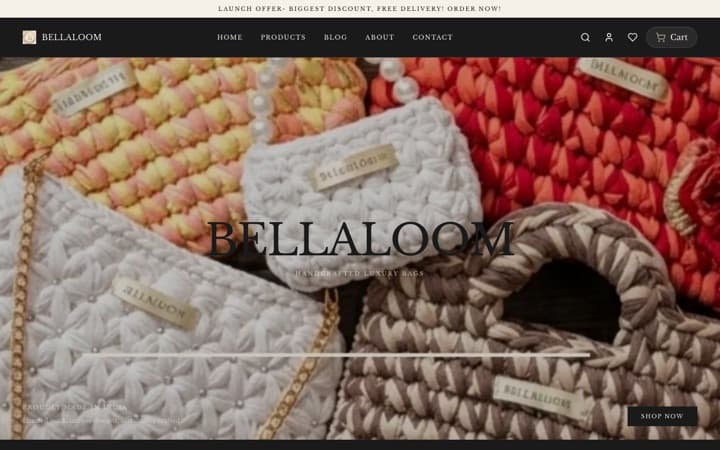
The reason this hybrid barely costs anything in 2026: publishing your own store is free. On SitesPlaced a store with UPI, COD and WhatsApp checkout goes live at ₹0 with 0% commission — new sellers can start with a generated store (see the easiest way to start selling online) — and you pay ₹199/month(Starter) only for a custom domain and branding removal. If you’re choosing the store side of the hybrid, we’ve ranked the best ecommerce website builders for India separately.
Frequently asked questions
Should I sell on a marketplace or my own website?
Sell on a marketplace when you need discovery — marketplaces bring shoppers who already search there, and for pure discovery they genuinely win. Sell on your own website when margin, brand and the customer relationship matter — you keep roughly 15–25% more of every sale and the buyer's contact details. Most sellers in 2026 land on a hybrid: use marketplaces to get found, and route repeat orders to their own 0%-commission store.
How much commission do marketplaces charge?
Typically 5–25% of the sale price depending on the platform and category, plus fixed closing fees and payment-collection fees. On a ₹800 product, the all-in marketplace take is commonly ₹150–₹200 before shipping. On your own store the equivalent cost is a ~2% payment-gateway fee on online card payments — and ₹0 on direct UPI or cash on delivery.
Is it worth having my own website if I already sell on Amazon or Flipkart?
Usually yes, and not as a replacement — as a second channel. A marketplace buyer belongs to the marketplace: you don't get their contact details and can't remarket to them. Your own site captures your social and WhatsApp audience, keeps ~15–25% more per order, and gives repeat customers somewhere commission-free to buy. Since publishing a store is free on SitesPlaced, the experiment costs ₹0.
Do marketplaces really bring more traffic than your own website?
For search-driven discovery, yes — honestly, a new website starts at zero visitors while a marketplace listing sits in front of millions of shoppers on day one. But small stores don't depend on search: in SitesPlaced store-analytics data, social (Instagram + Facebook) sends about 4.6× more visitors to small stores than search does. If you already have an audience on Instagram or WhatsApp, your own site converts traffic you already own.
Can I sell on a marketplace and my own website at the same time?
Yes — that hybrid is the most common setup for small brands in 2026. List your bestsellers on the marketplace for discovery, run your own store for social traffic and repeat buyers, and keep prices consistent across both. The main operational care is stock: update inventory in both places when something sells out.
Add the 0%-commission side of your hybrid — free
Publish your own store with UPI, COD and WhatsApp checkout at 0% commission. Keep the marketplace for discovery; keep the margin on everyone you bring yourself.