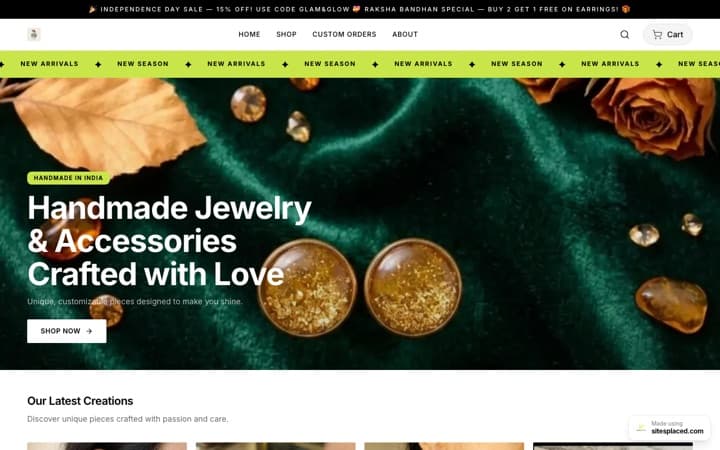



How to sell handmade crafts online in India — from your first piece to your first order
You can start selling handmade crafts online with a phone, an Instagram account and a free online store. Pick one craft, price your time as well as your materials, take UPI and cash on delivery, and send people from Instagram and WhatsApp to a store link where they can see prices and order without messaging you first.
Key takeaway: start small and specific. Five to ten pieces in one craft, photographed in daylight, priced so your hours are paid, is enough to launch. You generally don’t need a special licence to sell your own handmade work, though GST depends on your sales and where you ship, so check with a CA. Put everything on a free store at yourname.sitesplaced.site (0% commission, UPI, COD and WhatsApp checkout included) and share that one link everywhere.
TL;DR
- • Pick one craft and one style so your page looks like a brand, not a hobby album.
- • Price = materials + your time + packing + fees + margin. Covering only the yarn means you work for free.
- • Paperwork: PAN and a bank account to start; GST and Udyam depend on your situation. Confirm with a CA.
- • Photos: daylight, a plain background, a size reference and a close-up of the texture.
- • Ship safely: box-in-box for anything that can break, booked through Shiprocket or Shipmozo.
- • Store: the free Gifts & Lifestyle Store or Home & Decor Store template, with personalisation and paid extras built in.
1. Pick what to sell, and keep it narrow
Buyers remember a maker for one thing: “the girl who does resin name plates”, “the crochet flower bouquet shop”. A page that mixes candles, crochet, paintings and earrings is harder to trust and harder to recommend. Start with one craft and five to ten pieces that look like they belong together: the same colours, the same finish, the same packaging.
| Craft | Good first products | Watch out for |
|---|---|---|
| Crochet | Keychains, coasters, flower bouquets, small bags, soft toys | Slow to make. Price your hours, not just the yarn. |
| Resin art | Keychains, coasters, name plates, trays, preserved-flower frames | Curing time and bubbles. Don’t call a piece food-safe unless the resin is sold as food-safe. |
| Pottery and ceramics | Mugs, planters, diyas, small bowls | Breakage in transit. Only say “food-safe” if your glaze is. |
| Macramé | Wall hangings, plant hangers, keychains, bag straps | Light but bulky. Roll it for shipping; don’t fold it flat. |
| Painted and embroidered décor | Embroidery hoops, lippan art, painted frames, name boards | Colour and size must match the photo. Always show a size reference. |
Two kinds of product help a new shop. A small, lower-priced piece (a keychain, a coaster) lets a stranger try you without much risk. A “hero” piece (a large wall hanging, a personalised name plate) shows what you can really do and makes a good gift. Decide early which pieces are ready stock (made, photographed, waiting) and which are made to order (you start after payment). You will price, ship and promise delivery dates differently for each.
2. Price your time, not just your materials
Handmade prices go wrong in one direction: too low. The fix is to write every cost down, including your hours. Here is a worked example for a crochet tote bag. These are example numbers only; use your own supplier prices and the hourly rate you would accept for the work.
| Example: one crochet tote | Cost |
|---|---|
| Yarn and lining | ₹240 |
| Handles, zip, label | ₹60 |
| Your time: 4 hours at ₹100 an hour | ₹400 |
| Packing: paper bag, thank-you card, mailer | ₹35 |
| Payment fee on a ₹999 sale (example 2%) | ₹20 |
| Total cost | ₹755 |
At ₹999 this bag leaves about ₹244 after costs, before delivery. That margin pays for the pieces that go wrong, the photos, and the time you spend replying to messages. If ₹999 feels too high for your buyers, change the design (fewer hours, cheaper yarn), not your hourly rate. Delivery can be charged separately or built into the price; either way, say it on the product page.
Our guide on how to price your products goes deeper into margins, and the free product pricing calculator does the sums.
3. Paperwork: what you generally need
This is general information, not legal or tax advice. Rules change, so confirm your own case with a chartered accountant (CA).
- To start: a bank account and PAN. Payment gateways such as Razorpay, PhonePe and Cashfree ask for these (plus identity proof) when you open an account. Selling your own handmade work generally doesn’t need a special trade licence.
- GST: whether you must register depends on your yearly sales and on whether you send goods to other states. Read do you need GST to sell online in India, then ask a CA before you ship across state lines regularly.
- Udyam registration: optional and free on the government’s official Udyam portal. It records you as a micro business, which some schemes and bank loans ask for.
- Packed goods: if you sell pre-packed items, India’s Legal Metrology rules ask for certain details on the pack, such as your name and address, what’s inside, the quantity and the price. Ask your CA whether this applies to your products.
- Honest claims: only write “food-safe”, “eco-friendly”, “pure cotton” or “100% handmade” when it is true and you can show it.
Our earlier post, can I sell my handmade items on Instagram, covers the Instagram side of this in more detail.
4. Photos that show it’s handmade
A buyer can’t touch your work, so the photos have to answer their questions: how big is it, what does the texture look like, what colour is it really, and how will it look in my home? For each product, take:
- • One clean shot on a plain background, near a window in daylight. No flash, no heavy filters.
- • One size shot: the piece in a hand, next to a mug, or on a shelf.
- • One close-up of the stitches, the resin flowers, the glaze or the knots. This is where “handmade” shows.
- • One in-use shot: the hanging on a wall, the planter with a plant, the bag on a shoulder.
- • Every colour you offer, photographed, not described.
A 10-second video of you making the piece often says more than the photos. You can upload one to each product on SitesPlaced or paste an Instagram Reel link. For more, see how to take better product photos.
5. Packing and shipping without breakage
- Pottery and glass: wrap each piece on its own in bubble wrap, put it in a small box, then put that box inside a bigger one with padding on every side. Shake the parcel; if anything moves, add more padding.
- Resin: a soft pouch or tissue first so the surface doesn’t scratch, then bubble wrap.
- Crochet and macramé: a paper bag or mailer is enough. Roll macramé around a tube instead of folding it.
- Every parcel: a thank-you card, a care card (“wipe with a dry cloth”), and your store link or QR code for the next order.
For courier bookings, a shipping aggregator such as Shiprocket or Shipmozo lets you compare couriers and print labels. Both connect to a SitesPlaced store for free, so you can book a pickup straight from the order. If a piece is made to order, say so on the product page, for example “Made to order, ships in 5 days”; on the brand-style templates, this line sits right under the buy button. The full routine is in how to ship orders from home in India.
6. Taking payment: UPI, COD and WhatsApp
- UPI, cards and net banking go through your own Razorpay, PhonePe or Cashfree account, so the money settles to your bank. SitesPlaced takes 0% commission; the gateway charges its own fee.
- Pay the store directly: no gateway yet? Buyers can place the order and then pay your UPI ID or bank account. You confirm the order once the money arrives.
- Cash on delivery (COD): the buyer pays the courier when the parcel arrives. It helps strangers trust a new shop, but refused parcels cost you both ways. You can add a small COD charge so paying online looks better.
- WhatsApp checkout: the buyer’s cart arrives on your WhatsApp as an order, so you can chat before confirming. It is free, and the order is saved in your dashboard too.
For custom commissions, take payment (or at least an advance) before you start. A personalised piece that is refused can’t be sold to anyone else. A UPI QR code sent on WhatsApp works well for advances.
7. Getting your first orders from Instagram and WhatsApp
- Show the making. Reels of a crochet flower taking shape or resin being poured are easy to watch and prove the work is yours.
- Put the price in the caption and the store link in your bio. People who tap already know they can afford it.
- Link the exact product in story link stickers, not your home page.
- Use WhatsApp status and a broadcast list for friends, family and past buyers. A broadcast reaches only people who have saved your number, so ask them to.
- Do one pop-up or flea market. A printed QR code to your store turns browsers into later online orders.
- Plan for gifting dates: Rakhi, Diwali, weddings and birthdays. A ready gift set is easier to buy than a single piece.
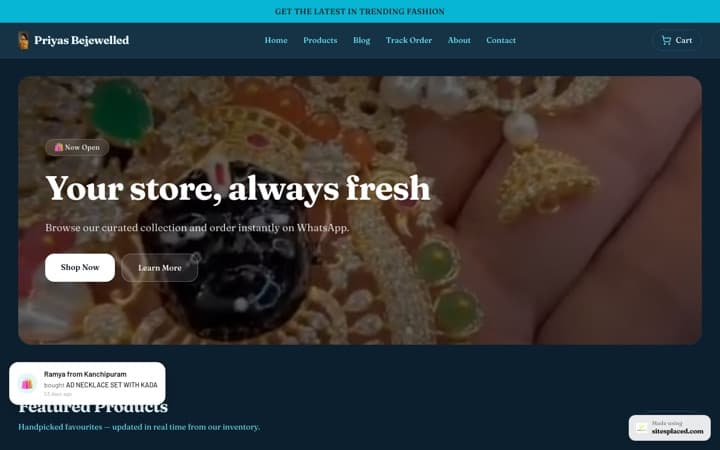
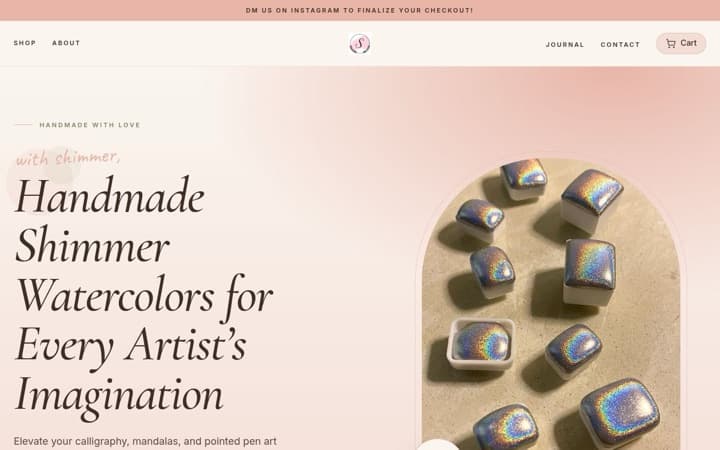
More ideas in how to get your first 10 orders on a new online store. To see how other makers set up their shops, browse the handmade and craft stores built on SitesPlaced.
8. Set up your free store
A store gives every piece its own page with a price, photos and a buy button, so you stop answering “price?” in DMs. On SitesPlaced the free plan is ₹0 forever: unlimited products and orders, 0% commission, and your store lives at yourname.sitesplaced.site (a subdomain, meaning your own name in front of our address).
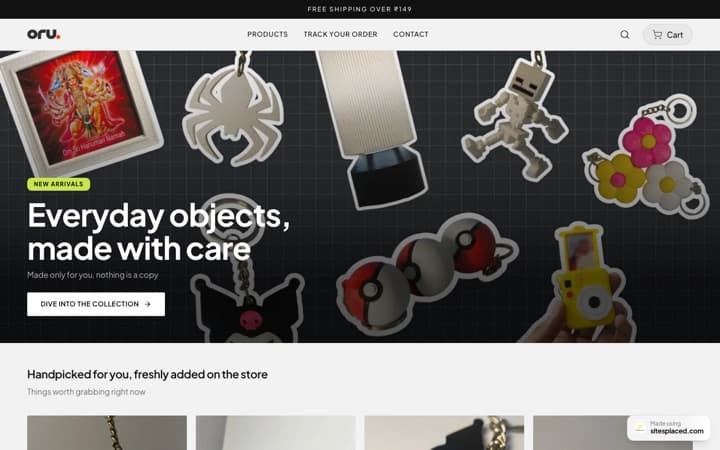
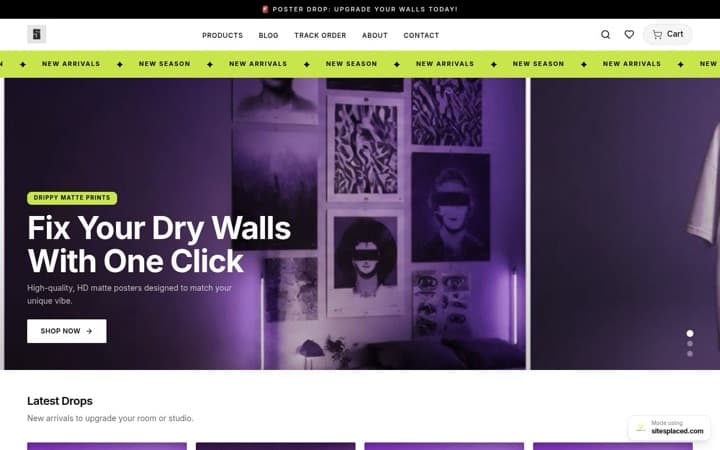
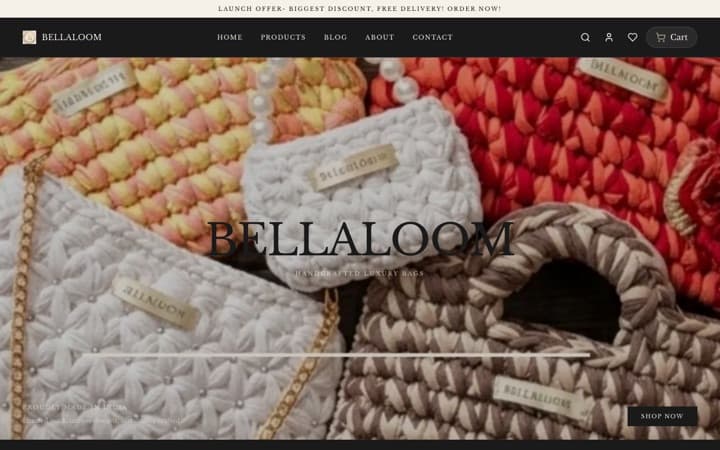
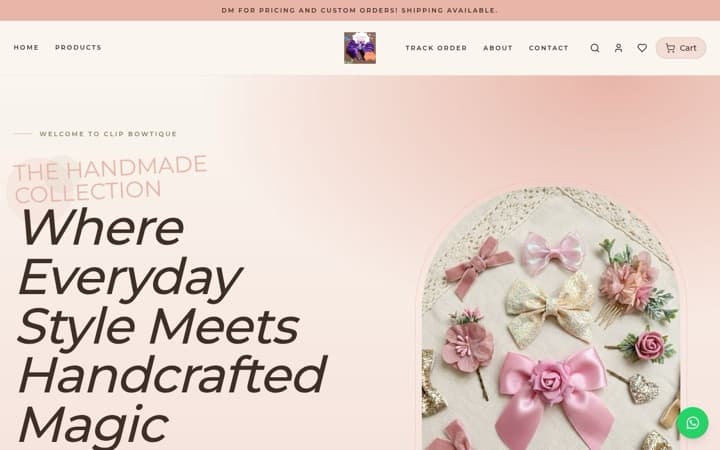
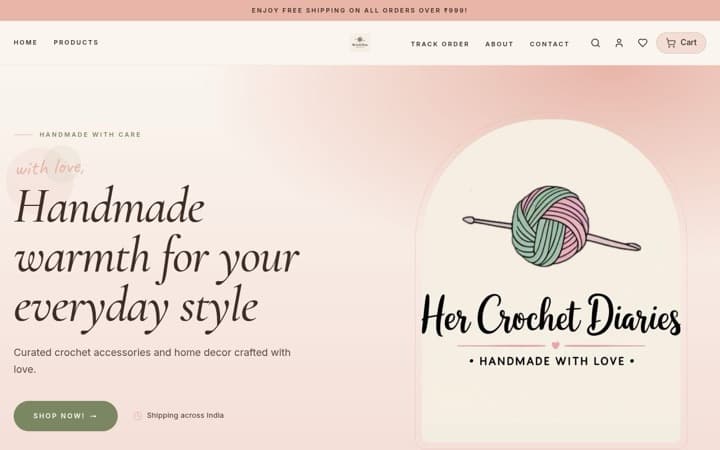
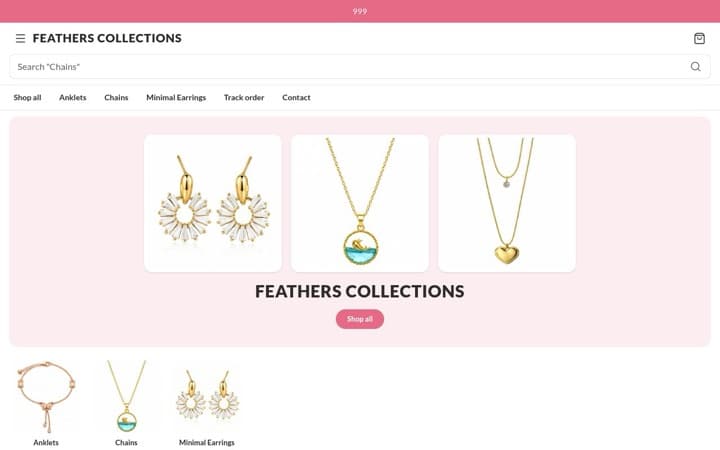
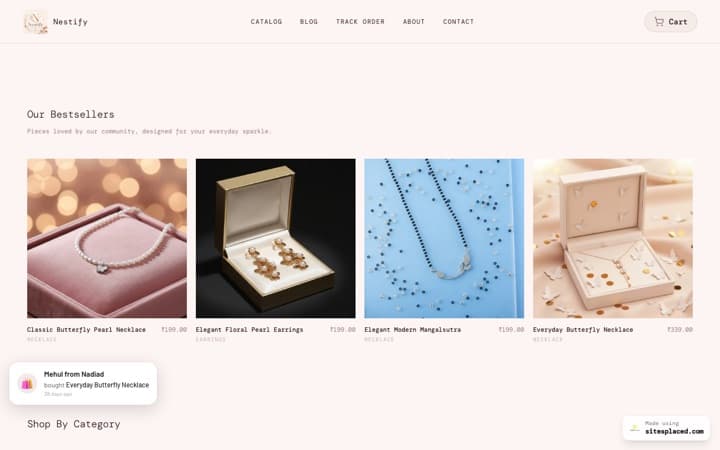
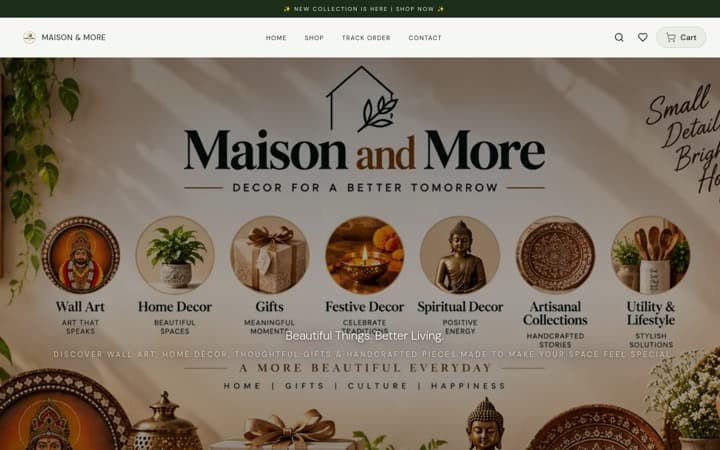
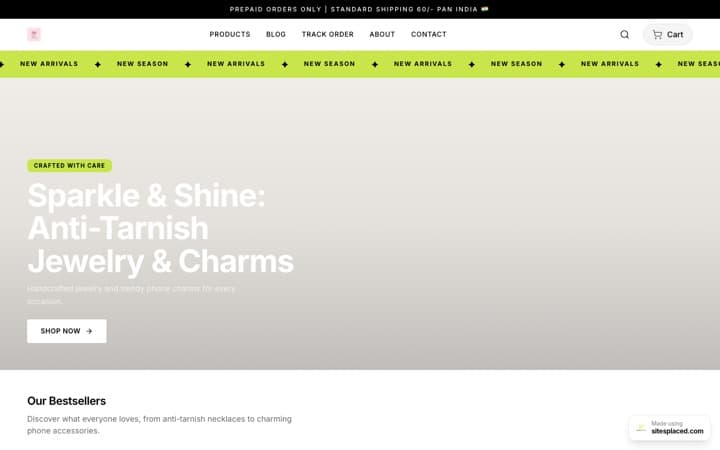
- Pick a template. The Gifts & Lifestyle Store suits gifts and personalised pieces: big category photos, shop by occasion, and a preview of the buyer’s own photo on personalised products. The Home & Decor Store suits wall hangings, planters and pottery: a calm grid and a photo mosaic of your categories. Choose carefully, because changing template later means making a new store.
- Add products with photos, price, colour options and stock. Set stock to 1 for one-of-a-kind pieces so they show sold out after one order; leave stock untracked for made-to-order items.
- Turn on personalisation where it fits. Each product can ask for a text note (“Name to write”), a photo upload, and paid extras such as “Gift wrap +₹50”. The note and photo travel with the order.
- Set checkout: connect Razorpay, PhonePe or Cashfree, and choose COD and WhatsApp checkout.
- Set delivery: one flat charge, plus free delivery above an amount you choose. The free-shipping bar (“Add ₹200 more for free delivery”) then appears on its own.
- Write your policies, especially returns for handmade and custom pieces. The return policy generator gives you a starting draft.
- Publish and share the link in your Instagram bio, WhatsApp status and on your packing cards.
9. When to upgrade (and when not to)
Stay on the free plan until orders come in regularly. When you want to look more established, Starter (₹199/month, or ₹1,990/year) gives you your own domain such as yourbrand.com, removes the small SitesPlaced badge, adds visitor and store analytics, and makes your store’s pages answer about 4× faster than on the free plan. In our measurements on live paid stores on 28 September 2026, a page answered in about 75 ms instead of about 330 ms. “Answer” means how quickly the page starts arriving on the shopper’s phone, before the photos load, not the whole page load. Your edits and stock changes still show straight away.
Growth (₹499/month) adds product reviews with Google star ratings, Buy X Get Y offers and the other sales boosters. To try either first, the code FREE7 at checkout gives 7 days free when you set up autopay; cancel before the first charge and you pay nothing. See pricing.
Frequently asked questions
Do I need a licence to sell handmade crafts online in India?
To start selling your own handmade crafts you generally don’t need a special licence. You need a bank account and PAN to open a payment gateway account. GST registration depends on how much you sell and whether you ship to other states, so read our GST guide and confirm your case with a chartered accountant. Udyam registration is optional and free on the official Udyam portal.
How should I price handmade products?
Add up materials, your time at an hourly rate you’d accept, packing, the payment fee and your share of delivery, then add a margin on top. If the price only covers materials, you are working for free. The free product pricing calculator on SitesPlaced does the sums for you.
How do I ship fragile handmade items like pottery or resin?
Wrap each piece on its own in bubble wrap, put it in a small box, then put that box inside a bigger one with padding on every side so nothing moves when you shake it. Resin pieces also need a soft pouch so they don’t scratch. Book the courier through Shiprocket or Shipmozo, which you can connect to a SitesPlaced store for free.
Should I offer cash on delivery for handmade items?
For ready-made pieces, cash on delivery (COD, where the buyer pays the courier when the parcel arrives) can help first-time buyers trust you. For custom or personalised pieces, take payment before you start, because a refused parcel with someone’s name on it can’t be sold to anyone else. You can add a small COD charge on SitesPlaced to nudge buyers to pay online.
How do I take custom orders for names or photos?
On a SitesPlaced store, each product can ask the buyer for a text note (for example the name to write) and a photo upload, and can offer paid extras like gift wrapping. The note and photo travel with the order, so you don’t have to chase them on WhatsApp. For big commissions, agree the design on WhatsApp and take an advance by UPI first.
Which free template suits a handmade store?
The Gifts & Lifestyle Store suits gifts and personalised pieces: big category photos, shop by occasion, and a preview of the buyer’s own photo on personalised products. The Home & Decor Store suits wall hangings, planters and pottery: a calm product grid and a photo mosaic of your categories. Both are free, like all 16 store templates.
Give your handmade work its own shop
Free forever, 0% commission, UPI, COD and WhatsApp checkout included. Pick the Gifts & Lifestyle or Home & Decor template and publish today.