
How to start a clothing brand online in India — on a small budget
You can start a clothing brand in India with little money if you keep the first drop small. Pick one product, choose print-on-demand (no stock, less profit per piece) or a small run with a manufacturer (more money upfront, more control), write an honest size chart, set a simple exchange policy, shoot on your phone in daylight, and sell from your own store link on Instagram and WhatsApp.
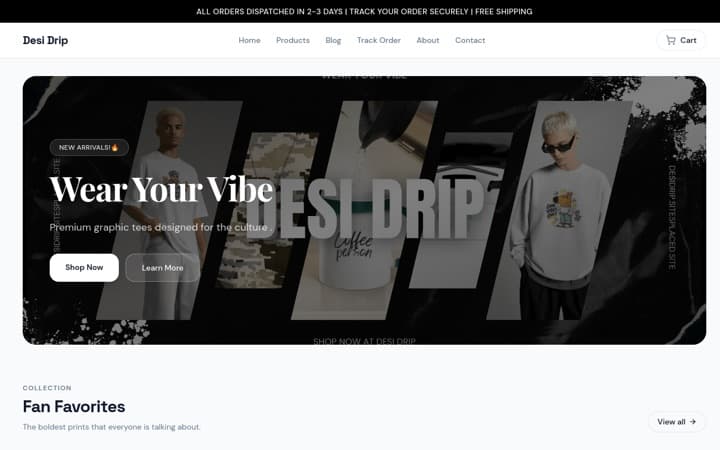
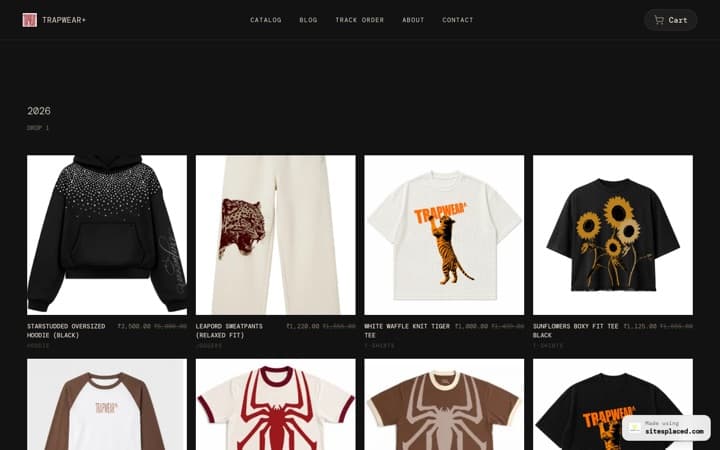
Key takeaway: your first drop is a test, so make it cheap to be wrong. One product type, three to five designs, and either print-on-demand or a run small enough that unsold pieces won’t hurt. A free SitesPlaced store connects to Qikink and Printify at no cost, shows the sizes still in stock on every card with the Clothing Store template, and takes UPI, COD and WhatsApp orders at 0% commission.
TL;DR
- • Start narrow: one product (oversized tees, co-ord sets, kurtas), three to five designs.
- • Sourcing: print-on-demand to test, a manufacturer for fabric and fit you control.
- • Size chart: garment measurements in inches and cm, plus the model’s height and size.
- • Returns: size exchanges on unworn pieces; refunds for damage; say who pays the pickup.
- • Photos: daylight, a plain wall, a friend as model, the same framing for every product.
- • Store: the free Clothing Store template, with a size chart popup and per-size stock.
1. Choose a narrow first drop
A “drop” is a small batch of new designs released together. For a first drop, choose one product you understand as a buyer, for example oversized t-shirts, cotton co-ord sets or everyday kurtas, and three to five designs in four or five sizes. A narrow range is cheaper to make, easier to photograph consistently, and tells people what your label is.
Before you print a single label, check that your brand name isn’t already a registered trademark, using the public search on the government’s IP India website. Changing a name after the labels, bags and Instagram handle are done is expensive.
2. Sourcing: print-on-demand or a manufacturer
| Route | Money upfront | Cost per piece | Control | Unsold stock | Best for |
|---|---|---|---|---|---|
| Print-on-demand (Qikink, Printify) | Nothing; you pay per order | Highest | Low: their blank garments and print methods | None | Testing designs, graphic tees, merch |
| Small run with a manufacturer | Samples plus the minimum order | Lower | High: your fabric, fit and labels | You own what doesn’t sell | A label built on fit and fabric |
| Buying ready stock | The pieces you buy | Medium | Medium: you choose, you don’t design | Some | Testing demand before designing your own |
Print-on-demand means the printer keeps blank garments and prints yours only when an order comes in, then ships it to your buyer. SitesPlaced connects to Qikink, which prints and ships within India, and Printify, both free on every plan and billed to your own account with them. You link each product (and each size and colour) to the printer’s catalogue, and orders are sent across for printing. See how to connect Qikink to your store and our print-on-demand store guide.
A manufacturer makes your design in your fabric. Words you’ll hear: the MOQ (minimum order quantity, the fewest pieces they’ll make per design or colour), the sample (one piece made before the full run; always pay for one), the tech pack (a sheet with your measurements per size, fabric, print position and labels) and GSM (fabric weight in grams per square metre; a higher number is a thicker fabric). India’s garment clusters, such as Tiruppur for knitwear and t-shirts, Ludhiana for winterwear, Surat for synthetic fabrics and Jaipur for block prints, are good places to start asking.
Here is a worked budget for a small first run. Every number is an example; get real quotes, because prices vary a lot by fabric, print method and quantity.
| Example first drop | Cost |
|---|---|
| 90 printed t-shirts (3 designs × 30, sizes S to XL) at ₹300 each | ₹27,000 |
| 3 samples at ₹500 each | ₹1,500 |
| Neck labels and hang tags | ₹2,000 |
| Mailer bags and thank-you cards | ₹1,500 |
| Photoshoot (a friend, your phone, daylight) | ₹0 to ₹2,000 |
| First drop, total | About ₹32,000 to ₹34,000 |
3. Paperwork, briefly
Selling clothes generally doesn’t need a special licence. You need PAN and a bank account to open a payment gateway account; GST depends on your yearly sales and whether you ship across state lines. We cover the details in do I need a licence to sell clothes on Instagram and do you need GST to sell online. This is general information, not tax advice; confirm your case with a CA.
4. A size chart buyers can trust
“Will it fit?” is the question to answer before anyone buys. Answer it with numbers:
- Measure the garment laid flat, one piece per size: chest (armpit to armpit, then double it), length (top of the shoulder to the hem), shoulder width and sleeve length.
- Give inches and centimetres, and say clearly these are garment measurements, not body measurements.
- Name the fit: regular, relaxed or oversized. “Oversized” with no numbers causes exchanges.
- Caption the model: “Model is 5’10”, wearing L.” It’s the fastest way for a buyer to picture their size.
On SitesPlaced, add the chart as the product’s info image; it opens as a “Size Chart” popup on the product page. Track stock per size, and sold-out sizes can’t be ordered.
5. Returns, exchanges and COD
- Size exchanges: for example, within 7 days of delivery, unworn, tags on. Say whether you or the buyer pays for the return pickup.
- Damaged or wrong item: a replacement or refund, with photos sent within a day or two of delivery.
- Print-on-demand pieces: the printer usually won’t take back a wrong size. Say so plainly and point buyers to the size chart before they order.
- Cash on delivery: COD means the buyer pays the courier on arrival. If they refuse the parcel, it comes back to you (couriers call this RTO, return to origin) and you usually pay for both journeys. Add a small COD charge so paying online looks better, and confirm COD orders on WhatsApp before you ship.
The free return policy generator writes a first draft, and how to reduce RTO and fake COD orders has more on COD.
6. A photoshoot on a budget
You need a phone, daylight and a friend who will stand still. Shoot in open shade or next to a big window, not in direct sun. Steam every piece first. Use one plain wall for the whole drop so your store looks like one brand. For each design:
- • Front, back and side on the model, framed the same way every time.
- • A close-up of the print, embroidery or fabric texture.
- • A flat lay on a clean surface.
- • A 10-second video of the fit as the model moves, uploaded to the product or linked as an Instagram Reel.
If your photos come out flat, AI product photos for small businesses covers what AI tools can and can’t fix.
7. Launch the drop and get the first orders
- Tease before launch: fabric close-ups, the sampling process, a date. Instagram’s countdown sticker lets people set a reminder.
- Launch with one link: the store link in your bio and in story link stickers pointing to each design.
- Reward the first buyers: a first-order coupon code (coupons are free on SitesPlaced).
- Use WhatsApp: a broadcast to friends, family and classmates with the drop link, and your status on launch day.
- Restock what sells: reorder the sizes and designs that sold out; drop the rest.
8. Set up your free clothing store
- Pick the Clothing Store template. The Clothing Store uses edge-to-edge photos, shows the sizes still in stock on every product card, adds a save-% tag to anything on sale, and has a delivery and COD line under the buy button. For a side-by-side look at the other fashion layouts, read the best clothing store website templates. Changing template later means making a new store, so choose once.
- Add products with sizes (and colours) as options, stock per size, the size chart as the info image, and fabric, fit and care in the description.
- Connect Qikink or Printify if you use print-on-demand, and map each size and colour.
- Set checkout: your own Razorpay, PhonePe or Cashfree account for UPI and cards, COD with an optional charge, and WhatsApp checkout.
- Set delivery: a flat charge and free delivery above an amount. Connect Shiprocket or Shipmozo (free) if you ship your own stock.
- Publish on yourlabel.sitesplaced.site and put it everywhere.
9. When to upgrade
A clothing label is a brand, and a brand wants its own name in the address bar. Starter (₹199/month, or ₹1,990/year) adds your own domain such as yourlabel.com, removes the SitesPlaced badge, adds store analytics and Meta Pixel with Conversions API (so Instagram ads can see which ads led to sales), and makes your store’s pages answer about 4× faster than on the free plan. In our measurements on live paid stores on 28 September 2026, a page answered in about 75 ms instead of about 330 ms; “answer” means how quickly the page starts arriving, before the photos load, not the full page load. Growth (₹499/month) adds reviews with Google star ratings and Buy X Get Y offers such as “Buy 2 tees, get 1 free”. The code FREE7 gives 7 days free on either when you set up autopay; cancel before the first charge and you pay nothing.
Frequently asked questions
How much money do I need to start a clothing brand in India?
With print-on-demand you can start with almost nothing upfront, because the printer makes each piece only after it sells. A small first run with a manufacturer costs more: as a worked example, 90 t-shirts at ₹300 each plus samples, labels and packing comes to about ₹32,000 to ₹34,000. Your real numbers depend on the fabric, print and quantities you choose.
Should I use print-on-demand or a manufacturer?
Use print-on-demand to test designs without risk; you earn less per piece and can’t control the fabric. Use a small manufacturer run once you know what sells and want your own fabric, fit and labels. You can start with the first and move your best-selling designs to the second.
Do I need a licence or GST to sell clothes online?
Selling clothes generally doesn’t need a special trade licence. GST registration depends on your yearly sales and on whether you ship to other states, so confirm your case with a CA. A trademark for your brand name is optional but worth checking before you print labels. Our post on licences for selling clothes on Instagram covers this in more detail.
How do I make a size chart for my clothing store?
Lay one piece of each size flat and measure chest (armpit to armpit, then double it), length (top of the shoulder to the hem), shoulder width and sleeve length. Give them in inches and centimetres, and say they are garment measurements, not body measurements. On SitesPlaced, add the chart as the product’s info image and it shows as a Size Chart popup.
Should I accept returns on clothes?
Offer size exchanges on unworn pieces with tags for a short window, and refunds or replacements for damaged or wrong items. Say who pays for the return pickup. For print-on-demand pieces, the printer usually won’t take back a wrong size, so ask buyers to check the size chart and say plainly what you can offer.
Does SitesPlaced connect to Qikink and Printify?
Yes. Both connect on every plan, including the free one, using your own Qikink or Printify account. Qikink prints and ships within India. You link each product to your print-on-demand catalogue and orders are sent across for printing. SitesPlaced takes 0% commission; the printer bills your own account.
Launch your first drop on a free store
The Clothing Store template, Qikink and Printify, UPI, COD and WhatsApp checkout: all free, at 0% commission.