


The best platform to sell online this Diwali — 5 options compared
A small seller in India has five real ways to take Diwali orders: Instagram DMs, WhatsApp only, a marketplace, a paid store builder, or a free store. If you can already reach buyers, through followers, contacts or a shop counter, a free store on SitesPlaced is the best of the five. It costs ₹0, takes 0% commission, and can be live today. If nobody knows you yet, a marketplace is the honest answer for being found, with your own store beside it.
Key takeaway: DMs and WhatsApp cost nothing but lose orders when the rush arrives. A marketplace brings strangers but takes a cut and keeps the customer. A paid builder works, but it is more to set up and more to pay for than a first festive season needs. A free SitesPlaced store gives you a proper order flow (stock, payment, address, order list) at ₹0, and you bring the visitors. Diwali is on Sunday 8 November 2026, so choose this week.
TL;DR
- • Instagram DMs: good for questions, weak for orders. Fine at five orders a day, painful at fifty.
- • WhatsApp only: personal and trusted, but every order is a chat you must finish by hand.
- • Marketplace: real traffic from people who don’t know you. You pay commission and don’t get the customer.
- • Paid store builder: capable, but more to set up and pay for than six festive weeks need.
- • Free store on SitesPlaced: ₹0, 0% commission, UPI, COD and WhatsApp checkout built in. You bring the traffic.
The five options in one table
| Instagram DMs | WhatsApp only | A marketplace | A paid store builder | A free store on SitesPlaced | |
|---|---|---|---|---|---|
| Cost to start | ₹0 | ₹0 | Set by the marketplace: commission and fees on each sale | A monthly plan. Shopify’s India page listed Basic at ₹1,994/month billed monthly (September 2026) | ₹0, with 0% commission |
| Time to start | Minutes. You may be doing it already | Minutes | Depends on seller sign-up, documents and listing approval | Depends on how much you set up yourself: theme, payments, shipping, apps | The same day: about a minute with the importer, 10 to 20 minutes from a template |
| Who owns the customer | You have the chat, but only inside Instagram | You. Their number is in your phone | The marketplace | You | You. Name, phone and address come with every order |
| Payments | A UPI ID or QR sent in the chat, then a screenshot to check | A UPI ID or QR sent in the chat, then a screenshot to check | Collected by the marketplace and paid out on its own cycle | Through a gateway you connect. Shopify listed a 2% fee on Basic for third-party payment providers (September 2026) | UPI, cards and net banking through your own Razorpay, PhonePe or Cashfree account; direct UPI or bank transfer |
| Cash on delivery | Only if you arrange it with a courier and track it by hand | Only if you arrange it with a courier and track it by hand | Usually handled by the marketplace | Available. On Shopify, a COD charge or checks on COD orders usually come from apps | Built in, with an optional COD charge and a limit on unpaid COD orders per buyer |
| What breaks under festive volume | Missed messages, screenshots to match, no stock count, no order list | The same problems in a different app: every order is a conversation | Your margin, and your say over returns, packaging and the customer | Your time and the bill: a theme and apps to set up, and a plan that runs whether orders come or not | Nothing in the order flow, but you must bring the visitors yourself |
Shopify figures are from its India pricing page as of September 2026. The same page listed a 3-day trial and an introductory offer of ₹20/month for the first 3 months. Prices and offers change, so check the provider’s own page. Marketplace fees differ by marketplace and category; check the fee page for yours. SitesPlaced figures are our published prices.
1. Instagram DMs
What it does well. It is free, you already know how to use it, and buyers like talking to a person. For custom work, such as a name on a diya set or a hamper made to a budget, a chat is the right place to agree the details.
Where it breaks. Every order needs you: to reply, to quote, to send a UPI ID, to check a screenshot, to ask for the address. When a reel does well, messages arrive faster than you can answer, and nothing in the chat knows how many pieces you have left. We go through each leak, and the one-evening fix, in taking Diwali orders in Instagram DMs.
2. WhatsApp only
What it does well. You own the contact. Buyers trust a number they can call. The WhatsApp Business app has a catalogue, quick replies and labels, and status updates reach people who have saved your number.
Where it breaks. It has the same problem as DMs: each order is a conversation. Payment is a screenshot, stock is in your head, and the order list is whatever you wrote down. A store with WhatsApp checkout keeps the chat and adds the record. The longer comparison is in WhatsApp vs a website for selling online.
3. A marketplace
What it does well. Traffic. Shoppers are already there, searching, with a checkout they trust, and festive sale events bring even more of them. If nobody knows your brand, this is the one option on the list that can put you in front of strangers this season.
Where it breaks. You pay commission and fees on each sale, the payout follows the marketplace’s cycle, and its rules decide returns and packaging. The buyer is the marketplace’s customer, so you cannot message them next Diwali. Getting approved and listed also takes time that is not in your hands. The Diwali version of this choice is in marketplace or your own store this Diwali.
4. A paid store builder
What it does well. Paid builders such as Shopify, Wix and Dukaan are proper store platforms. You own the customer, the checkout is yours, and the larger ones have big app stores for almost any need.
Where it breaks. For a first-time seller, the set-up and the running cost. A plan is billed whether orders come or not once any introductory offer ends. On Shopify, extras that Indian sellers expect, such as a COD charge or WhatsApp ordering, usually come from apps, and Basic lists a 2% fee on sales paid through a third-party payment provider. We work out a six-week season in do you need Shopify for a Diwali sale.
5. A free store on SitesPlaced
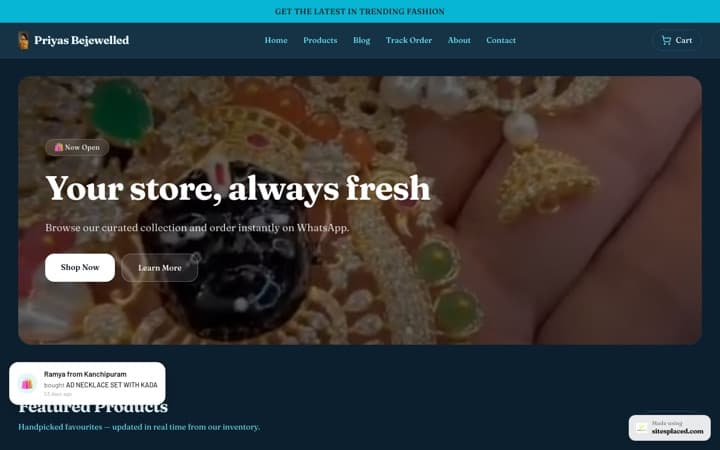
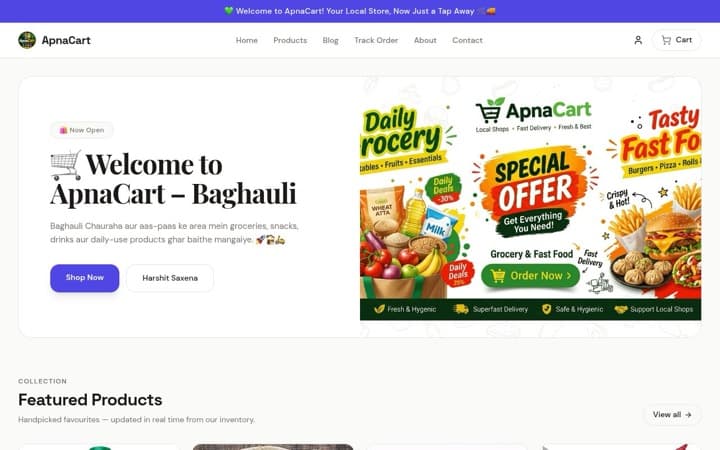
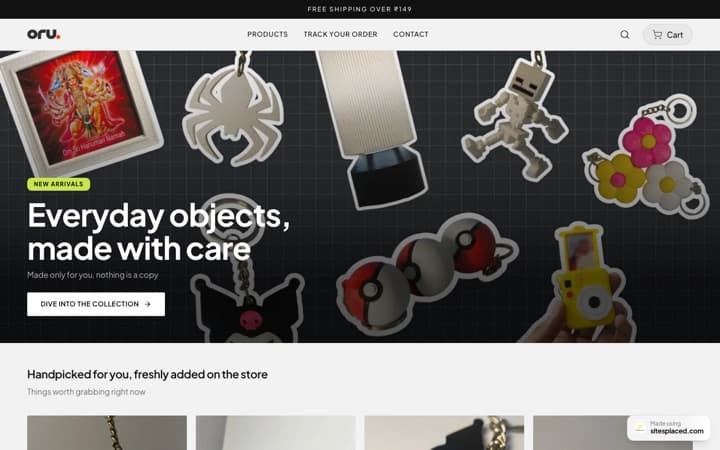
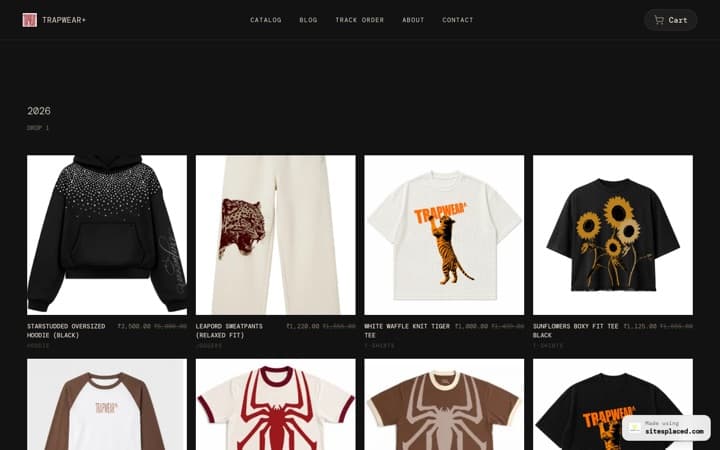
What it does well. It gives you the order flow of a paid builder at ₹0 and 0% commission. The free plan has unlimited products and orders, UPI, cards and net banking through your own Razorpay, PhonePe or Cashfree account, cash on delivery with an optional COD charge, WhatsApp checkout, coupons with an expiry date, the free-delivery bar, invoices, and Shiprocket and Shipmozo. For Diwali it also has a build-your-own hamper page, an announcement bar for your last order date, and pause ordering for the day you stop shipping.
Every order is saved to your Orders tab and emailed to you. Stock goes down when an order is placed, and a product with no stock left cannot be ordered.
Where it breaks. A store does not bring visitors by itself, so you need followers, contacts or walk-in customers to send to it. Delivery is one flat charge per store, with free delivery above a value you choose, and there is no way to block orders by pincode. The free store sits on a yourname.sitesplaced.site address with a small badge.
What paying adds. On every paid plan, from Starter at ₹199/month, you get your own domain, no badge, and store pages that answer about 4× faster than on the free plan: about 75 ms instead of about 330 ms, measured on live paid stores on 28 September 2026. “Answer” is the moment the page starts arriving on the phone, before the photos load. Growth at ₹499/month adds Buy X Get Y offers and the sales boosters. The code FREE7 gives 7 days free on either plan when you set up autopay; cancel before the first charge and you pay nothing. All eight reasons are in why open your Diwali store on SitesPlaced.
Which one should you pick?
| Your situation | Pick |
|---|---|
| You have followers, and DMs are already more than you can answer | A free store, with the link in your bio. Keep DMs for questions |
| You sell to people who have your number | A free store with WhatsApp checkout, shared on status and in chats |
| You have a shop with a counter and regular customers | A free store with a QR code at the counter |
| You have no audience and want strangers to find you | A marketplace for discovery, and your own store for everyone you can reach yourself |
| You cannot run without one particular app, or you need delivery rates by pincode | A paid builder that has it |
These options are not rivals. You can use three at once: Instagram and WhatsApp to be seen and to answer questions, and a store to take the order. A shop with a counter adds a printed QR code; that set-up is in a free Diwali website for your shop.
A worked example: one good reel
This is an example with round numbers, not a forecast. Say a reel of your ₹799 hamper does well and sixty people want one in the same evening.
- • In DMs or WhatsApp: sixty chats. Each needs a price, a UPI ID, a screenshot check and an address. If each takes four minutes, that is four hours, and buyers at the end of the queue are waiting for an answer while they look at other sellers.
- • With a store link: the sixty people tap the link and order by themselves. You have forty hampers, so stock reaches zero at forty and the product stops taking orders. You spend the evening packing.
The verdict
Keep Instagram and WhatsApp for what they are good at, which is being seen and being asked. Use a marketplace if you truly have no audience. For the order itself, open a free store on SitesPlaced: it costs nothing to try, it takes no cut, and it can be live before tonight’s story goes up. The week-by-week plan is on the Diwali hub.
Frequently asked questions
What is the best platform to sell online this Diwali?
For a small seller who can reach buyers on Instagram, WhatsApp or at a shop counter, a free store on SitesPlaced is the best option: ₹0 to open, 0% commission, live the same day, with UPI, cash on delivery, WhatsApp checkout, coupons and a hamper page included. If you have no audience at all, list on a marketplace for discovery and run your own store alongside it.
Is it too late to open an online store for Diwali 2026?
No. Diwali is on Sunday 8 November 2026 and a store can be live the same day you start. What takes longer is outside the store: stock, packaging, a payment gateway’s approval and your courier’s last pickup date. Start those first.
Can I keep selling in Instagram DMs and WhatsApp during Diwali?
Yes, for questions and custom requests. Move the order itself to a store link. In a rush, chats lose orders because messages are missed, payment screenshots have to be matched by hand, and nothing counts your stock. A store takes the order, the address and the payment while you are packing.
Should I sell on a marketplace or my own website for Diwali?
A marketplace brings shoppers who do not know you, and charges commission and fees for it. Your own store keeps the margin and the customer’s details, but you bring the visitors. You can do both: a few bestsellers on a marketplace, and your own store for followers, contacts and repeat buyers.
Do I need a paid store builder for a festive sale?
Usually not. A six-week season needs products, payments, cash on delivery, an offer, a last order date and shipping. All of those are on the SitesPlaced free plan. A paid builder makes sense when you need something specific it has, such as a particular app.
What does a SitesPlaced store cost during Diwali?
The free plan is ₹0 with 0% commission. Starter is ₹199/month and adds your own domain, no badge and store pages that answer about 4× faster than on the free plan. Growth is ₹499/month and adds Buy X Get Y offers and the sales boosters. The code FREE7 gives 7 days free on Starter or Growth when you set up autopay.
Take Diwali orders on a store of your own
Free to open and sell, 0% commission, with UPI, cash on delivery and WhatsApp checkout. Keep your DMs for questions.