


What real small online stores look like: data from 226 stores
By the SitesPlaced Founder · Published August 10, 2026
The typical small online store is far smaller and cheaper than the ecommerce industry talks about: it carries 6 products, sells them at a median ₹399, and puts a third of them on sale at a median 23% off. And the hardest step isn’t publishing — 93% of stores ever created went live, but 40% of published stores never stocked a single product. This isn’t a survey: it’s measured from every online store ever created on SitesPlaced, snapshot August 10, 2026.
published stores analyzed — 93% of the 243 ever created on the platform
products in the median stocked store; ~96% carry 15 or fewer
median product price; 61% of products are under ₹500
of published stores have zero products — the stocking cliff
Methodology (read this before quoting us)
We took a snapshot of the SitesPlaced database on August 10, 2026, covering every online store ever created on the platform: 243 stores, of which 226 are published (93%). Product, pricing and discount statistics cover the 136 published stores that have at least one product. Publish time is measured from a store’s creation timestamp to its last update — for a published store everything happened inside that window, so “published within 10 minutes” is an upper bound, not marketing rounding. All figures are anonymized aggregates: no individual seller, store or buyer is identifiable.
Honest limitations:this is a single-platform sample, and SitesPlaced’s audience is India-skewed, so prices and behaviors reflect Indian social-commerce sellers more than global ecommerce. The 40% empty-store rate likely includes some people who were only testing the builder, so treat it as an upper bound on genuine abandonment. And we deliberately publish no revenue, no order counts and no conversion rates— those are our sellers’ business, not ours to share.
Finding 1 — the stocking cliff: publishing is easy, stocking is the commitment
Of 243 stores ever created, 226 published — a 93% publish rate. Modern builders have genuinely solved the “going live” problem. But 40% of published stores contain zero products. The real filter between trying and selling isn’t design, hosting or checkout — it’s the unglamorous work of photographing, pricing and describing real items.
We’d rather report that honestly than pretend every published store is a business. The practical lesson for a new seller: add your first product beforeyou touch colors or fonts. A store with one real product and a default theme can take an order tonight; a beautiful empty store can’t. (What that first stocked store actually needs is a short list — see the features a beginner’s store needs.)
Finding 2 — micro-catalogs are the norm: sell 6 things, not 600
Among the 136 stocked live stores, the median catalog is 6 products(25th percentile: 1, 75th percentile: 7). The largest store lists 182 products — and it is a massive outlier. Here’s the full distribution:
| Catalog size | Stores | What it looks like |
|---|---|---|
| 1–3 products | 56 stores | The most common store: a handful of hero items |
| 4–6 products | 36 stores | The median store lives here |
| 7–15 products | 38 stores | A full shelf, still one person's workload |
| 16–50 products | 4 stores | Rare — serious catalog effort |
| 50+ products | 2 stores | Outliers (the largest lists 182) |
Roughly 96% of stocked stores carry 15 or fewer products. If you’re waiting to launch until your catalog feels “complete”, the data says you’re waiting for a standard that real sellers don’t hold themselves to. It also reframes the marketplace vs. own-website question: with six products, you don’t need infinite shelf space — you need a page you control.
Finding 3 — sub-₹500 is the sweet spot, and a third of products launch discounted
The median product costs ₹399, with the middle half of products priced between ₹250 and ₹850. 61% of all products are under ₹500, and 84% are under ₹1,000.That’s the impulse-friendly band of Indian social commerce — a price a buyer can say yes to from an Instagram story without a second opinion.
Discounting is common but not universal: 33% of products have a sale price set, with a median discount of 23%. For a third of products, the strike-through price is part of the launch playbook; the other two-thirds sell at sticker price.
Finding 4 — stores publish slower than websites (products are the reason)
36% of published stores went live within 10 minutes of creation, and 41% within an hour. Compare that with all site types on the platform — websites, portfolios and stores together — where 72% publish within 10 minutes. The gap is the catalog: a website’s content can be generated, but product photos and prices have to come from you. Stores are still fast — most of the hour is spent on products, not on the site.
Finding 5 — general + fashion dominate; food and niche retail follow
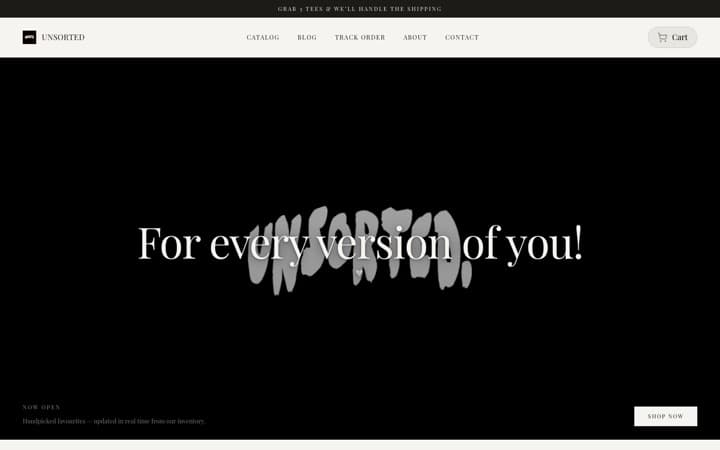
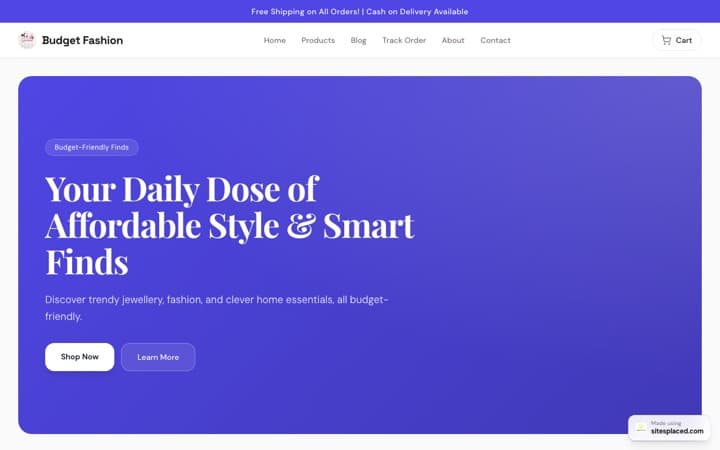
By store style, two choices tower over the rest: the general/default storefront (76 stores) and the fashion-boutique style (62). After those, the long tail is genuinely long — bakery, grocery, books and saree niches each account for only a handful of stores. Most sellers either want a neutral shop that fits anything, or a fashion look — the single biggest visual identity in small-store ecommerce.
What this means if you’re starting a store
Three data-backed rules. Start with 3–6 products— that’s a normal, launchable store, not a placeholder. Price inside the band your buyers already say yes to — under ₹500 is where 61% of real products sit. And stock before you style— the 40% who published empty stores prove that decorating is the comfortable way to avoid the real work. If you’re choosing where to build, our comparison of the best ecommerce website builders for India covers the store-specific trade-offs, and the easiest way to start selling online walks the first-day path. The checkout mechanics behind these stores — UPI, COD, WhatsApp and what they cost — are explained in how online checkout works for small businesses.
Frequently asked questions
How many products does a typical small online store have?
Six. Among the 136 stocked live stores in this study, the median store carries 6 products (25th percentile: 1, 75th percentile: 7), and about 96% carry 15 or fewer. Only two stores exceed 50 products, with the largest at 182. Real small stores are micro-catalogs, not mini-Amazons.
What do products in small online stores cost?
The median product costs ₹399, with the middle half of products priced between ₹250 and ₹850. 61% of all products are under ₹500 and 84% are under ₹1,000 — the impulse-friendly band of Indian social commerce, where a buyer can say yes without a family discussion.
How many online stores actually add products after publishing?
Fewer than you'd hope. In our data, 93% of stores ever created got published — but 40% of those published stores have zero products. Publishing takes minutes; stocking (photographing, pricing, describing real items) is the real commitment, and it's where most abandoned stores stall.
How long does it take to open an online store?
Longer than a plain website, but still fast: 36% of published stores went live within 10 minutes of creation and 41% within an hour. For comparison, 72% of all site types (websites, portfolios, stores) publish within 10 minutes — products are the extra work.
Do small online stores use discounts?
A third do. 33% of products in our data have a sale price set, with a median discount of 23%. Strike-through pricing is a launch tactic for a meaningful minority of products, not a universal one.
Cite or reuse this data
These statistics are original SitesPlaced platform data (snapshot August 10, 2026, anonymized aggregates). You are welcome to quote them with attribution and a link to this page — licensed CC BY 4.0. For press questions or the underlying aggregate tables, email admin@sitesplaced.com.
Open a 6-product store tonight
The data says small catalogs are normal. Add your first products, switch on checkout, publish free — and be on the right side of the stocking cliff.