


How to start an online thrift store business in India — sourcing, condition grading, one-of-one stock and returns
An online thrift store sells pre-loved clothes one piece at a time. Source from bale sellers, export-surplus traders and wardrobes you trust; wash and grade every piece honestly; photograph it flat and on a body with measurements; list each item with stock set to 1; and run drops on Instagram that link to your own store, so two people can never buy the same piece.
Key takeaway: thrift is a trust business. Nobody can touch the fabric, and every piece is different, so the whole store rests on honest grading, real measurements and a returns rule you actually keep. The operational trick is that every item is one of one: stock set to 1 on every listing, so the store says sold out before a second buyer pays. If you are starting a label with new clothes instead, read how to start a clothing brand online in India; this post is only about pre-loved.
TL;DR
- • Pick a lane: Y2K, oversized, formal, kids, branded. Not all of them.
- • Source small: inspect before you buy a bale; expect a share you can’t sell; price the sellable pieces to cover the rest.
- • Grade in four levels with every flaw written and photographed. Measurements in centimetres, always.
- • Stock = 1 on every item, so it shows sold out the moment it is bought.
- • Returns: final sale except not-as-described, written on every page.
- • Sell: drops on Instagram, buying on your own free store, prepaid or COD with a charge.
1. What “thrift” means here, and picking a lane
Online, “thrift” covers several things: genuinely pre-loved clothes, vintage pieces from decades ago, export surplus and overruns (new, unworn, often without the brand tag), and deadstock from boutiques. Be clear which you sell; calling new surplus “vintage” or calling a worn piece “new” is how a store loses trust in one order.
Then pick a lane. A store that sells oversized streetwear, one that sells formal shirts for first jobs, and one that sells kids’ clothes have three different buyers. A mixed feed looks like a jumble; a lane looks like taste. The cheapest way to find yours is to sell what you would wear, in the sizes you can measure on yourself or a friend.
2. Sourcing
Thrift stock comes from a few places, and each has a catch:
- Bale sellers. Wholesalers in big cities sell mixed lots by the kilo, often sealed. A bale is a gamble: some pieces are great, some are unsellable. Ask to open one or inspect a sample lot before buying, ask where the stock comes from, and walk away if the seller can’t say. Prices change with season and demand, so visit rather than trusting a figure you read.
- Export surplus and overruns. Traders near garment hubs sell new pieces that didn’t ship. Good for basics; check for cut labels, small defects and uneven sizing.
- Wardrobes. Your own, your family’s, and friends’ on consignment (you sell, they get a share). Smallest volume, best condition, and the only source where you know the history.
- Closing boutiques. Occasional, but good for a drop of new-with-tags pieces at a fair price.
Whatever the source, start with one small lot. Count how many pieces you can actually sell, and price those to cover the ones you can’t. In the worked example below, three in ten pieces don’t sell, so the seven that do carry the cost of ten.
3. Condition grading, with the words to use
Grading is the heart of a thrift store. Use four grades, define them once on your About or FAQ page, and use the same words on every listing.
| Grade | What it means | How to write it |
|---|---|---|
| Like new | No visible wear, tags may be attached, no repairs | “Like new, worn once at most” |
| Excellent | Light wear only visible up close; no stains, holes or pilling | “Excellent, light wear, no flaws” |
| Good | Visible but honest wear: slight fading, minor pilling, a small mended seam | “Good, light fading at the collar, see photo 4” |
| Fair | Noticeable flaws, priced for them: a mark, a missing button, a repair | “Fair, small mark on the hem, photographed” |
- Measure, don’t trust the tag. A “medium” from one brand is a “large” from another. Lay the piece flat and record pit to pit, length, waist and inseam in centimetres, and put them in every description.
- Every flaw gets a sentence and a photo. “Small mark on the back hem, see photo 4” sells more than silence, because the buyer knows you looked.
- Wash and steam everything before photographing. Remove lint, replace missing buttons, mend small seams, and never list a piece that smells.
- Name the brand only if the label is there and you believe it is real. “Unbranded” is fine; a wrong brand name is a complaint.
4. Photos that replace touching the fabric
One-of-one means every piece gets its own shoot, so make the routine fast and the same every time: a plain wall or sheet, daylight, phone on a stand.
- Flat lay or hanger front and back, full piece in frame.
- On a body if you can, with the model’s height and the size they usually wear in the caption. A mannequin works too.
- Close-ups of the fabric, the label and every flaw you wrote about.
- True colour. No warm filters. A mismatched shade is the most common reason a thrift buyer is unhappy.
- Same crop, same background for every listing, so the store grid looks like a shop and not a camera roll.
The camera side is covered in how to take better product photos.
5. One-of-one stock: set stock to 1
The thrift seller’s nightmare is two buyers paying for the same jacket. On a SitesPlaced store the fix is one field: set each listing’s stock to 1. A tracked product whose stock reaches 0 shows as sold out on the storefront and cannot be added to the cart, so the second buyer sees “Sold out” instead of a payment screen. It also ends the “is this still available?” DM, because the page answers it.
- Leave sold items visible for a while rather than deleting them; a grid of sold pieces shows new visitors that the store moves. Archive them later.
- Run drops. Upload a batch, announce the time in the announcement bar and on Instagram stories, and publish the batch together. Buyers who know the time come back for it.
- Categorise by size as well as type. A thrift buyer browses “M” first and “jackets” second.
- Wishlist. Buyers can save a piece for payday; on a one-of-one store that also tells them to hurry.
The wider stock routine is in inventory management for small sellers.
6. Pricing, with a worked example
Price from what each sellable piece really costs you, including the unsellable share and the twenty minutes each piece needs. Example numbers; use your own.
| Example: a shirt from a bale | Amount |
|---|---|
| Share of a ₹3,000 bale with 20 pieces | ₹150 |
| Add the unsellable share (3 in 10 don’t sell, so 7 pay for 10) | ₹65 |
| Wash, steam, small repair | ₹20 |
| Mailer bag, tissue, thank-you card | ₹25 |
| Payment fee (example 2% on ₹499) | ₹10 |
| Your time: 20 minutes to grade, measure, shoot, list and pack, at ₹150 an hour | ₹50 |
| Total cost | ₹320 |
| Price (courier charged separately) | ₹499 |
| Left for returns, photos and growth | ₹179 |
₹179 on a ₹499 shirt is the basics end of thrift. A branded or vintage piece bought for ₹400 and sold for ₹1,299 leaves far more for the same twenty minutes, which is why experienced sellers hunt for those pieces and sell basics in bundles (“three tees for ₹999”). Round to the ₹299, ₹499, ₹799, ₹1,299 steps buyers compare in. The free product pricing calculator runs the numbers with yours.
7. Returns, COD and the policy that holds
A one-of-one piece that comes back has lost its drop, its moment and often its condition. So many thrift stores are final sale, with a replacement or refund only if the item was not as described or a flaw was not disclosed. Some offer a 48-hour exchange for store credit. Either is fair if it is written before the buyer pays:
- On every product page, one line: “Final sale. Replacement or refund only if not as described.”
- In your Return Policy page, which is free on every SitesPlaced store. The free return policy generator drafts it, and our return and refund policy template explains each clause.
- Cash on delivery is risky for one-of-one: a refused parcel ties the piece up for weeks and costs you the courier both ways. Go prepaid only, or allow COD with an extra COD charge on lower-priced pieces. See how to reduce RTO and fake COD orders.
Paperwork is light: GST depends on your yearly sales and whether you ship to other states (see do you need GST to sell online in India and confirm with a CA), and you should always be able to say where a lot came from.
8. Instagram shows the drop, the store sells it
Thrift lives on Instagram, and that is where you post: try-on reels, flat-lay carousels, a countdown story before each drop. But selling in DMs breaks the one-of-one rule, because three people ask for the same jacket and you pick one by typing speed. The store fixes it: every piece has a page with its grade, measurements, flaws and a buy button, stock is 1, and the first to pay gets it.
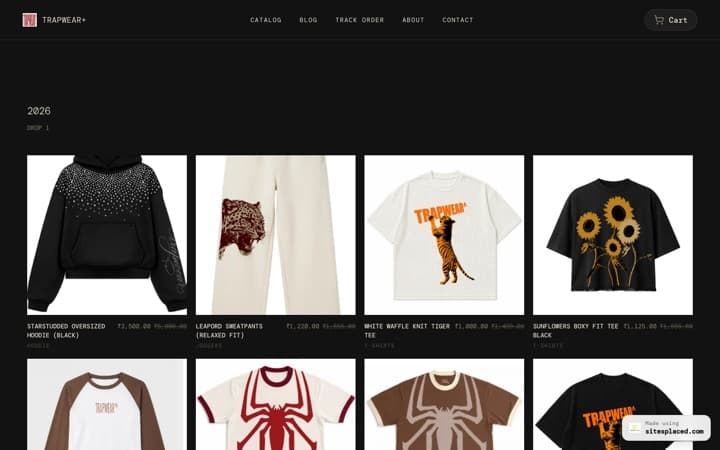
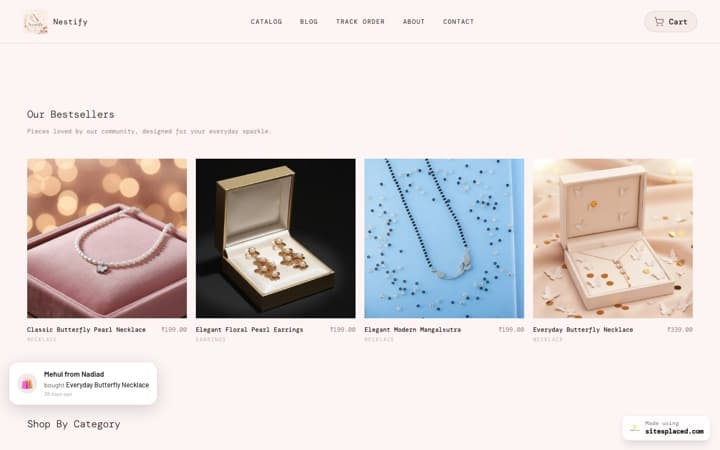
- Pick the Clothing Store template. The free Clothing Store has big photos, sizes on the card and very little text. The Simple Fashion Store is plainer, in black and white, but lacks quick add, the buy bar and the delivery line. Changing template later means making a new store.
- Add each piece with grade, measurements, flaws, fabric and brand (if real) in the description, and stock set to 1.
- Set checkout: online payment through your own Razorpay, PhonePe or Cashfree account at 0% SitesPlaced commission, UPI directly, COD only with an extra charge if at all, and WhatsApp checkout for buyers who want to ask about fit first.
- Set delivery: a flat charge, free delivery above an amount that nudges a second piece into the cart, shown as a progress bar.
- Write the policy pages and link them in the footer.
- Publish at yourbrand.sitesplaced.site, put the link in your bio, and point every drop story at it.
Turning your Instagram into a website covers the bio link and the handover from DMs, and the best clothing store website templates compares the layouts.
9. When to pay for a plan
The free plan has no commission and no limit on products or orders, so a hundred one-of-one listings cost nothing. When you want yourbrand.com, no SitesPlaced badge and store analytics (which tell you which drop got the taps), Starter is ₹199 for 30 days, paid once with no autopay, or ₹1,990 for a year. Paid plans also make your store’s pages answer about 4× faster than on the free plan: measured on live paid stores on 28 September 2026, a page answered in about 75 ms instead of about 330 ms, which matters when a drop sends fifty people to the same page at once. Growth at ₹499 a month adds product reviews with Google stars and the sales boosters. With autopay, the code FREE7 gives 7 days free on either plan; cancel before the first charge and pay nothing.
Frequently asked questions
Is an online thrift store profitable in India?
It can be, with the right sourcing and honest pricing. Stock is cheap per piece, but every piece is one of one, so the time to wash, grade, measure, photograph and list cannot be spread across a hundred units. In our worked example a piece from a bale cost about ₹320 all-in, including the unsellable share and 20 minutes of work, and sold at ₹499, leaving about ₹179. Branded or vintage finds leave more; basics leave less.
Where do thrift stores in India source clothes?
From wholesale bale sellers who sell mixed lots by the kilo, export-surplus and overrun traders, boutiques that are closing down, and people’s own wardrobes, including friends on consignment. Prices change and sealed bales are a gamble, so inspect a sample first, ask where the lot came from, and expect a share of pieces you cannot sell. Start with one small lot and learn before you buy bigger.
How do I grade the condition of thrifted clothes?
Use four grades and define them in writing: like new, excellent, good and fair. Describe every flaw in words and photograph it, add measurements in centimetres because brand sizes vary, and never round up a grade. Honest grading is what makes a thrift store trusted enough for a second order.
Should an online thrift store accept returns?
Many thrift stores are final sale, with a replacement or refund only if the item is not as described or a flaw was not disclosed. Some offer a short exchange window. Whatever you choose, write it on every product page and in the Return Policy page, and let buyers pay a little less for the certainty. The return policy generator drafts the wording for you.
How do I stop two people buying the same item?
Set stock to 1 on every listing. On a SitesPlaced store a tracked product shows as sold out the moment its stock reaches 0 and cannot be added to the cart, so the second buyer sees sold out instead of paying for a piece you no longer have. This also ends the “is this still available?” DMs.
Should I accept cash on delivery for thrifted clothes?
Carefully. A refused COD parcel ties up a one-of-one piece for weeks and costs you the courier both ways. Many thrift sellers go prepaid only, or allow COD with an extra COD charge and only on lower-priced pieces. Online payment through your own Razorpay, PhonePe or Cashfree account and UPI are both free on a SitesPlaced store.
Do I need a licence to sell second-hand clothes online?
We are not aware of a special licence for selling pre-loved clothes within India, but the usual rules for online sellers apply: GST depends on your yearly sales and whether you ship to other states, and you should be able to say where your stock came from. Confirm your case with a CA before you start.
Which SitesPlaced template suits a thrift store?
The free Clothing Store template, built for everyday clothing with big photos, sizes on the card and very little text, suits most thrift stores. The Simple Fashion Store is plainer, in black and white, but does not have quick add, the buy bar or the delivery line under the buy button. Changing template later means making a new store.
Open a free thrift store today
Stock set to 1, policy pages, the wishlist and the announcement bar for drops are all on the free plan, with 0% commission. Starter is ₹199 once for 30 days, no autopay; FREE7 gives 7 days free with autopay.