


How to start a resin art business from home in India — materials, safety, curing, pricing and shipping fragile pieces
A resin art business from home needs a ventilated corner, epoxy resin and hardener, silicone moulds, pigments, gloves and a mask, and patience, because every piece cures for a day or more before it can be finished and shipped. Start with coasters, keychains and small trays, price for materials plus your active time plus packaging, and sell from your own store so custom orders arrive with the details attached.
Key takeaway: resin is cheap per piece and slow per piece. The money is made by pricing your active hours properly, owning enough moulds to pour several sets while others cure, and selling custom work such as preserved wedding flowers, where the price reflects the meaning, not the grams of resin. Shipping is the part that breaks new sellers, literally, so test your packaging before your first order. For the general craft-selling steps (paperwork, payments, first orders), see how to sell handmade crafts online in India; this post goes deep on resin only.
TL;DR
- • Start with: coasters, keychains, bookmarks, one tray mould. Add preserved flowers once your pours are clean.
- • Kit: roughly ₹4,000 to ₹6,000 as an example budget, safety gear included.
- • Safety: open window plus a fan, nitrile gloves, glasses, a mask suited to resin, no food nearby, read your brand’s safety sheet.
- • Curing: about a day to demould, several days to full hardness, slower in winter. Rough ranges; your brand’s instructions win.
- • Pricing: materials + mould wear + packaging + fee + your active hours, then a margin for failed pours.
- • Shipping: wrap each piece, double-box, test on yourself first, photograph before sealing.
1. What sells, and when
Resin can become almost anything, which is the trap. Pick three or four products you can make consistently and photograph well. The table shows the common ones and why they work.
| Product | Why it sells | When |
|---|---|---|
| Coaster sets (4 or 6) | Small, quick to pour, easy to gift, easy to ship | All year; gifting peaks |
| Keychains and bookmarks | Cheapest to make, good add-on in the cart, personalised with initials | All year |
| Trays and cheese boards | Higher price per piece, shows off technique | Diwali to New Year gifting |
| Preserved flowers (varmala, bouquets) | Custom, emotional, priced well above material cost | Wedding season, November to February |
| Name plates and clocks | Housewarming gifts, custom text | All year |
| Small jewellery and studs | Light to ship, bought on impulse | All year |
Preserved flowers deserve a special mention. Couples want their varmala or bouquet kept in a frame, tray or set of coasters, and the wedding season, roughly November to February, brings a steady run of these orders. They are custom, emotional, and priced far above the resin inside them, which makes them the best product many resin sellers have. They also need the flowers to arrive dried and intact, so write clear instructions for buyers on how to send them.
2. Materials: an example starter kit
Prices vary by brand, city and the shop you buy from, so treat these as example figures and check before buying. Buy a 1 kg kit of resin and hardener first rather than 5 kg; you will waste some learning ratios, and resin has a shelf life.
| Item | Example cost |
|---|---|
| Epoxy resin and hardener (1 kg kit) | ₹1,200 |
| Silicone moulds: coasters, keychains, one tray | ₹900 |
| Pigments, mica powders, alcohol inks | ₹600 |
| Dried flowers, gold flakes, glitter | ₹400 |
| Nitrile gloves, mask suited to resin fumes, safety glasses | ₹700 |
| Mixing cups, sticks, silicone mat, heat gun or lighter | ₹600 |
| Sandpaper, polish, keychain hardware | ₹400 |
| Example starter total | ₹4,800 |
Choose a resin meant for the depth you pour: coasters and keychains need a “coating” or “art” resin; a thick tray or a flower block needs a “deep pour” or “casting” resin, which cures slower and clearer. Using the wrong one is the most common reason for cloudy, bubbly or soft pieces. Buy two or three of your bestselling mould rather than one; moulds, not demand, are what limit how many pieces you make a week.
3. Safety, in plain words
Uncured resin and hardener are chemicals. They can irritate skin and eyes, and mixing them gives off fumes. This is not a reason to avoid resin; it is a reason to set up properly once and work the same way every time.
- Ventilation. Work by an open window with a fan pulling air out of the room, not blowing it around. A balcony or a room you can close off from the rest of the house is ideal.
- Gloves and glasses. Nitrile gloves, changed when they get resin on them, and safety glasses. Resin on skin should be wiped off at once with a cloth and then washed with soap and water, following your brand’s instructions.
- A mask suited to resin fumes. A cloth or surgical mask does not filter fumes. Check what the mask packaging says it protects against.
- Keep it separate. No food or drink in the workspace, dedicated cups and tools, and the room closed to children and pets while resin is wet.
- Read the safety data sheet. Every brand publishes one. It tells you storage, first aid and disposal for that product. Follow it over anything in this post.
- Cover surfaces with a silicone mat or plastic sheet, and have paper towels and isopropyl alcohol ready for spills, used as your brand’s instructions allow.
4. Curing time, and why it decides your capacity
Curing is the chemical hardening of the resin after you pour it. It cannot be rushed, and it is the reason a resin business runs on a calendar rather than a clock. The ranges below are rough, for standard room temperature. Thick pours, cold rooms and humidity all slow curing; a winter pour in a north Indian city can take noticeably longer than the same pour in May.
| Stage | Rough range |
|---|---|
| Surface no longer tacky | about 12 to 24 hours |
| Firm enough to take out of the mould | about 24 to 48 hours |
| Fully hard, safe to sand, pack and ship | about 3 to 7 days |
Your brand’s instructions always win over this table. What matters for the business: a set poured on Monday ships at the earliest on Thursday, and more safely the following week. So your lead time on made-to-order pieces should be a week or more plus courier, and you should always have a few finished sets in stock for buyers who won’t wait.
5. Pricing: a worked example for a coaster set
Price from cost, including your active hours (pouring, demoulding, sanding, finishing, photographing and packing), not the curing hours when the piece sits on a shelf. These are example numbers; use your own.
| Example: set of 4 coasters with dried flowers | Amount |
|---|---|
| Resin and hardener used (about 200 g) | ₹250 |
| Pigment, flowers, gold flakes | ₹60 |
| Share of mould wear and tool replacement | ₹30 |
| Gloves, cups, sticks for this pour | ₹30 |
| Sanding and polish | ₹20 |
| Box, bubble wrap, corner protection | ₹70 |
| Payment fee (example 2% on ₹1,199) | ₹24 |
| Your active time: 1.5 hours at ₹200 | ₹300 |
| Total cost | ₹784 |
| Price | ₹1,199 |
| Left for failed pours, photos and growth | ₹415 |
About ₹415 left per set sounds comfortable until a pour fails. If one set in six comes out cloudy or with a stuck flower, that ₹415 is paying for the wasted ₹300 of materials too. Price at ₹999 and the margin for mistakes almost disappears; price at ₹1,199 and it survives. For custom preserved-flower pieces, add the consultation and the care of someone’s wedding flowers to the time, and price accordingly; buyers understand that a varmala frame is not a coaster.
Sell keychains and bookmarks as add-ons rather than standalone products; alone they barely cover the courier, but in a cart with a coaster set they add margin at no extra shipping cost. The free product pricing calculator runs these numbers with yours.
6. Shipping fragile pieces across India
Resin is hard but it chips at corners and cracks when dropped flat. Indian parcels are thrown, stacked and left in the sun. Pack for that, not for the courier’s advertised care.
- Wrap each piece in bubble wrap, so pieces never touch each other. Put corner protectors or folded card on trays.
- Double-box. The wrapped pieces go in a box with filler so nothing moves when you shake it, and that box goes inside a slightly larger one with more filler.
- Test on yourself. Post a packed set to your own address or a friend in another city before your first real order. If it arrives whole, keep that packing exactly.
- Photograph the packed parcel before sealing. It settles most “arrived broken” disputes and is useful for any courier claim.
- Choose the courier through an aggregator. Shiprocket and Shipmozo connect to a SitesPlaced store free, let you compare couriers per parcel and print labels. Ask them what cover they offer for breakage.
- Charge for shipping as a flat rate with free delivery above an amount, or build it into the price. A ₹70 box and ₹90 courier on a ₹499 keychain order is a loss, which is another reason to sell keychains as add-ons.
The day-to-day of booking, labels and returned parcels is in how to ship orders from home in India, and the charging decision in how to set shipping charges for an online store.
7. Custom orders without the back-and-forth
Most resin orders are a little custom: a name on a keychain, a colour choice, a photo of the flowers to preserve. On WhatsApp those details get lost. On a SitesPlaced store, personalisation is set per product on the free plan: a text note (“Name or initials”), a photo upload (“A photo of your bouquet”) and paid extras (a gift box, a stand, a second coaster) that the buyer ticks in the cart. The details travel with the order, so you make the right thing the first time.
- Lead time: write it in the product description and in the announcement bar (“Custom pieces ship in 10 to 14 days”). The delivery line under the buy button has a field for when you dispatch.
- Payment first for anything custom. Switch cash on delivery off on those products, or keep it only for ready stock with an extra COD charge.
- Fully bespoke work (a large varmala frame) can be listed without a price; the product shows “Price on request” with a button that opens WhatsApp with the product named, so the conversation starts from a real listing with your past work in the photos.
- Cap your week by setting stock on custom products to the number you can take, and pause ordering when curing racks are full.
The proofing and turnaround side is covered in selling personalised gifts online in India.
8. Set up your free store
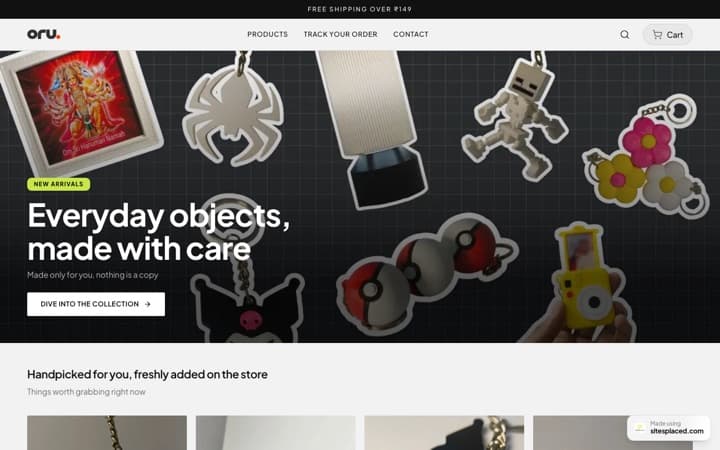
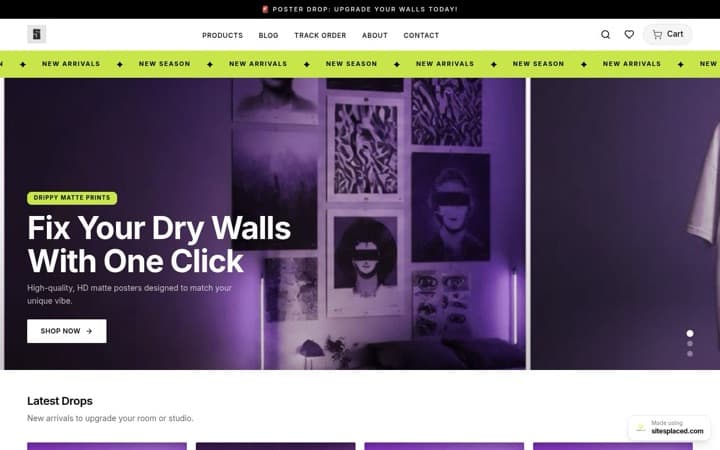
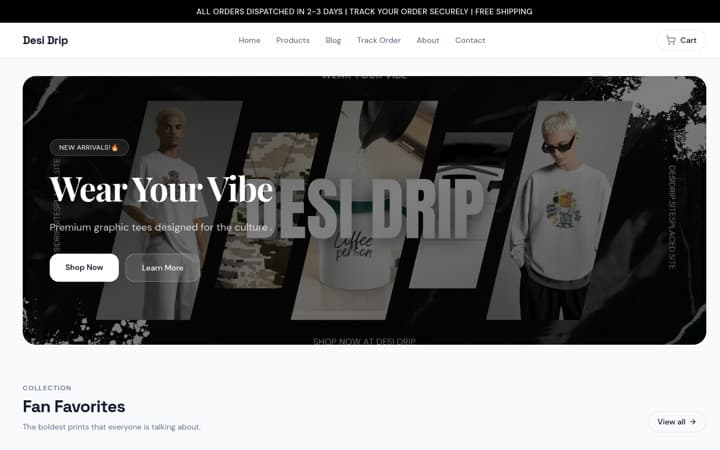
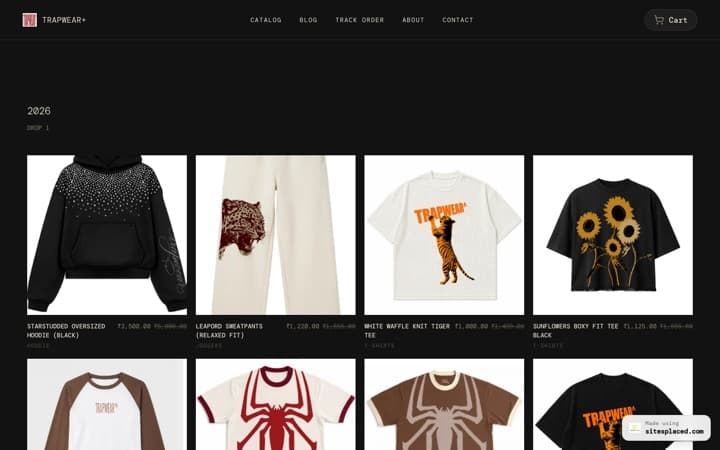
- Pick a template. The free Gifts & Lifestyle Store has big category photo blocks and a gift-first product page, which suits coasters and custom gifts. If your work leans to trays and wall pieces, the Home & Decor Store gives big photos and calm spacing. Changing template later means making a new store.
- Add products with three photos each: the piece in daylight, a close-up of the depth and flowers, and one in use on a table. Say the size in centimetres and the care (“wipe with a damp cloth, no hot pans”).
- Turn on personalisation for the products that need a name, a colour or a photo, and add paid extras.
- Set checkout: online payment through your own Razorpay, PhonePe or Cashfree account at 0% SitesPlaced commission, COD only on ready stock, WhatsApp checkout for buyers who want to talk first.
- Set delivery: a flat charge, free delivery above an amount that encourages a set plus an add-on, shown as a progress bar in the cart.
- Publish at yourbrand.sitesplaced.site and put the link in your Instagram bio.
Reels of the pour, the demould and the first polish are what get resin sellers found on Instagram. Put the price in the caption and the store link in the bio. More in how to take better product photos and the best gift shop website templates.
9. Paperwork, briefly
This is general information, not legal advice. Resin art is a handmade craft, so the usual rules for small sellers apply. Whether you need GST depends on your yearly sales and whether you ship to other states; see do you need GST to sell online in India and confirm with a CA. Registering as a micro business on the Udyam portal is optional and free; see Udyam registration for online sellers. If you sell pre-packed sets, India’s Legal Metrology rules ask for certain details on the pack, such as your name and address, what is inside, the quantity and the price. And never describe a piece as food-safe unless your resin brand says the fully cured product is, and you have followed its instructions.
10. When to pay for a plan
The free plan has no commission and no limit on products or orders, so stay on it while you learn your pours and your packaging. When you want yourbrand.com, no SitesPlaced badge and store analytics, Starter is ₹199 for 30 days, paid once with no autopay, or ₹1,990 for a year. Paid plans also make your store’s pages answer about 4× faster than on the free plan: measured on live paid stores on 28 September 2026, a page answered in about 75 ms instead of about 330 ms. Growth at ₹499 a month adds product reviews with Google stars, which matter for a craft people have not touched before. With autopay, the code FREE7 gives 7 days free on either plan; cancel before the first charge and pay nothing.
Frequently asked questions
Is a resin art business profitable in India?
It can be, if you price your active hours and your failed pours, and if you sell pieces that justify the time, such as custom preserved-flower work, rather than only cheap keychains. In our worked example a four-coaster set that cost about ₹780 to make, including 1.5 hours of work, sold at ₹1,199 and left about ₹415. The limit on income is usually mould count and curing space, not demand.
How much does it cost to start a resin art business from home?
An example starter kit of resin, moulds, pigments, safety gear and finishing supplies comes to roughly ₹4,000 to ₹6,000; brands and cities vary, so check prices before you buy. Reserve a similar amount for packaging and your first courier costs. The online store can be free: SitesPlaced’s free plan has no commission and no limit on products or orders.
Is resin safe to use at home?
Uncured resin and hardener can irritate skin and eyes and give off fumes, so work with the window open and a fan pulling air out, wear nitrile gloves and safety glasses, use a mask suited to resin fumes, and keep food, children and pets away from the workspace. Read the safety data sheet of your brand and follow it. Fully cured resin is a hard plastic; most of the risk is in handling it wet.
How long does resin take to cure?
As rough ranges: the surface stops being tacky in about 12 to 24 hours, pieces can usually come out of the mould after 24 to 48 hours, and full hardness takes around 3 to 7 days. Thick pours, cold rooms and humid weather all slow it down, and winter months are noticeably slower. Your brand’s instructions override any general figure.
How do I ship resin coasters without them breaking?
Wrap each piece separately in bubble wrap, keep pieces from touching each other, add corner protection to trays, put the wrapped set in a box with filler so nothing moves when shaken, and put that box inside a slightly larger one. Test by posting one to yourself first. Photograph the packed parcel before sealing, and book the courier through Shiprocket or Shipmozo, which connect to a SitesPlaced store free.
Can I sell resin coasters as food-safe?
Only if your resin brand states that the fully cured resin is food-safe and you have followed its mixing and curing instructions exactly. Even then, describe the coaster as a coaster, not a plate, and say it should not be used with hot pans or cut on. If you are not sure, do not claim it.
Do I need a licence to sell resin art online?
Resin art is a handmade craft, so the usual rules for small sellers apply rather than a special craft licence. GST registration depends on your yearly sales and whether you ship to other states; confirm with a CA. Registering as a micro business on the Udyam portal is optional but useful. If you sell items pre-packed, the Legal Metrology rules ask for details such as your name and address, net quantity and price on the pack.
Which SitesPlaced template suits resin art?
The free Gifts & Lifestyle Store template, which has big category photo blocks, playful colours and a gift-first product page, suits coasters, keychains and custom gifts. The Home & Decor Store template suits trays and wall pieces with calm spacing and big photos. Changing template later means making a new store, so pick once.
Open a free store today
Personalisation fields, stock caps, pause ordering, Shiprocket and Shipmozo are all on the free plan, with 0% commission. Starter is ₹199 once for 30 days, no autopay; FREE7 gives 7 days free with autopay.