


How to start an imitation jewellery business from home — sourcing, pricing per piece, photos and selling online
To start an imitation jewellery business from home, buy a small first lot from a wholesale market or manufacturer, price each piece from its landed cost plus packaging, fees and your time, photograph it on a plain background and on a person, and sell from your own free online store linked to Instagram and WhatsApp. Here is each step, with worked numbers.
Key takeaway: imitation jewellery is one of the cheapest businesses to start from home because the stock is light and inexpensive, but that is also why competition is heavy. You win on a clear style (one lane, not everything), honest descriptions of plating and finish, good photos, and a store that answers “price?” and “available?” without a DM. For the wider picture of a jewellery business, including real silver and gold, see how to start an online jewellery business in India; this post stays on imitation pieces sold from home.
TL;DR
- • Pick one lane: oxidised, anti-tarnish steel, American diamond (AD), Kundan and meenakari, or temple-style. Not all five.
- • Source small first: 30 to 50 pieces from a wholesale market or manufacturer. Prices change; visit and compare.
- • Price per piece: landed cost + pouch and box + payment fee + your minutes, then a margin for returns and unsold stock.
- • Photos: plain background, daylight, one on a person, one close-up of the finish, true colours.
- • Sell: a free store on the Jewellery Store template, with COD plus a COD charge, prepaid coupons and WhatsApp checkout.
- • Paperwork: GST depends on your sales; confirm with a CA. Never call plated metal “gold”.
1. Choose your lane before you buy anything
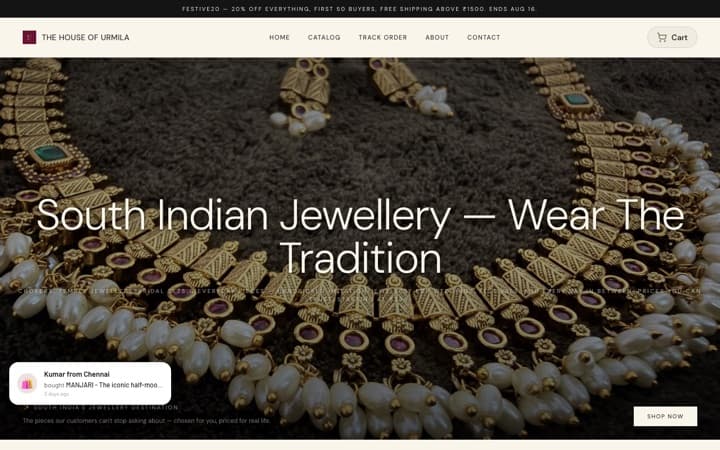
“Imitation jewellery” covers everything that looks like fine jewellery but isn’t made of precious metal or real stones: oxidised silver-look pieces, brass with gold plating, American diamond (cubic zirconia) sets, Kundan and meenakari work, anti-tarnish stainless steel, Korean-style minimal pieces, pearls and beads. Each lane has its own buyer, price range and photography style. A page that mixes ₹149 oxidised studs with ₹2,499 bridal AD sets confuses both buyers.
Pick the one you would wear yourself and can describe honestly. Everyday anti-tarnish pieces suit office-goers and students; oxidised suits the ethnic-casual crowd; AD and Kundan sets sell for weddings and festivals. The wedding season, roughly November to February, is when sets and bangles move fastest, so if you are starting now, a wedding-wear lane has a tail wind. For the bridal end specifically, read how to sell bridal jewellery online.
2. Sourcing: wholesale markets, manufacturers and what to check
Many home sellers start at a wholesale market in a big city, or buy from a manufacturer through a B2B marketplace. Market prices are not fixed: they change with metal prices, season and how much you buy, and a shop will quote differently per piece and per dozen. So treat any price you read online, including in this post, as a hint, and go and look.
| Well-known wholesale areas | Known for |
|---|---|
| Sadar Bazaar and Kinari Bazaar, Delhi | Everyday fashion jewellery, oxidised pieces, hair accessories, bulk packaging |
| Bhuleshwar and Zaveri Bazaar area, Mumbai | Imitation sets, American diamond (AD) pieces, bridal-look sets |
| Rajkot, Gujarat | Manufacturers of imitation and plated jewellery; many sellers buy from here through agents |
| Johari Bazaar, Jaipur | Kundan, meenakari and traditional-look pieces |
| Laad Bazaar, Hyderabad | Lac bangles, pearls and bangles in bulk |
| Chickpet, Bengaluru | Temple-style and everyday imitation jewellery for the south |
When you go, carry a notebook and your phone. For each shop, note the price per piece and per dozen, the minimum quantity, and whether the shop sells to small buyers at all. Then check the pieces themselves:
- Plating and finish. Rub a corner firmly with your thumb; cheap plating shows the base metal quickly. Ask what the plating is and whether the shop calls it anti-tarnish. Only repeat claims you are told and can stand behind.
- Hooks, clasps and stones. Open and close every clasp. Check that stones sit flat and none are missing. A loose stone becomes a return.
- Weight. Heavy earrings get returned because they hurt. Weigh a pair if you can and say the weight on the product page.
- Packaging. Many shops sell pieces loose. Budget separately for zip pouches, boxes and cards, or ask the shop for packed pieces at a slightly higher price.
- Start small. A first lot of 30 to 50 pieces across six to ten designs tells you what sells. Reorder the winners; do not buy a hundred of anything on day one.
3. Pricing per piece, with worked examples
Price each piece from what it costs you to get it to the buyer’s door, not from what a competitor charges. The three rows below are examples with round numbers; put in your own costs. “Time” is a few minutes to photograph, list, pack and reply, charged at a modest hourly rate. Courier is left out because you charge it separately or set a free-delivery amount.
| Example piece | Bought at | Pouch + box | Payment fee (2%) | Your time | Cost | Price | Left per sale |
|---|---|---|---|---|---|---|---|
| Oxidised jhumkas | ₹60 | ₹20 | ₹5 | ₹25 | ₹110 | ₹249 | ₹139 |
| Anti-tarnish steel necklace | ₹120 | ₹25 | ₹7 | ₹25 | ₹177 | ₹349 | ₹172 |
| AD choker set | ₹400 | ₹40 | ₹20 | ₹40 | ₹500 | ₹999 | ₹499 |
“Left per sale” is not profit yet. Out of it come the pieces that never sell, the pairs that come back broken, the courier on returned COD parcels, and your photo props. If three in ten pieces of a design never sell, the seven that do must pay for all ten. That is why ₹249 for a ₹60 pair of jhumkas is sensible rather than greedy, and why pricing at ₹149 to “beat the market” usually ends the business.
Round prices to the usual ₹249, ₹349, ₹499, ₹999 steps; buyers compare in those bands and the Jewellery Store template has a shop-by-price section that groups your catalogue the same way. The product pricing calculator does this arithmetic for you; how to price your products covers the thinking behind it.
4. Photos that sell a ₹300 piece
Jewellery is small and shiny, which makes it harder to photograph than clothes. You do not need a studio; you need daylight, a plain surface and patience.
- One clean shot on white, cream or a dark cloth, from above, with nothing else in frame. This is your product card.
- One on a person, even if it is your own ear, neck or wrist. Scale is the first question every buyer has.
- One close-up of the finish, the stones and the clasp. It builds trust and reduces “is this real silver?” messages.
- True colour. Don’t warm up a gold tone or cool a silver one with a filter. Mismatched colour is a top reason for returns.
- Consistency. Same background, same angle, same crop for every piece. A tidy grid looks like a brand; a mixed one looks like a reseller.
Write the material (brass, alloy, stainless steel), the plating, the length or drop in centimetres, the weight of a pair, and care instructions in every description. The full method is in how to take better product photos.
5. Returns, COD and the honesty rules
Cash on delivery (COD) means the buyer pays when the parcel arrives. It brings first-time buyers who don’t trust a new store yet, and it brings fake orders that come back unpaid, costing you the courier both ways. For pieces under about ₹500, keep COD on but add an extra COD charge, and offer a small coupon for paying online. For sets above about ₹1,000, consider prepaid only. See how to reduce RTO and fake COD orders for the full set of checks.
- Returns. Earrings are often sold without returns for hygiene reasons. Whatever your rule is, write it on the product page and in your Return Policy page, which is free on every SitesPlaced store. Replace damaged or wrong items without argument; that is where repeat buyers come from.
- Never call it gold. Gold-plated brass is “gold-plated” or “gold-tone”. Hallmarking rules exist for real gold; imitation is sold as imitation, and saying otherwise is the fastest way to a complaint.
- Describe the stones. “American diamond” and “cubic zirconia” are fine; “diamond” alone is not.
- GST. Whether you register depends on your yearly sales; see do you need GST to sell online in India and confirm with a CA. Registering on the Udyam portal as a micro business is optional but useful; see Udyam registration for online sellers.
6. Selling online: Instagram shows, the store sells
A great deal of imitation jewellery is sold through Instagram reels and stories, and that is where you should post. But selling through DMs means every buyer asks the price, the availability and your UPI ID, and you type the same answers all day. A store fixes that: every piece has a page with its price, photos and a buy button, and Instagram simply links to it.
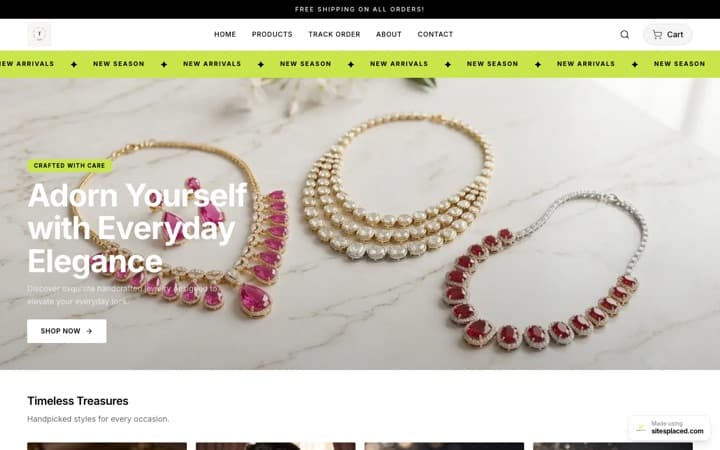
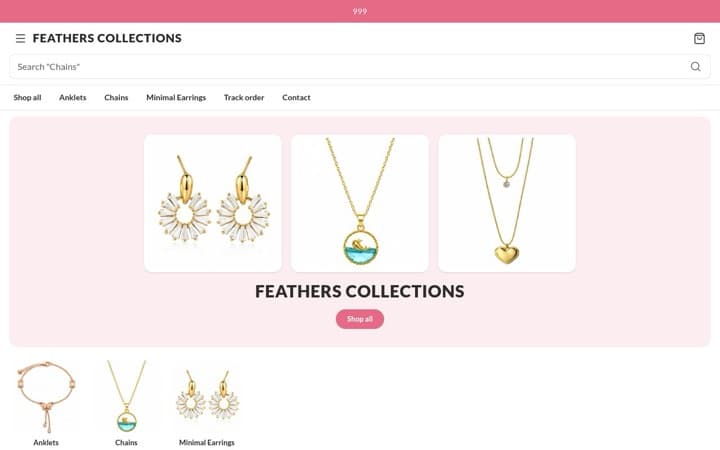
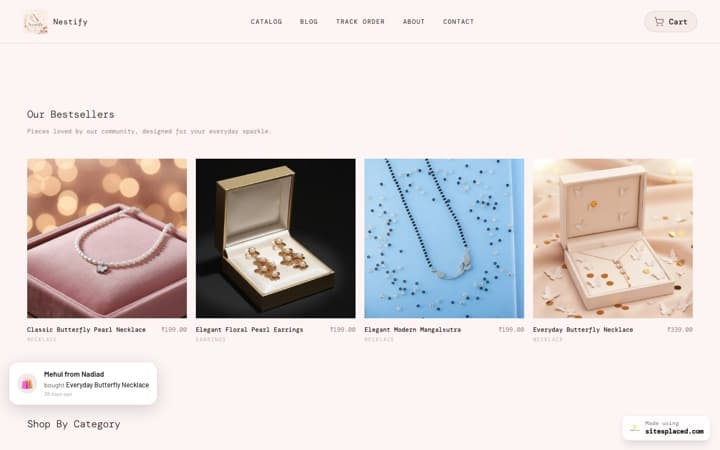
- Pick the Jewellery Store template. The free Jewellery Store is made for rings, earrings, necklaces and silver, with a shop-by-price section, finishes shown as photos, and a soft, rounded look. Changing template later means making a new store, so choose with care.
- Add every piece with its material, plating, size, weight and care line. Use categories like Earrings, Necklaces, Sets and Bangles, and options where a design comes in two finishes, each with its own price if needed.
- Set stock counts. If you have six pairs, enter 6; the product shows sold out at zero and no one orders what you can’t send.
- Set checkout: online payment through your own Razorpay, PhonePe or Cashfree account (0% SitesPlaced commission), COD with an extra COD charge, and WhatsApp checkout for buyers who want to ask first.
- Set delivery: a flat charge and free delivery above an amount such as ₹699, which the cart shows as a progress bar and nudges people to add a second pair.
- Publish at yourbrand.sitesplaced.site and put the link in your bio, every story and your WhatsApp status.
Coupons with an expiry date work well for a weekend drop, and the wishlist lets a browser save a set for payday. For the Instagram side, how to sell on Instagram in India covers posting, reels and the bio link; for more layouts, see the best jewellery website templates.
7. Your first month, honestly
The first month is for learning which designs sell and which photos get taps, not for profit. A realistic plan: one market trip and a first lot of 30 to 50 pieces; two evenings of photography; the store live by the end of week one; a reel every day or two showing pieces being worn; and your first orders from friends, colleagues and your society group, following its rules on promotion. Ask every first buyer for a photo wearing the piece; those photos sell the next ten.
Reorder only what sold. By month three you should know your lane, your best three designs and your real return rate, and the numbers in the pricing table above will be yours instead of ours. More in how to get your first 10 orders on a new online store.
8. When to pay for a plan
Stay on the free plan while you find your lane; it has no commission and no limit on products or orders. When you want yourbrand.com and no SitesPlaced badge, Starter is ₹199 for 30 days, paid once with no autopay, or ₹1,990 for a year. It also adds store analytics, Meta Pixel and makes your store’s pages answer about 4× faster than on the free plan: measured on live paid stores on 28 September 2026, a page answered in about 75 ms instead of about 330 ms. (The domain name itself is bought from a registrar; Starter is what lets you connect it.) Growth at ₹499 a month adds product reviews with Google star ratings, the slide-out cart with upsells and frequently-bought-together, which suit jewellery well. With autopay, the code FREE7 gives 7 days free on either plan; cancel before the first charge and pay nothing.
Frequently asked questions
How much money do I need to start an imitation jewellery business from home?
Less than most businesses, because pieces are cheap to buy and light to ship. A first lot of 30 to 50 pieces from a wholesale market, plus pouches, boxes and a few photo props, is often possible within ₹5,000 to ₹10,000 as an example budget; prices depend on what you buy and where. The store itself can be free: SitesPlaced’s free plan has no commission and no limit on products.
Where do I buy imitation jewellery wholesale in India?
Well-known wholesale areas include Sadar Bazaar and Kinari Bazaar in Delhi, the Bhuleshwar and Zaveri Bazaar area in Mumbai, Johari Bazaar in Jaipur, Laad Bazaar in Hyderabad and Chickpet in Bengaluru, and many pieces are manufactured in Rajkot. Prices change often and depend on quantity, so visit, compare a few shops, and ask for minimum quantities before you buy. B2B marketplaces also list manufacturers if you can’t travel.
What is the profit margin in imitation jewellery?
It depends on what you pay and what your buyers will pay, so work it out per piece instead of using a rule. Add the piece cost, pouch and box, payment fee and a few minutes of your time, then set a price that leaves enough for returns, unsold stock and photos. In our worked examples, a ₹60 pair of jhumkas priced at ₹249 left about ₹140 per sale before unsold stock; a ₹400 set at ₹999 left about ₹500.
Do I need GST to sell imitation jewellery online?
Whether you must register depends on your yearly sales and, in some cases, whether you ship to other states. The rules change, so read our plain-English guide on GST for online sellers and confirm your own case with a CA before you start. Many small home sellers begin as a sole proprietor and register when they cross the threshold.
Should I accept cash on delivery for jewellery?
Yes for low-priced pieces, where COD brings buyers who don’t trust a new store yet, but add an extra COD charge and encourage prepaid with a small coupon. For sets above about ₹1,000, consider prepaid only, because a returned parcel costs you the courier both ways and the piece may come back damaged. Fake COD orders are the main risk; our guide on reducing RTO explains how to cut them.
How do I stop imitation jewellery from tarnishing in storage?
Keep each piece in its own zip pouch, add a small silica gel sachet to the storage box, keep stock away from humidity and direct sunlight, and don’t leave pieces out after photographing them. Tell buyers the same on the product page, and describe plating honestly: a plated brass piece is not gold, and “anti-tarnish” should only be claimed if your supplier says so.
Can I sell imitation jewellery on Instagram without a website?
You can start that way, but prices, availability and addresses then live in DMs, and “is this available?” takes over your day. A free store with every piece listed, stock counts and UPI, COD and WhatsApp checkout lets Instagram do the showing and the store do the selling. Put the store link in your bio and in every story.
Which SitesPlaced template suits imitation jewellery?
The Jewellery Store template, which is free. It is built for rings, earrings, necklaces and silver, with a shop-by-price section, finishes shown as photos, and a soft rounded look. Pick carefully: changing template later means making a new store.
Open a free jewellery store today
The Jewellery Store template, stock counts, COD with a charge, coupons and WhatsApp checkout are all free, with 0% commission. Starter is ₹199 once for 30 days, no autopay; FREE7 gives 7 days free with autopay.