


The best apps to sell products online in India — matched to the seller you actually are
“Best selling app” is the wrong question — a saree reseller, a home baker and a D2C skincare brand need completely different tools. Here are the three routes Indian sellers actually take, the apps on each, what they really charge, and an honest fit-verdict for each kind of seller.
By SitesPlaced Founder · August 10, 2026
Short answer: pick by route, not by app. Marketplace apps (Meesho, Amazon Seller, Flipkart Seller Hub) rent you ready customers in exchange for fees and brutal price competition. Chat commerce (WhatsApp Business, Instagram DMs) is free but every order is manual. An own-store app gives you the brand and the customer list — and since a real store with UPI, COD and WhatsApp checkout now publishes free at 0% commission, most small sellers should start there plus WhatsApp, and add marketplaces once a product proves itself.
Full disclosure:we build SitesPlaced, one of the store-builder apps below — judge our take on it accordingly. Claims about the other apps stick to their publicly documented plans and fee models, and we’ve credited them where they genuinely win.
Route 1 — Marketplace apps: rent their customers
Meesho made online selling accessible to lakhs of first-time sellers with its 0%-commission model (shipping and other charges still apply) and a supplier app simple enough to run from any phone. Amazon Seller and Flipkart Seller Hubbring India’s biggest buyer bases, serious logistics networks, and category-based referral fees that vary widely.
The honest trade: marketplaces own the customer, not you. You compete on price against near-identical listings, the buyer relationship stays with the platform, and terms can change under you. That’s a fine deal for commodity products with thin margins and spare capacity — and a rough one for anyone building a brand.
Best if you: sell price-competitive commodity products and want reach more than a brand.
Route 2 — Chat commerce: WhatsApp Business and Instagram DMs
WhatsApp Businessis free, familiar, and has real selling features — product catalogs, quick replies, labels. Paired with Instagram, it’s how a huge share of India’s home sellers take their first orders, and there’s nothing wrong with starting here. The ceiling arrives fast though: every order is a conversation, payment is a UPI screenshot you verify by hand, there’s no stock tracking, and your “store” disappears if the chat does.
Best if you: are taking your very first orders from people who already follow or know you.
Route 3 — Own-store apps: own the brand and the customer
Dukaan deserves credit for making phone-first store creation mainstream in India; it runs on plan-based subscriptions with features gated by tier. Shopifyis the global standard — its mobile app for running a store is genuinely excellent — but it’s built for funded brands: monthly plans, gateway fees, and an app store that adds cost as you grow.
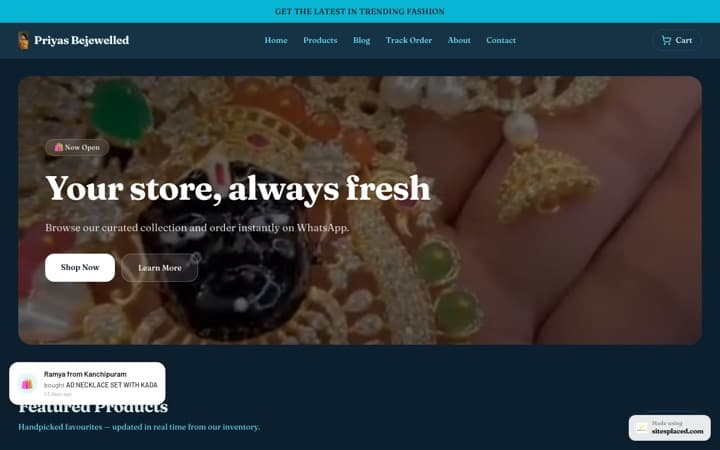
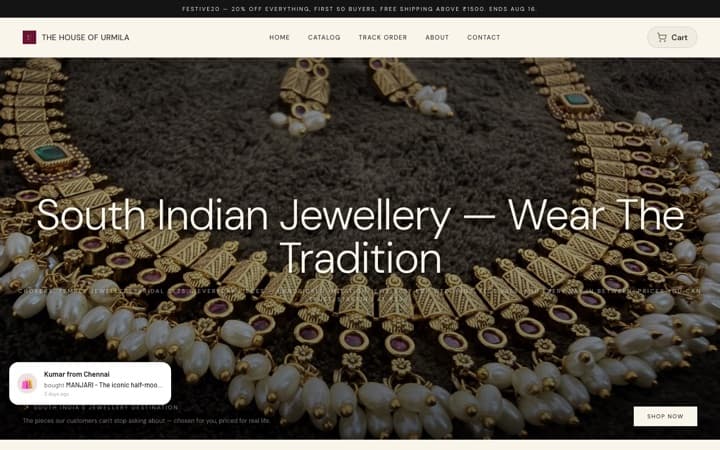
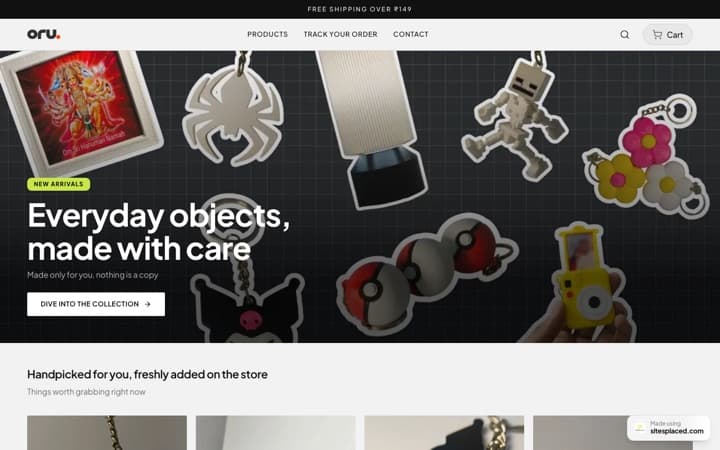
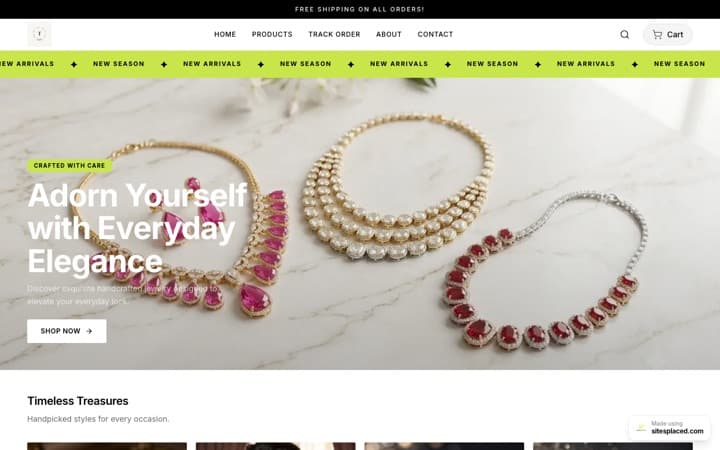
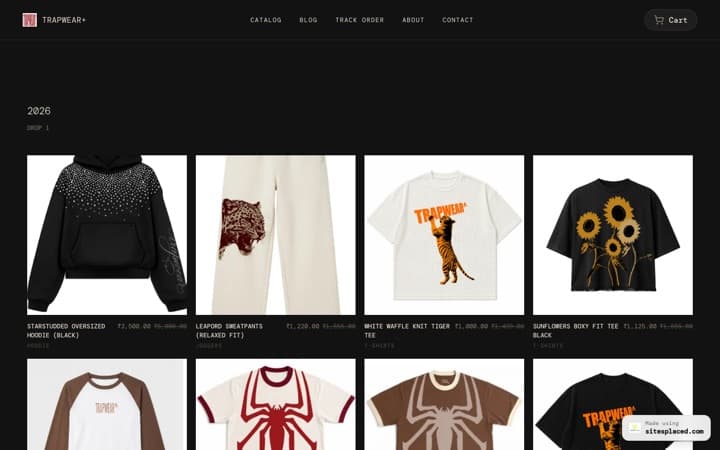
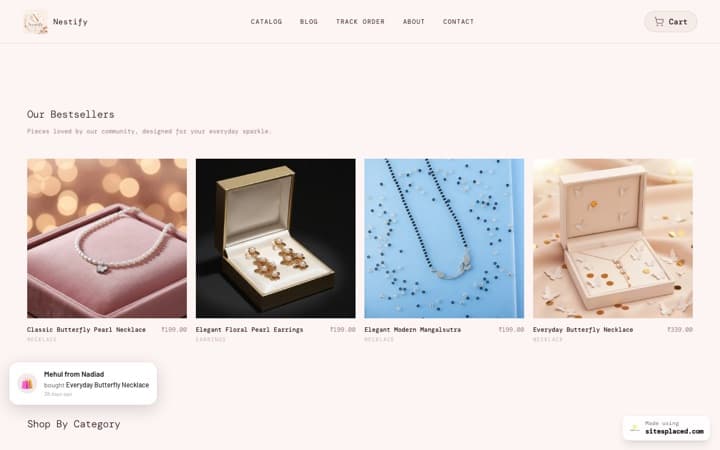
SitesPlaced — ours — takes a different bet: the store should build itself. Paste your Instagram handle and the importer turns your profile into a real store — products, photos, bio — in about 30 seconds; or describe what you sell and AI designs it. UPI and cards via Razorpay, COD and WhatsApp checkout are native, commission is 0% on every plan, and publishing is free with a small badge (₹199/month (Starter) — $14.99 — only if you want a custom domain, badge removal and AI extras). The Android app on Google Play adds camera product uploads, order statuses and a push notification the second a sale lands.
Best if you: already sell on Instagram or WhatsApp and want orders out of your DMs without fixed costs.
The apps, side by side
| App | Type | Fees | UPI / COD | Own brand? | Best for |
|---|---|---|---|---|---|
| SitesPlaced | Own store | 0% commission · free to publish | UPI, COD & WhatsApp built in | Yes — your site, your customers | Instagram/DM sellers going official |
| Meesho (seller) | Marketplace | 0% commission model; other charges apply | Handled by the platform | No — you're a listing | Price-competitive commodity products |
| Amazon Seller | Marketplace | Category-based referral fees | Handled by the platform | No | Established catalogs chasing reach |
| Flipkart Seller Hub | Marketplace | Category-based commissions | Handled by the platform | No | Reach in value-focused categories |
| WhatsApp Business | Chat commerce | Free app | Manual — UPI links, COD by trust | Partly — your chats, no storefront | First orders from people you know |
| Dukaan | Own store | Plan-based subscription | UPI/COD supported | Yes | Phone-first DIY store building |
| Shopify | Own store | Monthly plans + gateway fees | Via payment gateways | Yes | Funded brands with big catalogs |
Fee models reflect each platform’s public documentation as of August 2026 and vary by category and plan — always confirm current rate cards before pricing your products.
What real small sellers actually look like
Before choosing enterprise tooling, look at the data. Across real small stores on our platform, the median store lists 6 products at a median price around ₹399 — full breakdown in what real small online stores look like. A seller at that scale doesn’t need a ₹2,000/month subscription or a 20-app stack; they need zero fixed cost until revenue shows up, payment rails Indian buyers actually use, and a link that looks professional in an Instagram bio.
Frequently asked questions
Which app is best to sell products online in India?
There is no single best app — there are three routes. Marketplace apps like Meesho, Amazon Seller and Flipkart Seller Hub rent you their customers in exchange for fees and price competition. WhatsApp Business is free but every order is manual. Own-store apps give you a brand and your own customer list: SitesPlaced lets you publish a real store free with UPI, COD and WhatsApp checkout at 0% commission, which makes it the lowest-risk starting point for small sellers.
Which selling apps have zero commission in India?
Meesho is known for its 0% commission model for suppliers (other charges like shipping still apply). Among store builders, SitesPlaced charges 0% commission on every plan including the free one — you keep the full order value, and pay only if you want a custom domain or to remove the small badge. Amazon and Flipkart charge category-based referral fees; Shopify charges monthly subscription plus payment-gateway fees.
Should I sell on a marketplace or open my own online store?
Do both, in the right order. Marketplaces bring ready demand but own the customer, squeeze margins and can change terms anytime. Your own store owns the brand, the customer list and the margin, but you bring the traffic. Most small Indian sellers do best starting where their buyers already are (WhatsApp, Instagram) with a free store link for orders, then adding marketplaces once a product proves itself.
Do I need GST to sell online in India?
It depends on the route. Major marketplaces generally require a GSTIN to list in most categories. Selling from your own website or WhatsApp depends on your turnover, category and state rules — many home sellers start small without one, but the rules change and vary, so confirm your situation with a CA before scaling up.
How many products do I need to start selling online?
Fewer than you think. Across real small stores on SitesPlaced, the median store lists just 6 products at a median price around ₹399 — most successful small sellers start with a handful of items they can actually photograph, price and ship well, then grow the catalog from what sells.
Open your own store free — from your phone
Paste your Instagram handle or describe what you sell. In minutes you’ll have a real store with UPI, COD and WhatsApp checkout — free to publish, 0% commission, orders in a dashboard instead of your DMs.
Free on Android; iOS coming soon. No card required to publish.