


How to sell homemade cakes and Christmas plum cakes online without a shop, a pre-order system or a spoilt parcel
To sell homemade cakes online in India you need four things: FSSAI registration, a clear line between cakes that can be couriered and cakes that stay local, packaging that survives December, and a way to take orders ahead of Christmas without promising dates you cannot keep. This post covers each, with a worked pricing example. It is written for the baker who already makes a good plum cake and wants to sell it beyond friends. If you are starting a bakery from zero, read how to start a home bakery business online first; it covers the menu, the radius and custom cakes over WhatsApp.
Why plum cake is the one to sell. Of all the Christmas foods, plum cake is the one Indian households search for and buy from small bakers, because the bakery version is often dry and the homemade one is not. It is also the one cake that travels: dense, low in moisture, often better on day three than day one. Christmas is Friday 25 December 2026, so the whole season is three weekends of baking, and the first cakes should be ready to photograph by the last week of November.
TL;DR
- • FSSAI first: apply at foscos.fssai.gov.in and confirm what applies to you.
- • Ship the dry cakes (plum, fruit, tea cakes, cookies). Keep cream and chilled cakes local.
- • Test shelf life on your own recipe. Taste on day 3, 7 and 10. Print the date.
- • Pack for a rough courier: tight wrap, box, rigid carton, filler, FRAGILE.
- • No pre-order feature exists. Use the announcement bar for the close date and pause ordering when full.
- • Price from a full cost sheet, including your hours. Take payment by UPI; be careful with COD.
1. Paperwork: FSSAI and labels
Anyone who makes and sells food in India, including from a home kitchen, is generally expected to be registered with the Food Safety and Standards Authority of India (FSSAI). The official portal is foscos.fssai.gov.in. Which registration applies to you depends on the size of your business; confirm it on the portal or with a CA rather than from a WhatsApp forward. Many home bakers also register under Udyam (MSME), which is free and separate; our Udyam guide explains it.
Every cake that leaves your kitchen needs a label. As a general rule it carries the name of the product, the ingredients, common allergens (wheat, eggs, dairy, nuts), the net weight, the date it was made and a best-before date, your business name and contact, and your FSSAI number. Check the current labelling rules for your category before you print.
One Christmas-specific point: many plum cake recipes soak the fruit in rum or wine. Rules on selling food containing alcohol differ from state to state. If your recipe uses either, find out what applies where you are before you sell, and say clearly in the description whether a cake contains alcohol. Offer a juice-soaked version for buyers who want one; it will sell.
2. Which cakes ship, and which stay local
Decide this before you set up the store, because it decides your delivery charges, your packaging and who you can sell to. A courier parcel in December spends days in vans and warehouses and is dropped more than once. Only dry, dense bakes survive that.
| Cake | Courier? | Note |
|---|---|---|
| Plum cake, rich fruit cake | Yes | Dense, low moisture, often improves after a few days |
| Tea cakes, pound cakes, banana bread | Yes, within a few days | Wrap tightly; sell in loaf tins |
| Brownies, cookies, biscotti, rusks | Yes | The easiest things to post |
| Dry-fruit and nut loaves | Yes | Good gift item alongside plum cake |
| Fresh-cream, buttercream and photo cakes | No | Local delivery only, same day |
| Cheesecakes, mousse cakes, anything chilled | No | Local, in an insulated bag |
A simple way to run both: two categories on your store, “Ships across India” and “Local delivery in [city]”, so a buyer in another city never adds a cream cake to the cart. If someone outside your city orders a local-only cake anyway, message them from the order and refund; do not try to ship it.
3. Shelf life: test it, then print it
Do not take a shelf life from the internet, including from this page. How long your plum cake keeps depends on your recipe (how much fruit, butter and sugar; whether the fruit was soaked and in what), how it is wrapped and where it is stored. Bake a batch in November, wrap each cake exactly as you would for a customer, keep one at room temperature and one in the fridge, and taste a slice on day 3, day 7 and day 10. Write down what you find. Set your best-before date from the test, with a margin of safety, and print it on every label. Tell buyers how to store it on the label and in the product description.
For a courier cake, the best-before date has to cover the transit time plus the days the buyer will take to eat it. If your test says a cake is at its best for a week, a parcel that takes four days to arrive leaves the buyer three. Either bake closer to dispatch or sell a cake that keeps longer. How to sell homemade food online covers the same test for jars and snacks.
4. Packaging that survives December
- Wrap tight. Let the cake cool fully, then wrap it in butter paper and a layer of cling film or foil. Air is what dries a cake out.
- Box it. A cake box or a tin that fits the cake closely, so it cannot slide. A loose cake in a big box arrives as crumbs.
- Then a rigid outer carton, one size up, with crumpled paper or shred filling every gap. The cake box should not move when you shake the carton.
- Label the carton FRAGILE and THIS SIDE UP, and put a second address label inside the box in case the outer one tears.
- Weigh it. Couriers charge by weight and size; a 1 kg cake in a carton can be a 1.5 kg parcel. Put the real weight on the product so your delivery charge covers it.
- Make it a gift. A ribbon on the inner box and a small card cost a few rupees and turn a cake into a present. Christmas cakes are gifts more often than not.
5. Local delivery or courier, and how to set the charges
Most home bakers end up doing both: hand delivery or a rider for fresh cakes nearby, and a courier for plum cakes and cookies going further. Each needs its own charge, and your store should ask the buyer for the one that applies.
| How | Good for | Watch out | On your store |
|---|---|---|---|
| Hand delivery in your own area | Fresh cakes, same-day, no breakage | Your time and fuel; a radius you can reach | Flat delivery charge, or the waiver checkbox for pickup |
| Local rider app or a hired rider | Fresh cakes across the city | Cost per trip; handle with care is not guaranteed | Delivery charge covers the rider; Express option for same-day |
| Courier through Shiprocket or Shipmozo | Plum cake, cookies, loaves to any city | Transit days; December delays; rough handling | Delivery charge or Free delivery above a value; a fee per heavy product |
On SitesPlaced, delivery charges live under Settings → Shipping. Set a flat Delivery charge that covers your average courier or rider cost, and a Free delivery above amount so a two-cake order ships free; the cart then shows how much more to add. Turn on the Delivery charge waiver checkbox with your own label, such as “I will collect from [area]” or “I am within [city]”, so local buyers pay nothing for delivery when it is true, and check the address before you confirm. If you want to offer same-day local delivery at a premium, switch on the Express option and label it yourself, for example “Same-day delivery in [city]”. A heavy item such as a 2 kg cake can carry a delivery fee of its own on the product. How to set shipping charges works through the choices, and how to ship orders from home covers booking the courier.
6. Taking orders ahead of Christmas, honestly
Every baker wants to know the numbers before the oven goes on. The temptation is to promise a “pre-order” with delivery slots. SitesPlaced has no pre-order or delivery-slot feature, and it is better to say so than to fake one with a form you then cannot keep up with. What works instead:
- Open orders early with a window, not a slot. List the plum cake in the last week of November. In the description and in the announcement bar at the top of every page (Settings → Branding), write the promise plainly: “Christmas plum cake orders close 18 December. Courier dispatch 15 to 19 December. Local delivery 20 to 24 December.” The bar can rotate extra lines, so one can carry the dates and another your delivery areas.
- Make sizes into options. Add 500 g and 1 kg as product options with their own prices and stock. Set the stock to the number you can actually bake; when it runs out, the option shows as sold out and you are not over-committed.
- Take the message on the order. For cakes with a message or a name on them, turn on the text note under Personalisation & extras and label it “Message on the cake (up to 25 letters)”. For photo cakes, turn on the photo upload. Both arrive with the order, so nothing is lost in a chat.
- Pause when you are full. When you reach your baking limit or the close date, tick Pause ordering under Settings → Checkout and write your own message: “Christmas plum cake orders are full. We reopen on 27 December for New Year cakes.” Shoppers can still browse and their carts are kept; nobody can place an order you cannot bake.
- Bake to the list. Your Orders tab is your production sheet: sizes, messages, delivery addresses, and whether each was paid. Confirm each order as you bake it and mark it shipped or delivered as it goes out.
New Year’s Day is Friday 1 January 2027; a short second window for New Year cakes from 27 to 31 December is worth opening if you have the energy.
7. Pricing a cake properly
Home bakers under-price because they count only the ingredients. Count everything. Here is a worked example with made-up numbers for a 1 kg plum cake.
- • Flour, butter, sugar, eggs, dry fruit, nuts, spices, soaking liquid: ₹350
- • Tin, butter paper, box, ribbon, card and label: ₹70
- • A share of gas, electricity and the odd failed bake: ₹40
- • Cost before your time: ₹460
- • Price: ₹899, delivery charged separately
- • Left for your hours and your margin: ₹439 a cake
If a cake takes you ninety minutes of active work including packing, that ₹439 is your hourly rate; decide if you accept it. Bake four at a time and the hours per cake fall while the price does not. Use the product pricing calculator with your own numbers, and resist pricing against the bakery down the road; you are not selling the same cake.
8. Payment: UPI first, COD with care
A cake cannot be restocked. A refused cash-on-delivery order means a wasted cake and a paid rider. Most home bakers take payment up front by UPI, through their own Razorpay, PhonePe or Cashfree account connected to the store, or by “pay the store directly” with your UPI ID shown at checkout. For local custom cakes, an advance by UPI on WhatsApp and the balance on delivery is a fair middle. If you do offer COD, set an Extra COD charge under Settings → Checkout. COD or prepaid for festive orders runs the numbers, and how to make customers trust your store covers why a new buyer will pay a home baker in advance.
Set up the bakery store free
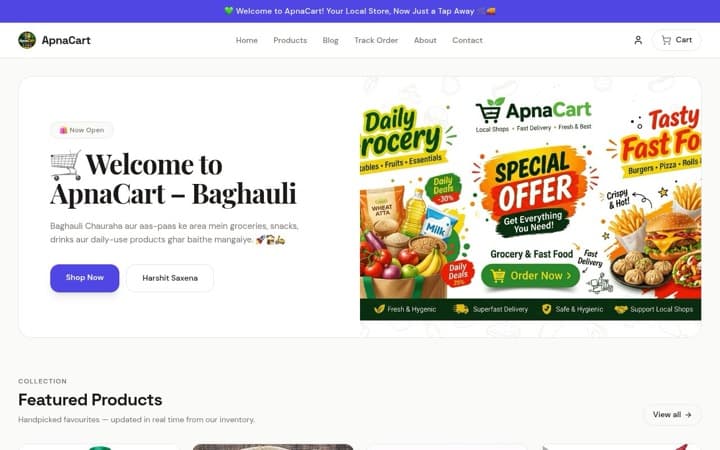
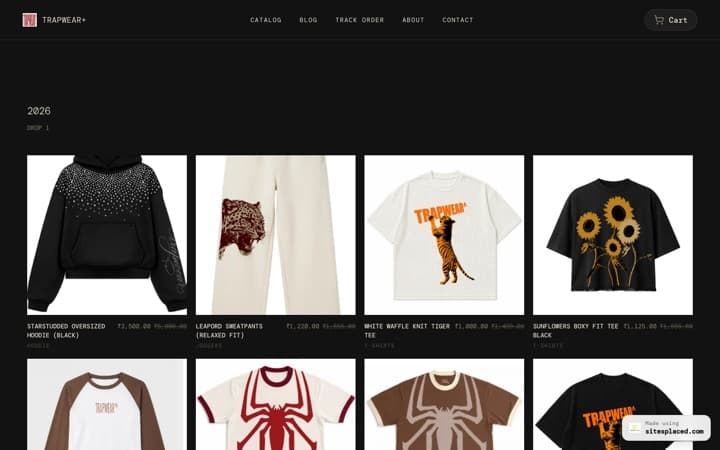
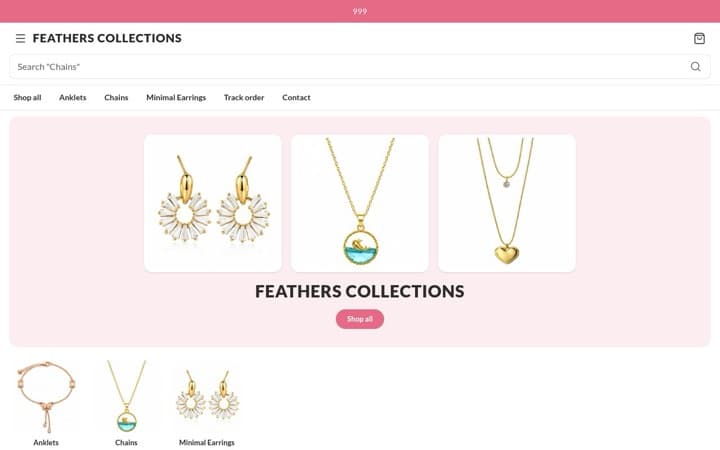
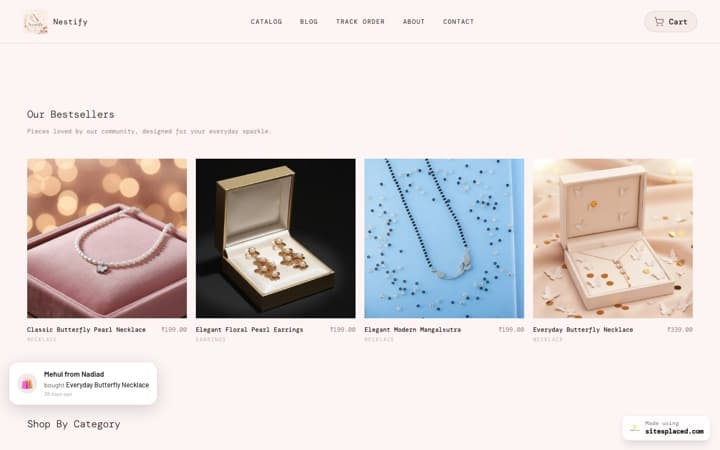
All of the above runs on a free SitesPlaced store: ₹0, 0% commission, unlimited products and orders, UPI and cards through your own gateway account, cash on delivery with an optional extra charge, WhatsApp checkout, product options for sizes, personalisation for messages and photos, the announcement bar, pause ordering, delivery charges with a local waiver and an express option, coupons with an expiry date, PDF invoices, and Shiprocket and Shipmozo for couriers. The Food Store is one of 16 free templates; best food brand website templates shows what it looks like.
Your own domain, such as yourbakery.com, comes with Starter: ₹199 a month, or pay ₹199 once for 30 days with no autopay, or ₹1,990 once for a year. Starter removes the SitesPlaced badge, adds analytics, and makes your store’s pages answer about 4× faster than on the free plan: about 75 ms instead of about 330 ms, measured on live paid stores on 28 September 2026. “Answer” means how soon the page starts arriving, before the photos load. Growth (₹499 a month, or ₹4,990 once for a year) adds product reviews with Google star ratings, which matter for a baker, and the WhatsApp chat bubble. The code FREE7 gives 7 days free on Starter or Growth when you set up autopay; cancel before the first charge and you pay nothing. The rest of the season is on the Christmas and New Year page for sellers.
Frequently asked questions
Do I need FSSAI to sell homemade cakes online?
Generally, yes. Anyone who makes and sells food, including from home, is expected to be registered with FSSAI, the Food Safety and Standards Authority of India. Apply on FoSCoS, the official portal at foscos.fssai.gov.in, and confirm which registration applies to you there or with a CA. Put your registration number on your labels and your store’s policies page.
Can plum cake be sent by courier?
Yes, plum cake is one of the few cakes that travels well: it is dense, low in moisture and often tastes better a few days after baking. Wrap it tightly, box it, and pack the box in a rigid outer carton with filler. Fresh-cream, buttercream and chilled cakes should not be couriered; keep those for local delivery on the same day.
How long does homemade plum cake last?
It depends on your recipe, how much fruit and fat is in it, whether the fruit was soaked, and how it is wrapped and stored. Do not guess: bake a batch, wrap it as you would for a customer, and taste a piece on day 3, day 7 and day 10. Set your best-before date from that test, with a margin, and print it on every label.
How do I take Christmas cake orders in advance?
There is no pre-order or delivery-slot feature on SitesPlaced, so say what you will do plainly. Put the close date and the delivery window in the announcement bar at the top of your store (for example, “Plum cake orders close 18 December; delivery 20 to 24 December”) and in each product description. When you reach your limit or the date, tick Pause ordering with your own message. Orders you take before that are normal orders you bake and deliver in the window you promised.
How should I price a homemade cake?
Add up ingredients for one cake, the tin or box and wrapping, a share of gas and electricity, and your time at an hourly rate you would accept, then add a margin for wastage and the odd failed bake. That total is the floor; the courier or rider is charged on top or built into the price. In our worked example a 1 kg plum cake with ₹460 of ingredients and packaging sold at ₹899 leaves about ₹440 before delivery and your hours.
Should I accept cash on delivery for cakes?
Be careful. A refused COD cake cannot be resold and you have paid the rider or courier. Many home bakers take prepaid only through UPI, or take an advance by UPI on WhatsApp and the balance on delivery for local orders. If you do offer COD, set an extra COD charge under Settings → Checkout so the buyer who insists on cash covers the risk.
Put your plum cake online before December
Open a free store, add your cakes with sizes and a message field, write the close date in the announcement bar, and share one link. ₹0, 0% commission, UPI and WhatsApp checkout included.