

How to sell ethnic wear for the wedding season online — lehengas, sarees, suits and sherwanis for the guests, not the bride
Every wedding has one bride and a few hundred guests, and the guests are the market a small online boutique can actually serve. They need an outfit for the mehendi, another for the sangeet, another for the wedding, in a colour the family agreed, by a date that will not move, and they often buy for the whole family at once. This guide is about selling to them in the season, roughly November to February: sizes, stitching dates, family orders, exchanges, photos, and the store template that fits.
Key takeaway: a wedding guest is buying dates and sizes as much as fabric. Put a size chart on every product, publish a last date for stitched orders for each week of the season, deliver early enough for a local tailor to alter, write the exchange rule before anyone orders, and make it easy for one person to order for six people. Photos on a person and a short video do the selling; the dates and sizes stop the returns.
TL;DR
- • Sell to guests: several functions, a colour family, fixed dates, two to three weeks out.
- • Size chart on every product, garment measurements in inches and centimetres, model height and size named.
- • Stitching cut-offs per week, and delivery at least a week before the function so a local tailor can alter.
- • Family orders: one coordinator, a sizes sheet, a photo of the real fabric, an advance on anything stitched.
- • Exchanges with a window, a last date and a clear line on stitched pieces.
- • Photos on a person, plus a twirl video. Every product carries one video and one reel.
- • The free Clothing Store template shows sizes on the card and the size chart in a popup.
Who the wedding guest is
The Diwali buyer wants one outfit for one evening and has no dress code. The wedding guest has a card with four functions on it, a WhatsApp group where the cousins agreed on “pastels for the mehendi, maroon for the wedding”, and about two to three weeks between the invitation and the first function. They also rarely shop alone: a mother orders for herself, two daughters and a daughter-in-law in one go, and the groom’s brother orders five matching kurta sets for the baraat.
So they ask different questions. Not “is it pretty?” but “will it fit my sister, will it arrive before the 14th, and can we exchange it if it doesn’t?” Answer those three on the page and you have the sale. Our Diwali guide, how to sell ethnic wear online for Diwali, covers the festival version and goes deeper on kurti size charts and combos; this post stays with weddings.
What to sell, and what each piece asks of you
| Piece | Stitching needed | Lead time | Exchange risk |
|---|---|---|---|
| Saree | Blouse to measurements; fall and pico | Ready saree in days; blouse adds about a week | Low on the saree itself; the blouse is where sizes go wrong |
| Lehenga (semi-stitched) | Blouse and waist to measurements | Two to three weeks, plus alteration time | Medium; the blouse and the length |
| Suit set (ready-to-wear) | Usually none; hemming at most | Days | High; one size off is an exchange |
| Sherwani or kurta set | Chest size; sleeves and length altered locally | One to two weeks | Medium; men rarely know their size |
| Dupatta or stole | None | Days | Lowest of all; no size |
Three words you will use on every page: unstitched (fabric, the buyer’s tailor does the rest), semi-stitched (the skirt or kurta is made, the blouse and the waist are finished to the buyer’s measurements) and ready-to-wear (a size, nothing to do). Say which one every product is in the first line of the description, because a buyer who thinks a semi-stitched lehenga is ready-to-wear will be very unhappy on the day. For sarees in particular, the drape, the fabric and the blouse are covered in how to sell sarees online in India.
Sizes and the size chart
- Measure the garment, not a body. Lay each size flat and measure bust or chest, waist, hip, shoulder, length and sleeve, in inches and centimetres. Say plainly that these are garment measurements and how much ease is in the cut.
- Name the model’s height and the size worn in every photo. It is the quickest way a buyer judges length.
- For sherwanis and kurta sets, give chest and length, and expect men not to know their size. A line like “If you wear a 40 shirt, take M” converts more than a chart alone.
- One size per option, with its own stock. In the product’s Options, add Size with each value at its own price and stock count, so a sold-out XL shows as sold out instead of becoming an exchange.
- The chart itself goes in the Size chart / info popup card on the product as an image; the product page shows a tappable link that opens it. Make the image once per cut and reuse it.
- Between sizes, message first. Say it on the page. A two-minute chat is cheaper than two courier trips.
Stitching and alteration dates
This is the part the Diwali season does not teach you. A guest needs the outfit not on the wedding day but about a week before it, so a local tailor can take in a blouse or shorten a hem. Work backwards for each function date and you get your calendar:
- • the function date, minus about seven days for local alterations,
- • minus courier transit to the buyer’s city,
- • minus your stitching time for semi-stitched pieces,
- • minus a few days of buffer, because the season is busy for every tailor and every courier.
The result is a last date for stitched orders for each week of the season, and a later one for unstitched and ready pieces. Publish both. Put the current week’s dates in the announcement bar under Settings → Branding (it can carry several lines, and they rotate) and in the first line of every semi-stitched product. Ask for the buyer’s measurements and function dates in the Order Notes field at checkout (Settings → Checkout → Checkout form fields), labelled “Blouse measurements and the date of your first function”. When you cannot take any more stitched work, turn on Pause ordering with a message that says ready pieces are still available on WhatsApp. There are no pre-orders or delivery slots as features, so the words carry the promise.
Who pays for alterations? Decide now and write it: alterations for fit are the buyer’s and their tailor’s, alterations for your stitching error are yours. Never state a muhurat date yourself; auspicious dates vary by community and year, and the buyer already has theirs.
Family orders: six outfits, one person, one date
- Find the coordinator. Every family order has one person with the group chat open. Make it easy for them: send a short sizes sheet (name, piece, size, blouse measurements if stitched) and ask for it back before anything is confirmed.
- Agree the colour on a real photo. Photograph the actual fabric in daylight next to a white sheet of paper and send it. Screens lie, and “maroon” means six things.
- Let them send the cart first. With “Show WhatsApp checkout” on under Settings → Checkout, the coordinator builds the cart with all six pieces and sizes and sends it to you as one message. You check stock and dates, then they pay.
- Advance on anything stitched to measurement. A semi-stitched lehenga finished to one person cannot be sold to another. Take half by UPI before you cut; your UPI ID and bank details show to buyers who choose the Bank transfer / UPI option and print on the invoice.
- A family bundle at a small saving makes the yes easier: a “Mother and daughters set” or “Baraat kurta set of 5” as its own product with size options. How to price bundles without losing money is in wedding season sale ideas for a small business.
- Ship together, label separately. One carton to one address, each outfit in its own labelled bag with the name from the sizes sheet.
Exchanges in peak season
An exchange is two courier trips in the weeks when couriers are slowest, and a guest whose replacement arrives after the function will not order again. So write the rule before the first order and put it where it is read:
- • the window and the condition: for example, within 7 days of delivery, unworn, unwashed, tags on;
- • a last date for exchanges before each function week, with the plain line that later exchanges arrive after the function;
- • what cannot be exchanged: pieces stitched or altered to measurement, with an alteration offered if the fault is yours;
- • who pays the return trip, either way, as long as it is said in advance;
- • what happens if the new size is sold out: refund or store credit, and how soon.
On a SitesPlaced store the full policy lives under Settings → Pages & policies as its own page; link it from every product. There is no exchange form; you arrange each one on WhatsApp. Keep one spare of the popular sizes for quick swaps. The free return policy generator drafts the page, and our return and refund policy template explains each clause. Keep cash on delivery on if you like, with an extra COD charge under Settings → Checkout so paying online is cheaper; a refused ₹6,000 lehenga is a real loss.
Photos on a person, and one twirl
- Full length on a person, front and back. A lehenga on a hanger has no shape; a sherwani on a chair has no fall. A friend, a plain wall and a window are enough.
- A close-up of the fabric and the work, so the buyer sees whether the embroidery is thread, sequin or print.
- A ten-second video: a twirl, a walk, the dupatta moving. Every SitesPlaced product carries one video link and one Instagram reel under Video & Instagram, so the reel you already made goes on the page.
- One line on colour: “Photographed in daylight; the colour may look slightly different on your screen.” It is honest, and it removes an exchange reason.
- Do not over-edit. A brighter pink on the screen than in the box is an exchange waiting to happen.
The general rules are in how to take better product photos.
The Clothing Store template
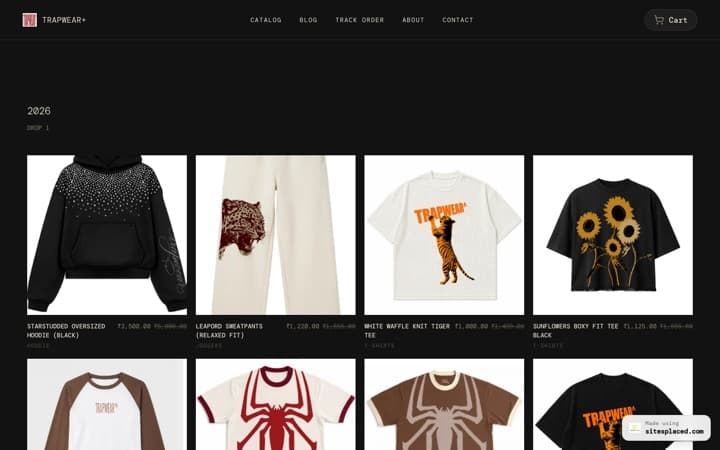
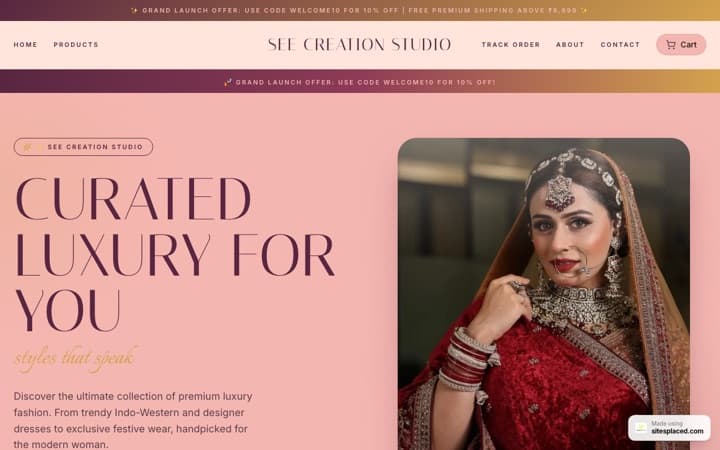
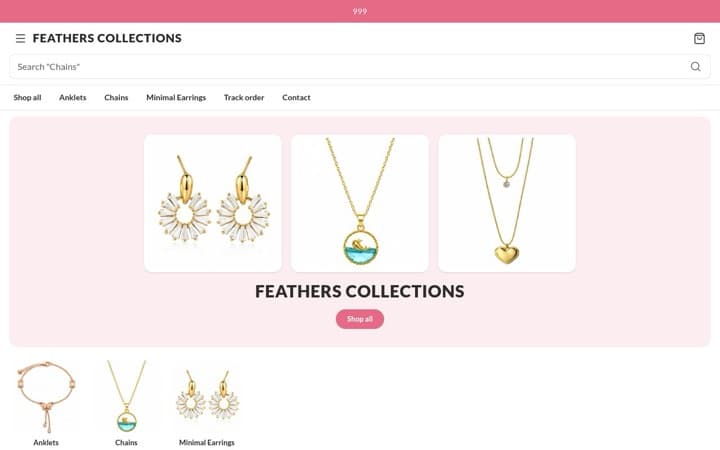
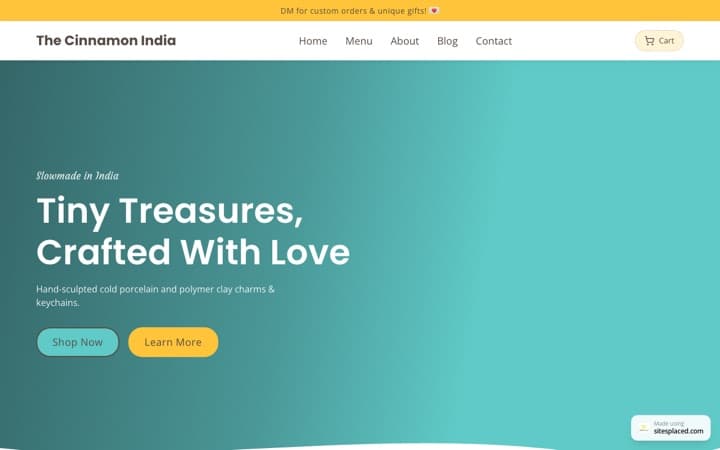
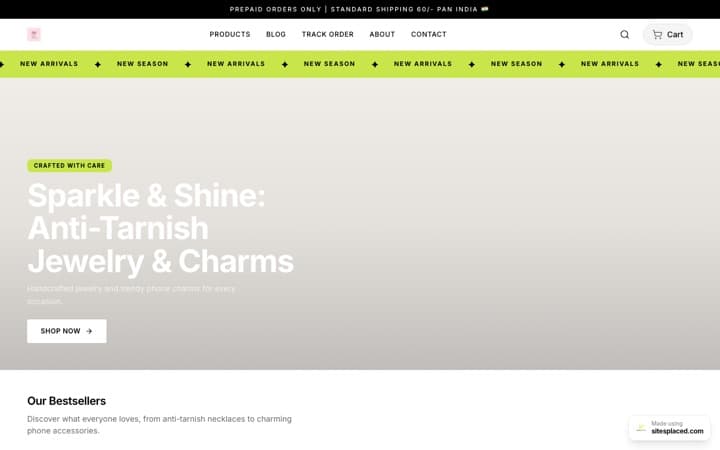
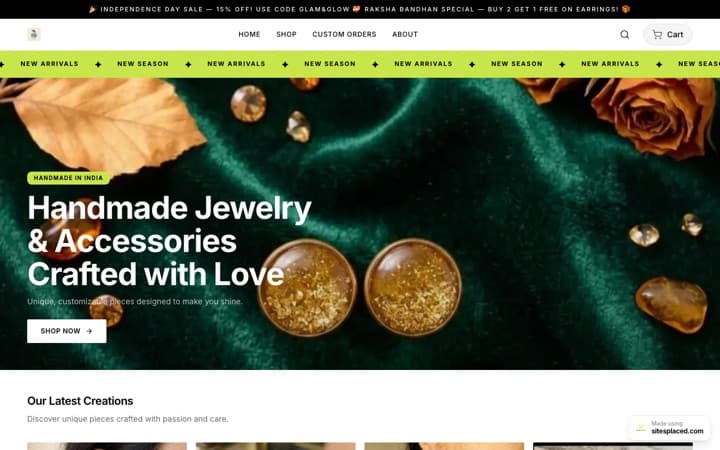
The free Clothing Store is built around exactly what a guest needs: big photos, sizes shown on the product card so a sold-out size is visible before the click, the size chart popup, a video and a reel on each product, quick add from the list, a buy bar that stays on the phone screen, and a price on request button that opens WhatsApp for a custom lehenga you quote by hand (leave the price blank and the piece cannot be bought at ₹0 by mistake). Mark a reduced piece with the Original price field and the strike-through appears. Other designs are compared in the best clothing store website templates of 2026; changing template later means making a new store, so pick once.
The store is free: ₹0, 0% commission, unlimited products, UPI and cards through your own Razorpay, PhonePe or Cashfree account, cash on delivery, WhatsApp checkout, coupons, invoices and an address like yourbrand.sitesplaced.site. Starter at ₹199 a month (or ₹199 paid once for 30 days with no autopay, or ₹1,990 once for a year) adds your own domain and removes the badge, and on every paid plan a store’s pages answer about 4× faster than on the free plan, about 75 ms instead of about 330 ms in our 28 September 2026 measurements on live paid stores. “Answer” is the moment the page starts arriving on the shopper’s phone, before the photos load, which is what you want when a family group opens your lehenga link together. The season’s other guides are on the wedding season hub.
Frequently asked questions
How is selling to wedding guests different from selling for Diwali?
A wedding guest buys for several functions with fixed dates and often a colour the family has agreed, and usually buys with others: four to six outfits in one family order. Diwali buyers buy one outfit each, for one evening, with no dress code. So wedding selling is about dates, sizes for a group and exchanges, more than about the design.
What should an ethnic-wear size chart include?
Garment measurements laid flat, in inches and centimetres, for every size: bust or chest, waist, hip, shoulder, length and sleeve. Say that these are the garment’s measurements, not body measurements, and how much room is in the cut. Add the model’s height and the size worn in the photos. On SitesPlaced the chart goes in the Size chart / info popup card on each product.
When should I stop taking stitched orders for a wedding date?
Work backwards from the function: courier transit to the buyer’s city, a week for a local tailor to alter if needed, your stitching time, and a few days of buffer. Publish that as a last date for stitched orders for each week of the season, in the product description and the announcement bar. Unstitched and ready pieces can close later.
How do I handle a family ordering six outfits at once?
Ask one person to coordinate. Send them a sizes sheet to fill for everyone, confirm the colour family against your actual fabric in a photo, and take an advance on anything stitched to measurement. Turn on Order Notes at checkout for the function dates, and let them send you the cart on WhatsApp first. A family bundle at a small saving makes the single big order easier to say yes to.
Should I allow exchanges in the wedding season?
Yes, within a stated window and with a last date for exchanges before each function, because an exchange is two courier trips and the busiest weeks make it slow. Pieces stitched or altered to a buyer’s measurements cannot be exchanged; say so before the order, and offer an alteration if the fault is yours. Keep a spare in popular sizes for quick swaps.
Which SitesPlaced template suits ethnic wear?
The Clothing Store: big photos, sizes shown on the product card, a size chart popup, a video and a reel on each product, and a price-on-request button for custom lehengas. It is free, like all 16 store templates. Changing template later means making a new store, so pick once.
Open your ethnic-wear store for the season, free
Sizes on the card, a size chart popup, a video on every piece, WhatsApp checkout for family orders. ₹0, 0% commission, your own payment account.