

How to add WhatsApp checkout to your ecommerce website
Why a chat button sometimes beats a checkout form, what the message needs to contain, and the trade-off nobody mentions.
WhatsApp checkout replaces the form with a conversation. The buyer taps a button, a chat opens with their cart already written into the message, and you take it from there. For buyers who want to ask something before paying — which is most first-time buyers in India — it converts better than any form. The cost is that the order is unpaid and manual.
TL;DR
- • The buyer taps, a chat opens with the cart pre-filled. No form, no account.
- • It converts because the buyer can ask a question first — the real barrier for a first-time buyer.
- • The order is recorded as a manual-payment order. You settle in chat.
- • It needs no gateway, no KYC and no approval.
- • The trade-off: it does not scale, and it is unpaid until you chase it.
Why it converts
A checkout form asks a stranger to commit before they have had a single question answered. Is this the right size? Do you deliver to my pincode? Is this the real colour? For a first-time buyer on a store they found through an Instagram post, those questions are the whole barrier.
A chat lets them ask. That is the entire mechanism, and it is why WhatsApp checkout routinely outperforms a form on exactly the traffic that is hardest to convert — cold, mobile, first-time.
It is also familiar in a way a web form is not. Most Indian buyers have bought something over WhatsApp before. Nobody needs to be taught how it works.
What the message must contain
The whole benefit disappears if the buyer has to retype their order. The pre-filled message should carry everything you need to fulfil, so the conversation starts at 'yes, in stock' rather than 'what did you want?'
- • Every item, with variant and quantity — not just the first one.
- • The total, so there is no argument about price later.
- • An order reference, so you can find it in your dashboard when they message again three days later.
- • The store name, because you may run more than one and the buyer will not say which.
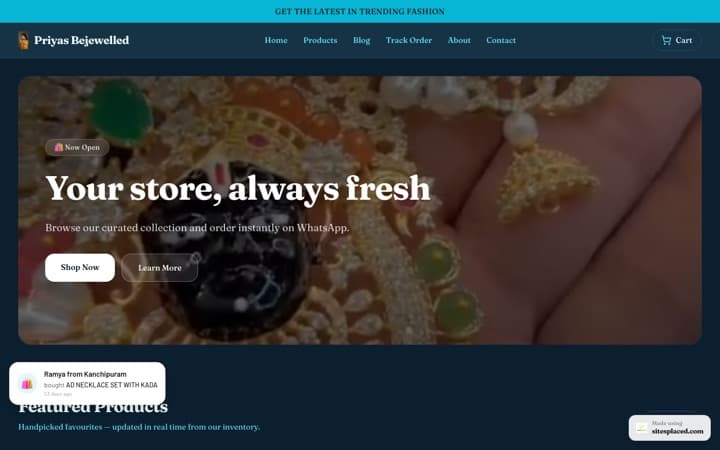
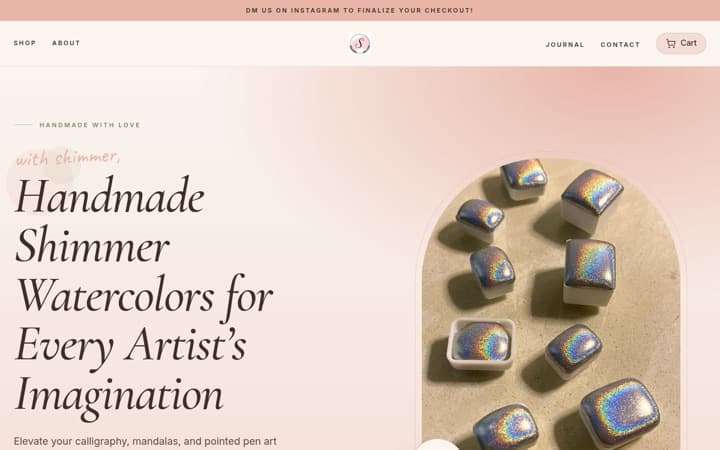
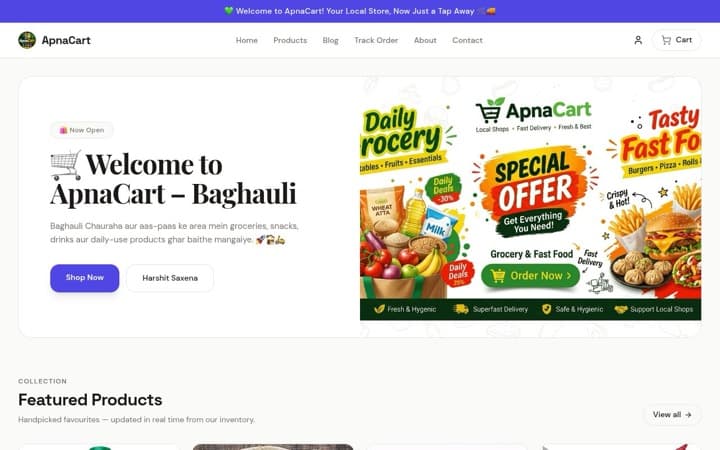
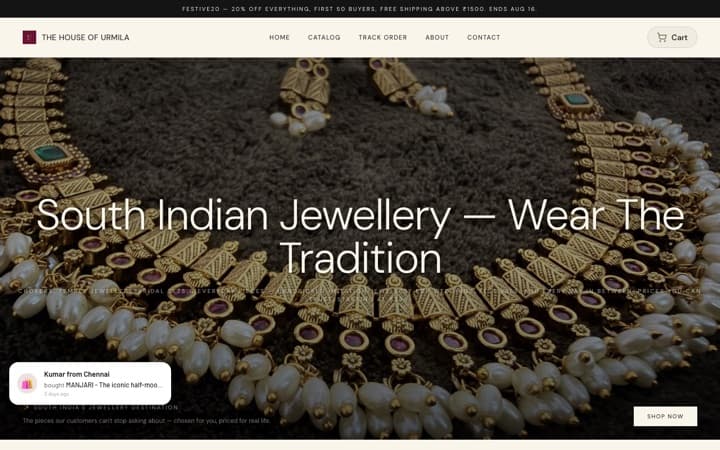
On SitesPlaced this is generated for you and the order is simultaneously recorded in the dashboard, so you have a proper record with an order ID, a Track Order page and an invoice — rather than a chat thread you have to scroll for.
The honest trade-off
Two costs, and you should know them before you make WhatsApp your default.
It is unpaid. The order exists; the money does not. You have to ask for it, and some conversations go quiet. A prepaid gateway checkout does not have that failure mode.
It does not scale. Ten orders a day in chat is fine. Fifty is a full-time job, and the replies get slower exactly when volume is rising, which is the worst possible time.
The sensible pattern is to offer both: WhatsApp for the buyers who need to ask, and a real checkout with UPI and cards for the ones who do not. Over time, as your store earns trust, the mix shifts toward prepaid on its own.
Use a business number, and answer it
Use WhatsApp Business rather than your personal number — you get away messages, quick replies and a catalogue, and you get to stop working at some point.
Set an away message with a real response time and then meet it. 'We reply within 2 hours, 10am to 8pm' is worth more than instant-reply theatre you cannot sustain. A buyer who is told when to expect an answer will wait. A buyer who is told nothing assumes the store is dead.
If you do not have the website yet
Everything above assumes you already have a store to put WhatsApp checkout on.
A SitesPlaced store is free to build and publish, with 0% commission on every sale, on every plan, and 21 integrations included rather than sold as add-ons. You can import a catalogue straight from Instagram instead of typing products in one at a time.
WhatsApp checkout and COD are on the free plan with no gateway required. On the ₹499/month Growth plan you can add WhatsApp Business API order alerts from your own number.
Frequently asked questions
Does WhatsApp checkout need a payment gateway?
No. It needs no gateway, no KYC and no approval — the buyer taps, a chat opens with their cart pre-filled, and you settle payment in the conversation.
Why does WhatsApp checkout convert better than a form?
Because a first-time buyer usually has a question before they will pay a stranger — size, pincode, colour. A form does not let them ask it. A chat does, and that is the whole barrier for cold mobile traffic.
What should the pre-filled message contain?
Every item with variant and quantity, the total, an order reference and the store name. If the buyer has to retype their order, the benefit is gone.
What is the downside?
The order is unpaid until you chase it, and it does not scale — ten chat orders a day is fine, fifty is a full-time job, and replies slow down exactly when volume rises. Offer WhatsApp alongside a real checkout rather than instead of one.
Take WhatsApp orders from a real store
Build the store free. WhatsApp checkout, COD and every payment gateway are included, at 0% commission.