

How to start a handmade soap business from home in India — cold process or melt-and-pour, the rules, curing and pricing
To start a handmade soap business from home in India, choose between melt-and-pour (quick, no lye, ready in a day) and cold process (oils and lye, cured for weeks, full control), confirm the cosmetics rules that apply to you with CDSCO or your State Licensing Authority before you sell, and price each bar to include oils, packaging, curing time and your hours. Then sell from your own free store.
Key takeaway: soap is a cosmetic in the eyes of the rules, not a craft, so the licensing question comes before the first batch, not after the first sale. The craft itself is forgiving: melt-and-pour gets you selling in a week, cold process gives you a recipe worth building a brand on but locks money up for a month or more while it cures. Price above the bar’s weight in ingredients, sell in sets, and claim nothing about skin you cannot stand behind. For the brand-level decisions (reselling, private label or making it yourself), read how to start a skincare brand in India; this post is only about soap made at home.
TL;DR
- • Two methods: melt-and-pour (base, no lye, ready in a day) or cold process (oils and lye, roughly 4 to 6 weeks of curing).
- • Rules: soap is a cosmetic; CDSCO is the national authority; a manufacturing licence from your state is generally needed. Confirm before selling. No fees quoted here.
- • Safety: lye is caustic; goggles, gloves, sleeves, ventilation, no children or pets, add lye to water.
- • Pricing: a 100 g bar costs about ₹136 to make and pack in our example; ₹249 is the honest price.
- • Packaging: breathable for cold process, shrink wrap for melt-and-pour, a label with the legal details and a batch number.
- • Store: free Beauty Store template, scents as options, sets of three, no treatment claims.
1. Cold process vs melt-and-pour, in plain words
Cold process is soap made from scratch. You weigh oils (coconut, olive or rice bran, castor and others), dissolve lye in water, combine them, and a chemical reaction turns the mixture into soap over a day. The bars then cure for weeks while water leaves them. You control every ingredient, which is why serious soap brands use it.
Melt-and-pour starts from a block of ready-made soap base that you melt, colour, scent, pour into moulds and let set. There is no lye to handle, the bars are ready within a day, and designs can be intricate. You are limited to what the base contains and depend on your base supplier.
| Point | Cold process | Melt-and-pour |
|---|---|---|
| What it is | Oils and lye (sodium hydroxide) react to become soap; you choose every oil | A ready-made soap base is melted, coloured, scented and poured |
| Handling lye | Yes; goggles, gloves, care | No; the base is already soap |
| Ready to sell | After curing, roughly 4 to 6 weeks | Within a day |
| Control over ingredients | Full; you can say exactly what is in it | Limited to what the base contains |
| Equipment | Digital scale, stick blender, moulds, thermometer, safety gear | Microwave or double boiler, moulds |
| Base cost per 100 g bar (example) | Lower on ingredients, higher on time and waiting | Higher on the base, lower on time |
| Suits | A brand built on its recipe | Gifting, fast starts, decorative bars |
Many sellers start with melt-and-pour to learn moulds, scents and packaging while their first cold-process batches cure, then move the range over. Whichever you choose, say which it is on the product page. Buyers who care will ask, and honesty is cheaper than a refund.
2. Safety with lye
Sodium hydroxide (lye, caustic soda) is what makes cold process soap, and it is caustic until the reaction is complete. Handled with care it is routine; handled casually it burns.
- Goggles, gloves, long sleeves every time, and closed shoes. Rinse any splash on skin with plenty of running water, and follow your supplier’s safety sheet for first aid.
- Add lye to water, never water to lye, slowly, in a heat-safe container, in a ventilated space, with your face turned away from the fumes.
- No children, no pets, no food in the room, and dedicated tools and containers that are never used in the kitchen again.
- Label every container and store lye sealed, dry and out of reach.
- Use a tested recipe and a digital scale. Soap-making calculators exist for working out the right amount of lye for your oils; too much lye makes a harsh bar, too little a soft one.
3. The rules: soap is a cosmetic
This is general information, not legal advice. Soap sold for washing the body is treated as a cosmetic in India, and cosmetics are regulated under the Drugs and Cosmetics framework. The national regulator is the Central Drugs Standard Control Organisation (CDSCO); day-to-day licensing for manufacturers is generally handled by your State Licensing Authority.
- Manufacturing for sale generally needs a cosmetics manufacturing licence from your State Licensing Authority, with requirements about premises and testing. Confirm exactly what applies to a home-scale maker in your state before you sell; the rules differ from craft products and change over time.
- Labelling has its own rules: the product name, ingredients, net weight, the manufacturer’s name and address, a batch number, manufacturing date and use-by or best-before, plus the details India’s Legal Metrology rules ask for on pre-packed goods such as MRP and net quantity.
- Claims. “Cures acne”, “removes pigmentation”, “whitens” and similar move a product away from cosmetic rules and are a frequent source of trouble. Say what the soap is made of and how it feels. Nothing about treating skin.
- GST depends on your yearly sales; see do you need GST to sell online in India and confirm with a CA.
We do not quote fees because they change and differ by state. The licensing routes, including private label where someone else holds the licence, are compared in how to start a skincare brand in India.
4. Curing time, as a rough range
Curing is the weeks a cold-process bar spends on a rack after it is cut. Water leaves the bar, it hardens, becomes milder and lasts longer in the shower. As a rough range, four to six weeks is the common guidance; bars with a lot of soft oils can need longer, humid weather slows it down, and your recipe decides. Melt-and-pour needs no cure beyond setting, usually within a day.
For the business this means two things. First, cash flow: a batch made today cannot be sold for a month or more, so your first cold-process batch should go on the rack six to eight weeks before you plan to launch, and you should always have the next batch curing. Second, space: a rack with air around every bar, out of direct sun, somewhere no one will touch them. Date every batch; it becomes the batch number on the label.
5. Pricing a bar, two worked examples
Price from cost, including your time and a margin for the batch that seizes, the scent that fades and the testing and compliance you must pay for. These are example numbers; ingredient prices vary widely by oil and supplier.
| Example: 100 g cold-process bar | Amount |
|---|---|
| Oils (coconut, rice bran or olive, castor) for 100 g | ₹45 |
| Lye | ₹5 |
| Essential oil or fragrance | ₹20 |
| Colour or botanicals | ₹5 |
| Paper band and kraft box | ₹20 |
| Printed label | ₹5 |
| Payment fee (example 2% on ₹249) | ₹5 |
| Your time: a 12-bar batch takes 2.5 hours over its life = 12.5 minutes a bar at ₹150 an hour | ₹31 |
| Total cost | ₹136 |
| Price | ₹249 |
| Left for failed batches, testing, compliance, curing space | ₹113 |
| Example: 100 g melt-and-pour bar | Amount |
|---|---|
| Soap base for 100 g | ₹70 |
| Fragrance and colour | ₹20 |
| Shrink wrap and box | ₹25 |
| Printed label | ₹5 |
| Payment fee (example 2% on ₹249) | ₹5 |
| Your time: 5 minutes a bar at ₹150 an hour | ₹13 |
| Total cost | ₹138 |
| Price | ₹249 |
| Left | ₹111 |
Both land near ₹136 to ₹138 all-in and both make sense at ₹249. The cold-process bar costs less in ingredients but more in waiting and in the licence you need to make it; the melt-and-pour bar costs more in base but is sold the same week. Under ₹200 a bar, the margin disappears into packaging and one failed batch, which is why home soap brands that last price in the ₹249 to ₹399 band and sell sets of three.
Sets matter for another reason: a single ₹249 bar does not carry its own courier. Three bars in one box do. The free product pricing calculator runs these with your numbers.
6. Packaging and the label
- Cold process wants to breathe. A paper band, a kraft box with a window or a cloth wrap. Sealed plastic traps moisture and can make the bar sweat.
- Melt-and-pour wants sealing. Glycerin-rich bases attract moisture from the air and bead with “dew” if left open, so shrink wrap or a sealed bag, then the box.
- The label carries the legal details from section 3, the weight, a batch number and date, and your full ingredient list. Print the same list on the product page.
- Shipping: bars are sturdy, so a padded mailer or a small box with tissue is enough. Weigh a packed set before you set your delivery charge; couriers bill by weight slab. The routine is in how to ship orders from home in India.
7. Selling online: a store that sells smell without smelling
Nobody can smell your soap through a phone, so the page has to do it: a cut bar showing the texture, a description of the scent in plain words (“sharp lemongrass, then soft coconut”), the full ingredient list, and who it is for by skin feel, not by medical promise.
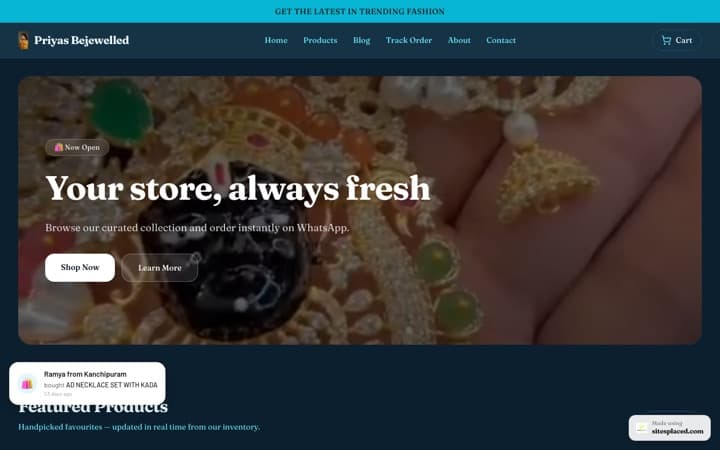
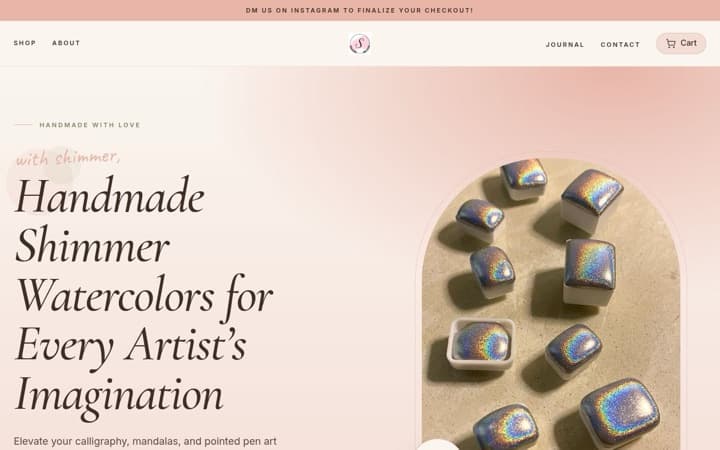
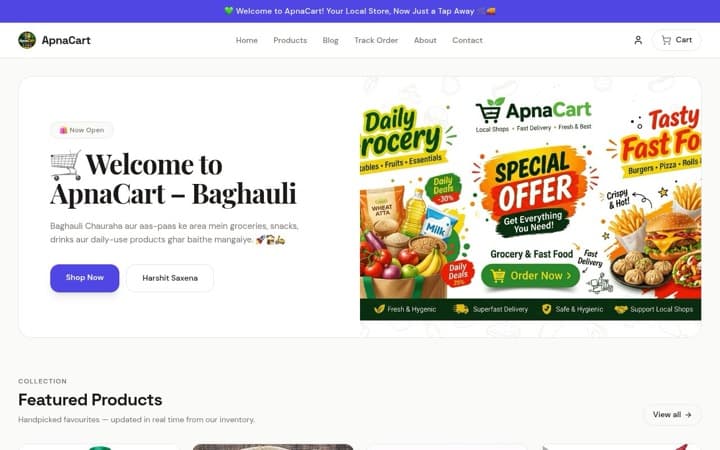
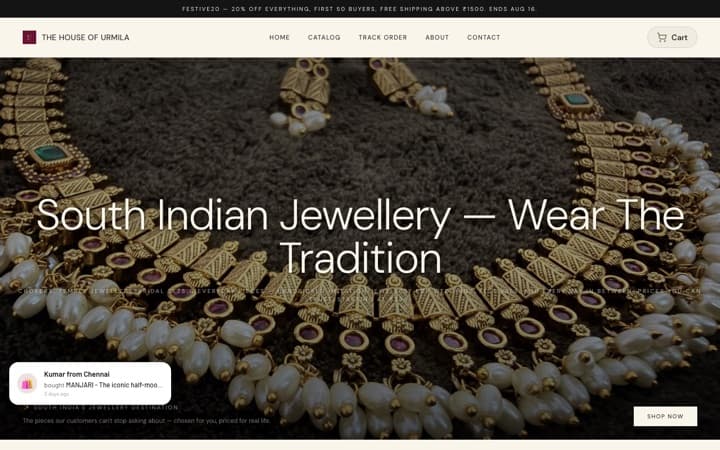
- Pick the Beauty Store template. The free Beauty Store is built for skincare and personal care, with tabbed bestsellers and benefit lines on every card. Changing template later means making a new store.
- Add products with scent as an option (each with its own price if needed), the method (cold process or melt-and-pour), ingredients, weight and a batch-dated best-before.
- Make sets a product: “Trio: lemongrass, charcoal, oatmeal”, and a gift box with personalisation (a text note for the card, gift wrap as a paid extra), both free features.
- Set checkout: online payment through your own Razorpay, PhonePe or Cashfree account at 0% SitesPlaced commission, UPI directly, cash on delivery with an extra COD charge if you want it, and WhatsApp checkout for buyers with questions.
- Set delivery: a flat charge and free delivery above an amount that makes a trio the obvious choice, shown as a progress bar in the cart.
- Publish at yourbrand.sitesplaced.site and put the link in your Instagram bio.
Reviews carry a product nobody has smelled; they are part of the Growth plan, with Google star ratings on your product cards. Until then, ask every early buyer for a photo and a sentence and post them to your stories. More layouts in the best beauty and skincare store templates.
8. Timing a launch for the gifting season
Soap sells as a gift as much as a necessity, and the season from Christmas on 25 December through the wedding months of November to February is when trios and gift boxes move. Work backwards from curing: a cold-process range for December gifting goes on the rack by late October. Candle makers face the same calendar and the same labelling questions; how to start a candle business online in India is a useful neighbour, and many soap sellers add a candle to their gift box.
9. When to pay for a plan
The free plan has no commission and no limit on products or orders, so it costs nothing while your first batches cure. When you want yourbrand.com, no SitesPlaced badge and store analytics, Starter is ₹199 for 30 days, paid once with no autopay, or ₹1,990 for a year. Paid plans also make your store’s pages answer about 4× faster than on the free plan: measured on live paid stores on 28 September 2026, a page answered in about 75 ms instead of about 330 ms. Growth at ₹499 a month adds product reviews with Google stars and the sales boosters such as frequently bought together, which suits a range of scents. With autopay, the code FREE7 gives 7 days free on either plan; cancel before the first charge and pay nothing.
Frequently asked questions
Do I need a licence to sell handmade soap in India?
Soap sold for washing the body is treated as a cosmetic in India, and cosmetics have their own rules. Making cosmetics for sale generally needs a licence from your State Licensing Authority under the framework overseen by CDSCO, the Central Drugs Standard Control Organisation, and there are labelling rules too. Confirm exactly what applies to you with your State Licensing Authority or CDSCO before you sell, and consider a regulatory consultant. We do not quote fees because they change.
Is melt-and-pour soap really handmade soap?
It is handmade in the sense that you shape, colour and scent it by hand, and it is a fair way to start. Be honest in the description: say it is made from a soap base and list what the base contains. Do not call it cold process or claim you chose the oils, because buyers who care about that will ask.
How long does cold process soap need to cure?
As a rough range, four to six weeks, on a rack with air around each bar, out of direct sun. Curing lets water leave the bar so it hardens and lasts longer in the shower; some recipes with a lot of soft oils take longer. Your recipe, your climate and your humidity decide, so test a bar from each batch before you sell from it.
How much does it cost to start a soap business from home?
For cold process, a digital scale, stick blender, a couple of moulds, a thermometer, safety goggles and gloves, plus oils, lye and fragrance for the first batches, is an example budget of a few thousand rupees; melt-and-pour needs less equipment and more spend on the base. The bigger cost is time: a cold-process batch locks money for a month or more before it can be sold. The online store can be free on SitesPlaced.
How much should I charge for a handmade soap bar?
Add oils or base, fragrance, colour, packaging, label, payment fee and your time per bar, then a margin for failed batches, testing and the rules you must comply with. In our worked example a 100 g cold-process bar cost about ₹136 to make and pack and sold at ₹249, leaving about ₹113; a melt-and-pour bar came to about ₹138. Sets of three raise the order value and share one parcel.
Can I say my soap cures acne or whitens skin?
No. Claims about treating or curing a condition move a product from cosmetic towards drug rules, and whitening claims are a well-known problem area. Describe what the soap is made of and how it feels and smells, and leave medical and skin-changing claims out. If in doubt, ask CDSCO or a regulatory consultant before you print it.
Is handmade soap profitable?
It can be, with patience. Ingredients are cheap per bar, but cold process ties up money for weeks, packaging and compliance are real costs, and a soap people have never smelled is sold on trust. Sellers who do well price above ₹200 a bar, sell sets and gift boxes, and build a small, honest range rather than fifty scents.
Which SitesPlaced template suits a soap brand?
The free Beauty Store template, built for skincare and personal care, with tabbed bestsellers and benefit lines on every card. The Wellness Store is a calmer alternative. Both show “Price on request” for a product without a price, and both support options such as scent, each with its own price. Changing template later means making a new store.
Open a free store today
Scents as options, sets, gift personalisation and delivery rules are all on the free plan, with 0% commission. Starter is ₹199 once for 30 days, no autopay; FREE7 gives 7 days free with autopay.