

Online business ideas for students in India — 12 things you can actually sell with little money and an hour a day
The online businesses that work for a college student are the ones you can run in about an hour a day between classes, start with under ₹2,000, and sell to people you already see: art prints and stickers, thrifted clothes, snacks on campus, crochet, Canva templates, your own notes as downloads, print-on-demand merch, custom badges for fests, handmade jewellery, Lightroom presets, personalised gifts and second-hand textbooks. This is a list about selling, not about building a portfolio. For each idea: what you sell, who buys, an example start cost, the time it takes, how you deliver, and the risk.
Key takeaway: campus is the easiest market you will ever sell to: a few thousand people, all reachable, all with the same birthdays, exams, fests and farewells on the calendar. Start there, by hand, with no courier. Put your products and prices on a free store so you stop retyping them in group chats, take money by UPI into an account in your own name, fix your hours before you fix your product, and pause the store during exams instead of vanishing.
TL;DR
- • Cheapest to start (₹0): your notes, Canva templates, presets, second-hand books.
- • Best on campus: snacks, badges and merch for fests, personalised gifts before farewells.
- • Travels best off campus: downloads, prints, jewellery, crochet (light parcels).
- • Time: one hour a day plus a packing session a week; fixed dispatch days; pause during exams.
- • Money: your own UPI ID first; a gateway (Razorpay, PhonePe or Cashfree) once you meet its rules.
- • Store: free, unlimited products, one live download on the free plan, 0% commission.
The 12 ideas
Art prints and stickers
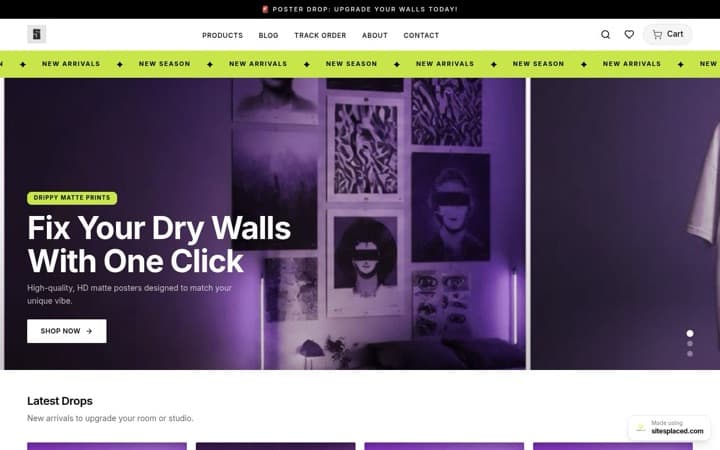
- What you sell: Your drawings as A5/A4 prints and die-cut stickers, printed at a local shop in small runs.
- Who buys: Classmates, hostel walls, Instagram followers who like your style.
- Example start cost: ₹500 to ₹1,500 for a first run of 30 to 50 prints.
- Time: An evening a week to draw; an hour to pack.
- How you deliver: By hand on campus; by post or courier off campus (flat in a rigid mailer).
- The risk: Prints bend in transit. Use a card backing and a plastic sleeve.
Thrift and pre-loved clothes
- What you sell: Curated second-hand pieces from your own and friends’ wardrobes, washed, photographed, measured.
- Who buys: Students who want a look without the price; the thrift community on Instagram.
- Example start cost: ₹0 to ₹1,000 (washing, hangers, a plain sheet for photos).
- Time: A weekend to shoot a drop of 15 to 20 pieces.
- How you deliver: Hand-off on campus; courier for outsiders.
- The risk: Sizing disputes. Measurements on every listing, no returns stated clearly.
Snacks on campus: brownies, cookies, laddoos
- What you sell: A short menu baked or made on a fixed day, pre-ordered.
- Who buys: Your hostel block, your department, late-night study groups.
- Example start cost: ₹800 to ₹2,000 for ingredients and boxes for a first batch.
- Time: One cooking day a week; take orders the two days before.
- How you deliver: By hand at a fixed time and place.
- The risk: Hostel and college rules on selling food, and FSSAI generally applies to food sellers (foscos.fssai.gov.in). Check both before the first batch.
Crochet and handmade accessories
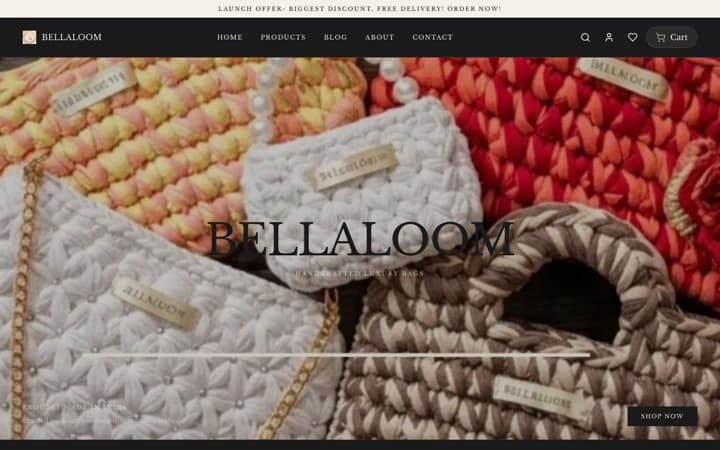
- What you sell: Bag charms, bookmarks, hair accessories, small bags.
- Who buys: Classmates, gift buyers before birthdays and farewells, Instagram.
- Example start cost: ₹500 to ₹1,200 in yarn and hooks.
- Time: Made in lectures’ gaps and bus rides; batch-pack on Sundays.
- How you deliver: Hand-off on campus; light enough to post anywhere.
- The risk: Your hours. Price the time or you will quit by mid-semester.
Canva templates: resumes, presentations, Instagram packs
- What you sell: Editable templates you designed, delivered as a Canva share link in a download.
- Who buys: Other students, small businesses, fresher job-seekers.
- Example start cost: ₹0 (Canva free) to the price of Canva Pro if you want its assets.
- Time: A weekend to make a bundle; nothing to pack after that.
- How you deliver: Instant download on payment.
- The risk: Copying and a crowded market. Make them for one specific use (placements, fests) and bundle.
Your own notes, formula sheets and study planners as downloads
- What you sell: Notes you wrote, in your words, for a course or an entrance exam.
- Who buys: Juniors in your course; students preparing for the same exam.
- Example start cost: ₹0.
- Time: You already made them; a few hours to clean up.
- How you deliver: Instant download on payment.
- The risk: Copyright. Sell your own notes, never scans of a textbook or a coaching institute’s material.
Print-on-demand merch: college or fest T-shirts, totes, phone cases
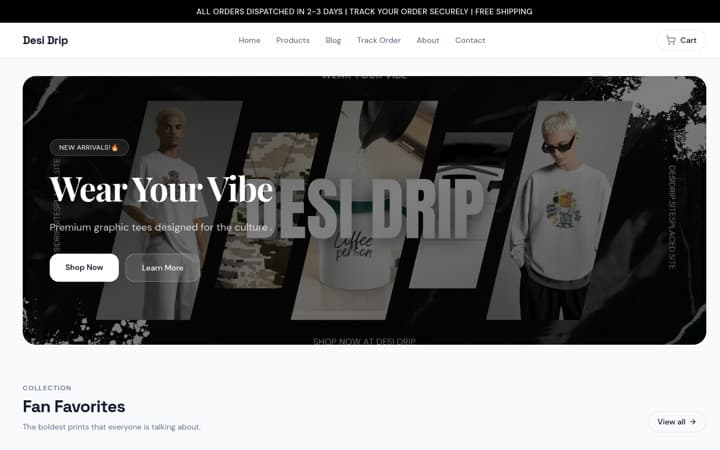
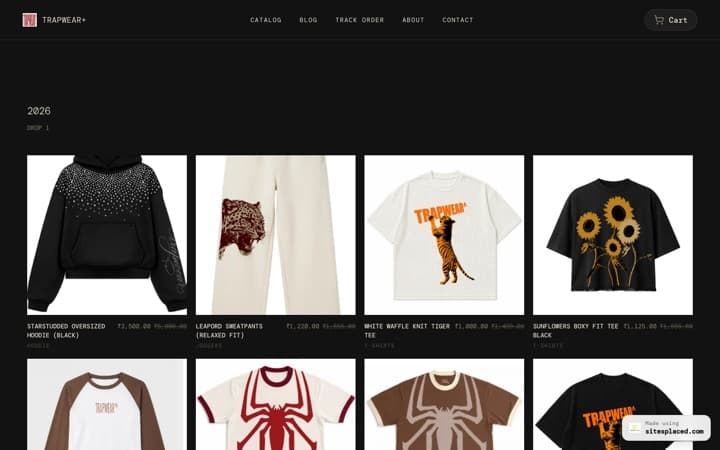
- What you sell: Your designs, printed and shipped by a print-on-demand service only when someone orders.
- Who buys: Your batch, societies, fest-goers, alumni.
- Example start cost: ₹0 to ₹600 for one sample of each design.
- Time: Design once; orders run themselves.
- How you deliver: Shipped by the print service.
- The risk: Thin margins and quality you did not see. Order a sample first; check your college’s rules on using its name or logo.
Custom badges, keychains and laptop stickers for societies and fests
- What you sell: Bulk sets of 50 to 200 for a club, a department or an event, made by a local printer.
- Who buys: Society treasurers, fest teams, department reps.
- Example start cost: ₹1,000 to ₹2,500 for samples and a first small order.
- Time: Bursty: busy in fest season, quiet otherwise.
- How you deliver: Hand over in bulk on campus.
- The risk: One order is a big share of your money. Take a 50% advance by UPI before ordering from the printer.
Handmade jewellery: clay and beaded earrings
- What you sell: Small batches of earrings and bracelets in a few designs.
- Who buys: Classmates and Instagram; gifting before farewells and festivals.
- Example start cost: ₹800 to ₹2,000 in clay, findings, beads.
- Time: Two evenings a week.
- How you deliver: Hand-off on campus; small boxes by post.
- The risk: Breakage and lookalike competition. Pack in a rigid box; let your style, not the material, be the point.
Lightroom presets and photo editing packs
- What you sell: Your editing style as preset files, with a before/after preview.
- Who buys: Students and small creators who like your photos.
- Example start cost: ₹0.
- Time: A weekend to build and test a pack of 8 to 10.
- How you deliver: Instant download on payment.
- The risk: Piracy. Watermark previews, update the pack, bundle with a short how-to.
Personalised gifts: polaroid prints, name mugs, photo frames
- What you sell: Small custom gifts made through a local print shop, ordered with a name or photo.
- Who buys: Birthdays, farewells, anniversaries among your friends and their friends.
- Example start cost: ₹500 to ₹1,500 for samples.
- Time: A few hours a week; peaks around farewells and Valentine’s week.
- How you deliver: Hand-off on campus or courier.
- The risk: Spelling mistakes and no returns. A text field and a photo upload on the product, and a confirmation before you print.
Second-hand textbooks, lab coats and drafting kits
- What you sell: Books and gear you and seniors no longer need, listed by course.
- Who buys: Juniors every semester, like clockwork.
- Example start cost: ₹0 to ₹500 to buy a few from seniors.
- Time: Busy for two weeks at the start of each semester.
- How you deliver: By hand on campus.
- The risk: Low prices. Sell course bundles rather than single books.
Two of these have their own full guides: how to sell digital art online covers prints, downloads and licences for idea 1, and how to sell Canva templates covers setup, pricing and delivery for idea 5.
All 12 at a glance
| # | Idea | Example start cost | Stock to keep? |
|---|---|---|---|
| 1 | Art prints and stickers | ₹500 to ₹1,500 | Yes, a little |
| 2 | Thrift and pre-loved clothes | ₹0 to ₹1,000 | Yes, a little |
| 3 | Snacks on campus: brownies, cookies, laddoos | ₹800 to ₹2,000 | Made to order |
| 4 | Crochet and handmade accessories | ₹500 to ₹1,200 | Yes, a little |
| 5 | Canva templates: resumes, presentations, Instagram packs | ₹0 | No |
| 6 | Your own notes, formula sheets and study planners as downloads | ₹0 | No |
| 7 | Print-on-demand merch: college or fest T-shirts, totes, phone cases | ₹0 to ₹600 | No |
| 8 | Custom badges, keychains and laptop stickers for societies and fests | ₹1,000 to ₹2,500 | Yes, a little |
| 9 | Handmade jewellery: clay and beaded earrings | ₹800 to ₹2,000 | Yes, a little |
| 10 | Lightroom presets and photo editing packs | ₹0 | No |
| 11 | Personalised gifts: polaroid prints, name mugs, photo frames | ₹500 to ₹1,500 | Made to order |
| 12 | Second-hand textbooks, lab coats and drafting kits | ₹0 to ₹500 to buy a few from seniors | Yes, a little |
Example figures only; costs depend on your city and what you already own.
Time-boxing it around classes
The business that fails is the one that spreads across every hour. Decide the hours first. A pattern that works for most of the ideas above: one hour a day for replies, orders and posting (the same hour every day, say after dinner), and one two-hour session a week for making and packing. Choose one or two dispatch or hand-off days and print them on every product page (“Hand-off Tuesdays and Fridays, 6 pm, main gate”). Buyers accept a schedule; they do not accept silence.
Exams are when students quietly abandon a side business, and it is unnecessary. On a SitesPlaced store, pause ordering (Settings → Checkout) stops new orders and shows your own message (“Back after 20 December, exams on”), and the announcement bar carries the date on every page. Both are free. Pause for two weeks, unpause, and your buyers are still there; vanish for two weeks without a word and they are not.
Choose ideas whose busy weeks match your free weeks. Textbooks and badges are busy at the start of a semester; snacks are busy before exams, which is exactly when you are not. Downloads need no time at all once they are up, which is why one digital product is a good anchor under any other idea.
Taking payments as a student
Step one is a UPI ID on a bank account in your own name. Most banks open accounts for students; the age rules and the documents differ by bank, so ask yours. Your own account means the money and the record are yours, which matters when a buyer asks for a refund or you want to show a recruiter what you did. On campus, a UPI QR code on your phone (our free UPI QR code generator makes one) and cash in hand cover every order.
Step two, when you want UPI and cards at checkout on a store, is your own payment gateway account: Razorpay, PhonePe or Cashfree. Each has its own KYC process and its own rules on age and the documents it wants, which can include identity and address proof and a bank account; read the gateway’s current requirements rather than relying on anyone’s summary. If you are under the age a gateway accepts, a parent can hold the account, with your agreement, until you are not. The gateway charges its usual fee per online payment; SitesPlaced adds nothing and takes 0% commission.
Until a gateway is connected, a SitesPlaced store’s free Pay the store directly option lets a buyer place the order and pay your UPI ID, which appears on their order-placed screen and the invoice; you confirm when the money lands. For a bulk order (fest badges, a society’s merch), take an advance by UPI before you spend anything at the printer. Whether tax applies to what you earn depends on how much it becomes; do you need GST to sell online in India explains the GST side in plain words, and a CA can confirm your case.
The free store
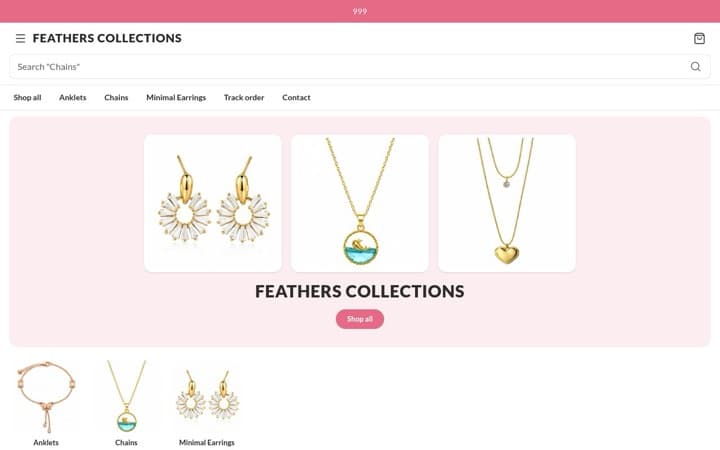
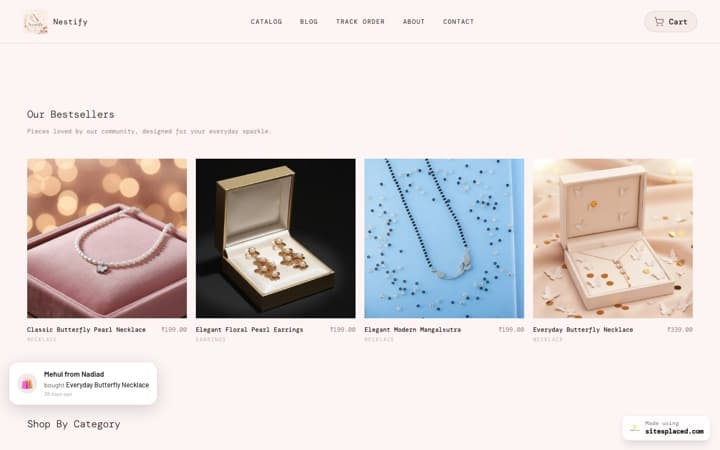
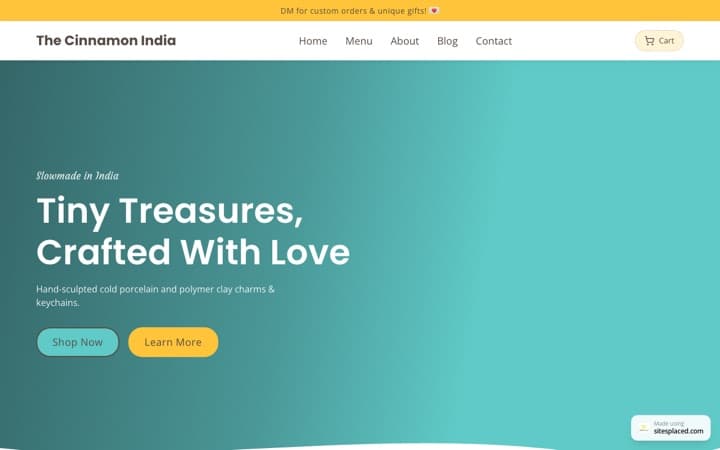
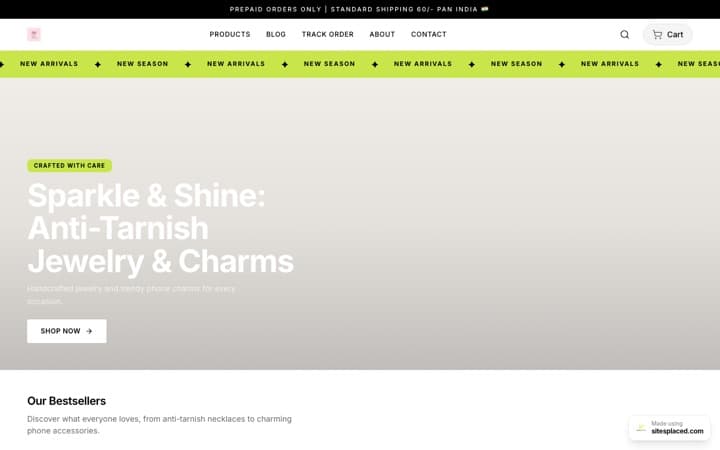
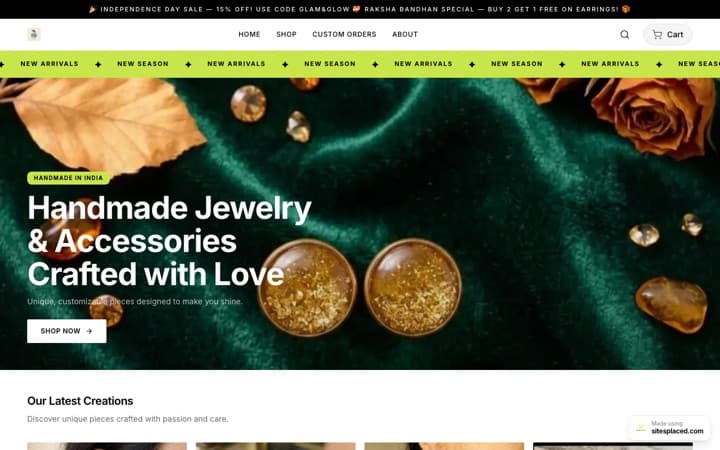
You can run idea 3 or 12 from a group chat forever. The moment you have more than five products or more than one price, a store saves you the retyping and makes you look like you mean it. A free SitesPlaced store gives you unlimited products with variants (sizes, colours, flavours), coupons, cash on delivery, WhatsApp checkout for the orders that need a chat, UPI through your own gateway when you have one, invoices, and a free address like yourname.sitesplaced.site with a small SitesPlaced badge. No commission on anything you sell.
One limit to know: the free plan allows one live download product. That is enough to start a notes, template or preset business with one bundle; selling several downloads needs the Growth plan (₹499 a month, or ₹4,990 once for a year). The mechanics of a download product (the file is released on payment, link limits, what to do about sharing) are in sell digital downloads with no commission and protecting digital downloads from piracy. Print-on-demand through Qikink or Printify (idea 7) connects on the free plan too.
Separately from the store: a portfolio site for placements is also free to build and publish on SitesPlaced, and a one-time ₹99 removes the badge on the student portfolio templates. That is a different thing from selling, and it lives at SitesPlaced for students. If you want both, the store sells and the portfolio links to it.
Getting the first ten orders on campus
- Sell to a date. “Brownies before the Friday exam, order by Wednesday.” “Farewell polaroids, order by the 20th.” A deadline turns interest into an order.
- One drop at a time. Fifteen thrift pieces on Sunday, gone by Tuesday, next drop next Sunday. Scarcity you did not fake.
- Hand-offs beat couriers. No packaging cost, no delivery charge, no RTO. Fix a time and a place.
- Ask for the forward. Every happy buyer knows thirty people in your college. Ask them to send the link to one.
- Price in round numbers that fit a UPI payment without change: ₹99, ₹149, ₹249.
The general version, for selling beyond campus, is in how to get your first 10 orders.
Frequently asked questions
Can a college student legally sell things online in India?
Yes. There is no rule against a student running a small business. What you need to check is practical: your college's or hostel's rules on selling on campus, the age and documentation rules of your bank and your payment gateway, and, if your earnings grow, whether income tax or GST applies to you. Food sellers generally need FSSAI registration. When in doubt, ask a CA; most charge little for a first conversation.
How do I get paid as a student?
Start with a UPI ID on a bank account in your own name; most banks open accounts for students, with their own age rules, so check with your bank. To take UPI and card payments at checkout on a store, you connect your own Razorpay, PhonePe or Cashfree account, and each gateway has its own KYC and age requirements; read theirs before you sign up. If you are under the age a gateway accepts, a parent can hold the account with your agreement. Until then, a store's 'pay the store directly' UPI option and cash in hand on campus both work.
Do I need GST to sell as a student?
Most student sellers are far below the turnover where GST registration becomes compulsory, but the rules depend on what you sell, how much and where, and the thresholds change. Do not take a number from a blog post; read our plain-English guide to GST for online sellers and confirm your situation with a CA if your sales grow.
How much time does a student side business take?
Decide the hours first and fit the business inside them, not the other way round. One hour a day plus one packing session a week runs most of the ideas on this list. Set fixed dispatch days, say them on your product pages, and pause ordering during exams with a note on the store rather than quietly disappearing. The ideas that sell downloads take the least ongoing time.
What sells best in college?
Things with a date attached: snacks before exams, gifts before farewells and birthdays, merch before fests, textbooks at the start of a semester. Campus is a small, dense market where word of mouth travels in minutes, so one good drop sells the next one. Off campus, digital products and prints travel furthest because they are cheap or free to deliver.
Can I sell my class notes online?
Your own notes, written in your own words, yes. Scans of a textbook, a coaching institute's material or a professor's slides, no; that is their copyright, and selling it can get you into trouble with the college as well as the law. The notes that sell are the ones that explain a hard topic simply, so write them to be understood, not to be complete.
Will running a small business hurt my placements?
Usually the opposite, if you keep your grades up. A small business you actually ran is evidence of initiative, numbers and dealing with customers, and recruiters ask about it. Put it on your resume honestly: what you sold, roughly how many orders, what you learned. Do not inflate it; interviewers can tell. If you want a portfolio site alongside the store, student portfolio sites are free to build and publish on SitesPlaced.
Open a free store between two lectures
Unlimited products, one download product, coupons, cash on delivery, WhatsApp checkout, pause ordering for exams, and UPI through your own gateway when you have one. 0% commission, on the free plan.