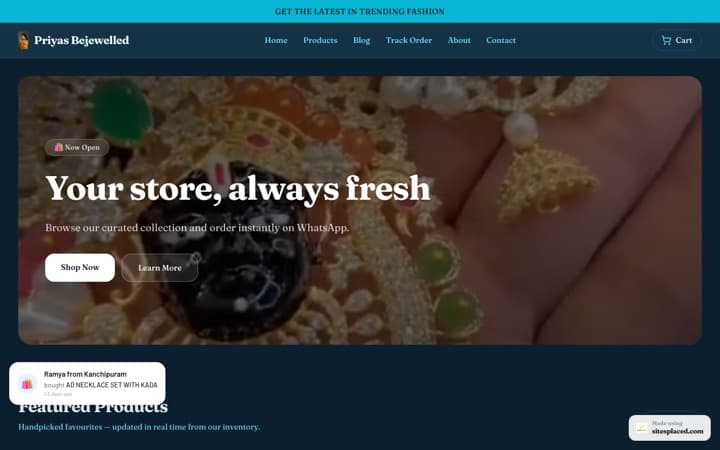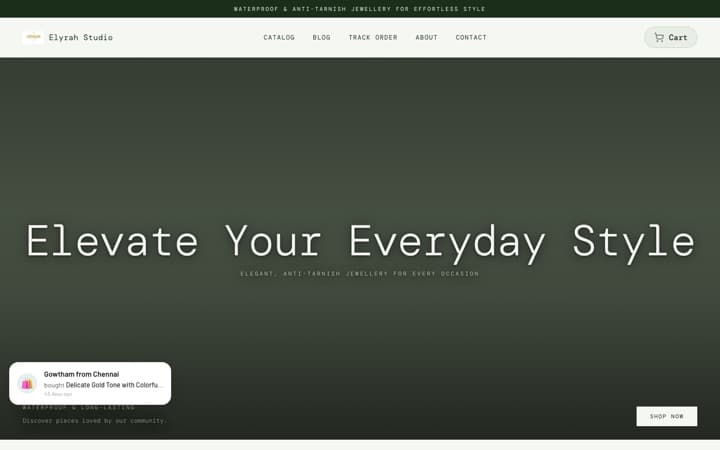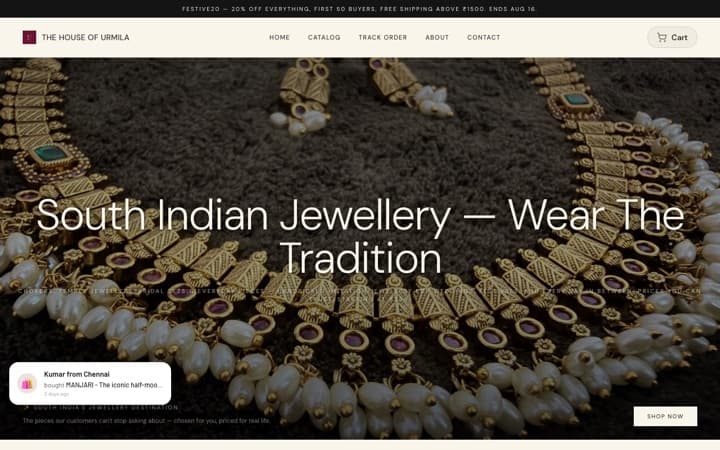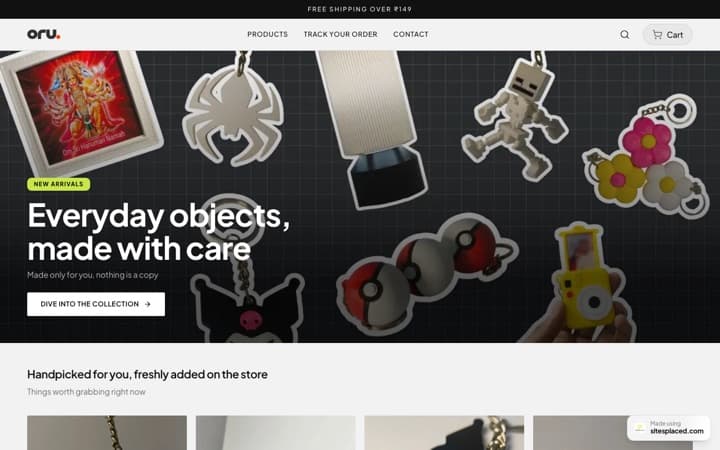



Are Instagram Shop fees worth it? — the real cost-benefit maths
Instagram looks free until you add up the selling cuts, payment-link fees and ad spend it takes to actually reach buyers. Here's how those costs stack up against a free, 0%-commission store you own — and when each one wins.
The short version: Instagram is brilliant for discovery, but the costs of selling on it — fees, link cuts and ads to reach your own audience — scale with every order. A SitesPlaced store is free to build and publish, takes 0% commission, and gives you an asset you actually own. From the very first order, the maths usually favours the store.
What "free" on Instagram actually costs
Posting on Instagram is free. Selling on it rarely is. The bill arrives in three quiet pieces, and none of them shows up as a single line item, which is exactly why so many sellers underestimate them.
- Selling and payment-link fees. Where Instagram's checkout operates it takes a percentage of each sale. In India, where most orders still close through payment links or DMs, you instead pay a processing fee on every transaction. Either way, a slice of each order disappears.
- Ad spend to reach your own followers. Organic reach has fallen for years. To get even your existing audience to see a launch, you increasingly pay to boost it. That's a recurring cost that grows as you scale, not a one-time setup.
- Time lost in the DMs. Manually quoting prices, chasing addresses and confirming payments has a real hourly cost. Every order you handle by hand is margin you spend without seeing it on an invoice.
Instagram fees vs a store you own
| Cost | Selling on Instagram | SitesPlaced store |
|---|---|---|
| Selling / platform fee | A cut per sale where checkout exists; in India most still settle via payment links or DMs | ₹0 — no per-sale platform cut |
| Payment processing | Payment-link / gateway fee on every transaction | Razorpay/UPI gateway fees only; 0% SitesPlaced commission on top |
| Reach | Often pay-to-play ads to reach your own followers | Free Google/SEO traffic + your own domain you keep |
| Monthly cost | Variable — scales with ad spend, never an asset | Free to build & publish; ₹199/month ($7.99, Starter) only for a custom domain, no badge + AI |
| What you own | Nothing — account, audience and storefront are rented | Your domain, checkout and customer data |
A simple break-even example
Treat this as illustrative — plug in your own numbers. Say you sell 40 orders a month at an average of ₹800. That's ₹32,000 in revenue. If percentage selling fees and payment cuts take even 3–4% of that, you're handing over roughly ₹960–₹1,280 every month, before any ad spend. Add a modest boost budget and the figure climbs further.
A SitesPlaced store is free to build and publish with 0% commission, so the platform cost stays at zero no matter how many orders you ship — the same maths that makes it a cheaper Shopify alternative in India for sellers comparing monthly-fee platforms. You still pay your gateway's standard processing fee on prepaid orders, but there's no extra commission stacked on top. The more you sell, the wider the gap opens in your favour — because your platform cost stays at zero while percentage fees keep climbing.
Every percentage cut and link fee you'd pay selling on social is margin you keep instead. You only ever pay ₹199/month (Starter) if you later want a custom domain, the SitesPlaced badge removed and AI — never a per-sale cut.
What you stop paying for on your own store
- • No per-sale commission — 0% on every order, you keep every rupee.
- • No plugin or app subscriptions — UPI, COD, Razorpay and WhatsApp checkout are built in.
- • No separate domain, hosting or invoicing bills — custom domain, hosting and GST-ready PDF invoices are included.
- • No paying to "rent" reach — your store ranks on Google and brings buyers without the algorithm gating it.
When Instagram fees are still worth it
None of this means you abandon Instagram — quite the opposite. Instagram is one of the best discovery channels a small seller has ever had, and the reach it gives you is genuinely valuable. The mistake is treating it as both your shop window and your cash register.
The fees you pay for discovery are worth it; the fees you pay for checkout on rented land usually aren't. Use Instagram to get found, then route that traffic to a website for your Instagram business that you control, where the sale closes without a commission and the customer becomes yours. That's the combination that protects your margin instead of slowly draining it.
Frequently asked questions
Does Instagram charge a fee to sell?
Instagram does not charge to post or run a shop catalog, but where its checkout operates it takes a selling fee, and you still pay payment-processing fees. In India most sellers settle through payment links or DMs, so the real costs are gateway fees plus the ad spend needed to reach buyers — costs that scale with every sale.
Are Instagram Shop fees worth it for small sellers?
If selling fees, payment-link cuts and ads quietly take a slice of each order, your margin shrinks as you grow. A flat-fee store you own can be cheaper past a low monthly volume because there's no per-sale commission. Run the simple break-even maths on your own numbers before deciding.
How much does SitesPlaced cost compared to Instagram fees?
SitesPlaced is free to build AND publish a full store, with 0% commission on sales — you keep every rupee. UPI, Cash on Delivery, Razorpay and WhatsApp checkout are included free. You only pay from ₹199/month ($7.99, Starter) when you want a custom domain, the SitesPlaced badge removed, AI and higher limits — so there are no surprise per-sale cuts.
Can I avoid per-sale commission entirely?
Yes. On your own SitesPlaced store there is 0% platform commission; you only pay your payment gateway's standard processing fee. That keeps a far larger share of each order in your pocket than a marketplace that takes a percentage of every transaction.
When does owning your own store beat percentage fees?
Almost immediately. A SitesPlaced store is free to build and publish at 0% commission, so every percentage cut and link fee you'd pay selling on social is margin you keep instead — and it builds an asset you own. You only ever pay ₹199/month (Starter) if you later want a custom domain, the badge removed and AI.
Stop paying per sale — own your store
Keep Instagram for discovery and move checkout to a store you own. Free to build and publish, 0% commission on every order; pay from ₹199/month (Starter) only for a custom domain, badge removal and AI.