


How to start a pickle and masala business from home in India — FSSAI, shelf life, jars and courier, without guesswork
To start a pickle and masala business from home, register with FSSAI on the FoSCoS portal, pick three or four products you can make in batches and whose shelf life you have tested, pack them in jars that survive a courier, label them properly, and price each jar to include the packaging and your hours. Then sell from your own store so repeat buyers reorder without messaging you.
Key takeaway: pickles and masalas are one of the few home-food businesses that can ship across India, because the products keep. That is also the whole business: a small line, made in batches, in jars that don’t leak, with a shelf life you have proved on your own shelf. Get FSSAI registration first, test before you print a date, and price per jar including the jar. The detailed label, shelf-life testing and packing routine is in how to sell homemade food online in India; this post is about setting up the business itself.
TL;DR
- • Paperwork: FSSAI registration on FoSCoS, generally needed; confirm what applies to you. GST depends on sales. No fees quoted here.
- • Line: three or four products that keep: oil pickles, dry masalas, podis. Fresh chutneys stay local.
- • Shelf life: test it on your own shelf before you print a date.
- • Jars: glass for looks and gifting, food-grade PET for parcels; the seal matters most.
- • Pricing: ingredients + jar + packing + fee + your minutes per jar, then a margin. Combos spread the courier.
- • Store: free Food Store template, pack sizes as options, prepaid or COD with a charge, no returns on food.
1. Paperwork first: FSSAI and the rest
This is general information, not legal advice. Food rules are enforced locally and change, so confirm your own case.
- FSSAI. Anyone who makes and sells food, including from a home kitchen, is generally expected to be registered with the Food Safety and Standards Authority of India. Small businesses usually start with a basic registration; larger ones need a state or central licence, based on turnover and scale. You apply on FoSCoS (foscos.fssai.gov.in), FSSAI’s official portal, which guides you to the right one. Confirm what applies to you there or with a CA. Once you have a number, it goes on every label and on your store’s About page.
- Packed-goods rules. Packed goods sold to consumers generally need certain details on the pack under India’s Legal Metrology rules, such as your name and address, the net weight, the MRP and the month of packing, and online sellers are expected to show them on the product page too.
- GST. Separate from FSSAI, and it depends on your yearly sales and whether you ship to other states. See do you need GST to sell online in India and confirm with a CA.
- Udyam. Registering as a micro business is optional and free, and useful for bank and bulk-buyer paperwork later; see Udyam registration for online sellers.
2. Pick a small line that keeps
The question is not “what do I make well” but “what do I make well that survives ten days in a courier bag”. The table sorts the usual products by how they keep. Shelf life depends on your recipe, so treat the middle column as a general description, not a promise.
| Product | How it generally keeps | Ships by courier? |
|---|---|---|
| Oil and salt pickles (mango, lemon, mixed veg, garlic) | Preserved by oil, salt and sun; keep for long periods once tested | Yes, if the jar is sealed against leaks |
| Dry masalas (garam, sambar, chai, biryani) | Dry; keep well away from moisture | Yes, light and safe |
| Dry podis and chutney powders | Dry; keep well | Yes |
| Sweet preserves (chhundo, murabba) | Sugar-preserved; keep reasonably well | Yes, in a sealed jar |
| Fresh chutneys (coriander, mint, coconut) | Days, in a fridge | No; local delivery only |
| Water-based pickles (gajar-gobhi in winter) | Short; fridge | No; local only |
Start with one regional speciality people can’t get elsewhere (an Andhra-style avakaya, a Gujarati chhundo, a Rajasthani ker sangri, a Punjabi aam ka achaar) plus two dry masalas that use the same spices. Regional is your edge: a buyer in Bengaluru who grew up in Lucknow will pay for the pickle that tastes like home. Keep fresh chutneys for your own city, delivered the same day.
3. Shelf life and the label, in general terms
A pickle that is fine at home for a year is not automatically fine after a week in a hot courier van and a month in a buyer’s kitchen. Test it: keep jars from every batch on your own shelf, in your own weather, for the whole period you intend to print, and open one at intervals. Print only what you have seen hold. If a batch is different (a wetter mango, a new oil), test again.
The label, in general terms, carries: the product name, the full ingredient list with allergens, the net weight, the MRP, the month of packing and the best-before you tested, storage instructions (“keep dry, use a dry spoon, refrigerate after opening” if that is true), your name and address, and your FSSAI number. Mark vegetarian or non-vegetarian as the rules require. Put the same information in the product description online.
The step-by-step for testing and labelling is in how to sell homemade food online in India, which this post does not repeat.
4. Glass or plastic?
Every new pickle seller asks this. Here is the honest comparison:
| Point | Glass | Food-grade PET plastic |
|---|---|---|
| Looks | Premium, lets the pickle show | Looks cheaper unless the design is good |
| Weight | Heavy; courier is billed by weight slab | Light; cheaper to ship |
| Breakage | Can crack or shatter in transit | Does not break |
| Oil and spice | Does not react or stain | Use food-grade PET; check with the supplier that it suits oil pickles |
| Reuse at home | Buyers keep and reuse the jar | Often thrown away |
| Cost per jar | Higher | Lower |
A sensible split: glass for local delivery, gifting boxes and the festive season, where the jar is part of the gift; PET for single jars going across the country. Whichever you pick, buy jars from a supplier who sells to food businesses, ask for the lid that seals against oil, and add a shrink band or tamper seal. The seal is what stops a complaint; the material is what the buyer notices.
5. Couriering jars
Leaks and breaks are the two complaints a pickle seller gets. Both are packing problems, and both are solved before your first order by posting a jar to yourself.
- Leave headspace at the top of the jar; oil expands in heat. Tighten the lid, add a shrink band or tape across it, then wrap the lid area in cling film.
- Bubble-wrap the jar and pack it upright in a box with filler so nothing moves when shaken. Two or three jars should not touch each other.
- Mind the weight slab. Couriers bill in weight slabs, so a 250 g pickle in a heavy glass jar with a box can fall into a higher slab than the pickle itself suggests. Weigh a packed parcel before setting your delivery charge.
- Combos ship better. Three jars in one box cost far less per jar to send than three parcels, which is why a “tasting trio” is both your best seller and your best margin.
- Book through an aggregator. Shiprocket and Shipmozo connect to a SitesPlaced store free, let you compare couriers per parcel and print labels. Mark the parcel as containing food in whatever way your aggregator asks.
The daily routine, labels and returned parcels are covered in how to ship orders from home in India, and the charging decision in how to set shipping charges for an online store.
6. Pricing a jar, with a worked example
Price from cost, including the jar and your minutes. Pickles are made in batches, so your time per jar is small; the jar and the packing are often bigger than the ingredients. Example numbers; use your own.
| Example: 250 g mango pickle | Amount |
|---|---|
| Raw mango, oil, spices, salt (for 250 g) | ₹70 |
| Jar, lid, shrink band, label | ₹35 |
| Bubble wrap, cling film, box share | ₹15 |
| Gas and electricity share | ₹5 |
| Payment fee (example 2% on ₹249) | ₹5 |
| Your time: 20 jars in 4 hours = 12 minutes a jar at ₹150 an hour | ₹30 |
| Total cost | ₹160 |
| Price (courier charged separately) | ₹249 |
| Left for spoilage, samples, compliance and growth | ₹89 |
₹89 a jar is modest, which is normal for food: the business works on repeat orders and combos, not on a fat margin per jar. If you sold 100 jars in a month at these numbers, about ₹8,900 would be left before any courier you absorbed and before the FSSAI and testing costs you spread across the year. A three-jar combo at ₹699 with free delivery above ₹599 raises the order value and shares one box across three jars, which is where the month actually improves.
Never price a jar by what a supermarket brand charges; they buy mangoes by the tonne. Price by your cost and your story. The free profit margin calculator and how to price your products help you set the number.
7. Selling online: a store built for repeat orders
Pickles are a repeat product. The first jar is sold by a reel or a friend’s recommendation; the second, third and tenth are sold by how easy it is to reorder. A WhatsApp chat makes that hard; a store makes it one tap.
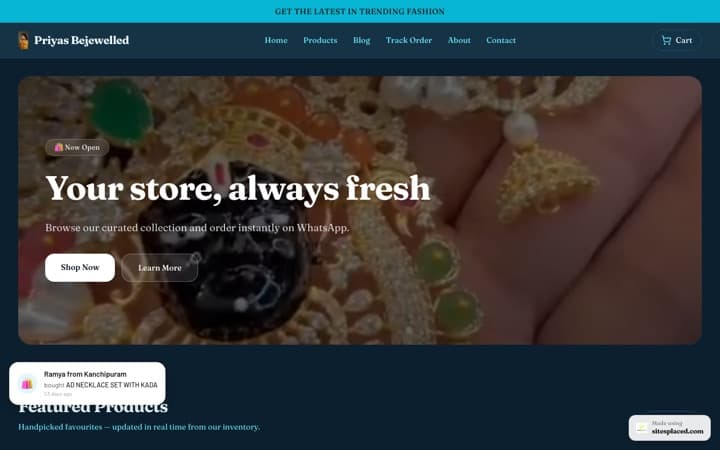
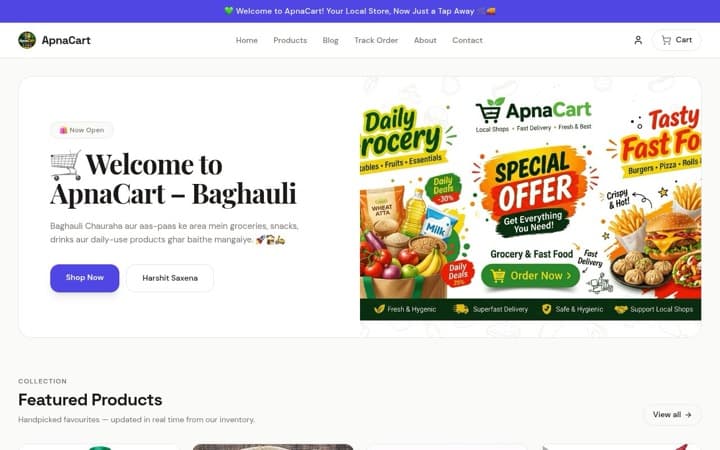
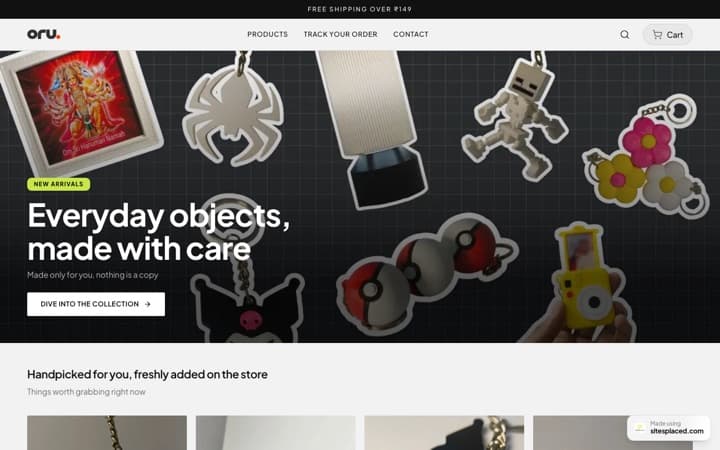
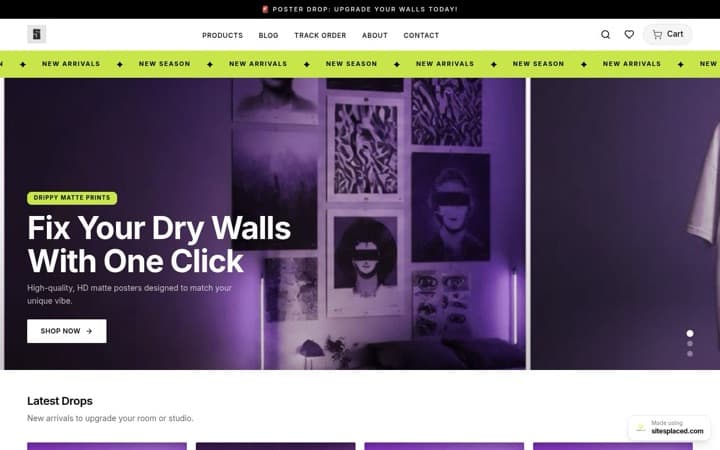
- Pick the Food Store template. The free Food Store is built for spices, sweets and packaged food, with big bold type, colourful category cards and pack sizes shown on the product card. Changing template later means making a new store.
- Add products with 250 g and 500 g as options, each with its own price, and the full ingredient list, allergens, storage line and best-before in the description.
- Make combos a product of their own (“Tasting trio: mango, lemon, garlic”).
- Set checkout: online payment through your own Razorpay, PhonePe or Cashfree account at 0% SitesPlaced commission, or UPI directly; cash on delivery with an extra COD charge if you want it, since a refused food parcel comes back unsellable; WhatsApp checkout for buyers who want to ask first.
- Set delivery: a flat charge based on your packed-parcel weight, free delivery above an amount that nudges buyers to a combo, shown as a progress bar in the cart.
- Write your policies. Food is normally not returnable; say so plainly in the Return Policy page (free on every store) and on the product page, and promise a replacement for a leaked or broken jar.
- Use the announcement bar for seasons: “Mango pickle batch opens 15 May”, “Orders close 20 December for Christmas delivery”. Pause ordering when a batch is sold out, with your own message.
- Publish at yourbrand.sitesplaced.site and put the link in your Instagram bio and WhatsApp status.
Festive gifting is a second season: pickle and masala boxes sell for Diwali and through the wedding season as return gifts. The free build-your-own hamper page lets buyers pick three jars and you pack one box. For more food layouts, see the best food brand website templates.
8. When to pay for a plan
Stay on the free plan while you prove your shelf life and your packing; it has no commission and no limit on products or orders. When you want yourbrand.com, no SitesPlaced badge and store analytics, Starter is ₹199 for 30 days, paid once with no autopay, or ₹1,990 for a year. Paid plans also make your store’s pages answer about 4× faster than on the free plan: measured on live paid stores on 28 September 2026, a page answered in about 75 ms instead of about 330 ms. Growth at ₹499 a month adds product reviews with Google stars, which matter a great deal for food from a kitchen a buyer has never seen. With autopay, the code FREE7 gives 7 days free on either plan; cancel before the first charge and pay nothing.
Frequently asked questions
Do I need a licence to sell pickles online in India?
Generally, yes. Anyone who makes and sells food in India, including pickles, masalas and chutneys from a home kitchen, is expected to be registered with FSSAI, the Food Safety and Standards Authority of India. Small home businesses usually start with a basic registration and bigger ones need a state or central licence. You apply on FoSCoS, FSSAI’s official portal, and should confirm which applies to you there or with a CA before selling.
Can I sell homemade pickles without FSSAI registration?
You should not plan to. Food sold to the public is generally expected to come from a registered or licensed food business, and online buyers increasingly look for the FSSAI number on the label. Registration is done online on the FoSCoS portal. Get it sorted before your first sale rather than after a complaint.
Should I use glass or plastic jars for pickles?
Glass looks premium, does not react with oil and spice and gets reused by buyers, but it is heavy, which raises courier cost, and it can break. Food-grade PET plastic is light and does not break but looks less premium and must be confirmed suitable for oil pickles with your supplier. Many home sellers use glass for local delivery and gifting and PET for parcels going across the country. Either way, the lid and seal matter more than the material.
How do I courier pickle jars without leaking?
Leave a little space at the top of the jar, tighten the lid, add a shrink band or tape over the lid, wrap the lid area in cling film, then bubble-wrap the jar and pack it upright in a box with filler so it cannot move. Post one to yourself first. Book through Shiprocket or Shipmozo, which connect to a SitesPlaced store free, and remember couriers bill by weight slab, so a heavy glass jar can cost more to ship than the pickle inside.
How much should I charge for a 250 g jar of pickle?
Add ingredients, jar and label, packing material, a share of gas, the payment fee and your time per jar, then a margin for spoilage, samples and growth. In our worked example a 250 g mango pickle cost about ₹160 to make and pack, so ₹249 with courier charged separately left about ₹89 a jar. Combos of three jars spread the courier cost and raise the order value.
How long do homemade pickles last?
It depends on the recipe, the oil and salt levels, the jar and the weather, so test rather than guess. Keep jars from each batch on your own shelf in your own climate and check them over the period you intend to claim. Print a best-before date you have actually tested, along with storage instructions, and shorten it if in doubt.
Do I need GST to sell masalas online?
Whether you must register for GST depends on your yearly sales and, in some cases, on shipping to other states. FSSAI registration is separate from GST. Read our plain-English guide on GST for online sellers and confirm your case with a CA.
Which SitesPlaced template suits a pickle and masala store?
The free Food Store template, built for snacks, spices, sweets and packaged food, with big bold type, colourful category cards and pack sizes shown on the product card. Set 250 g and 500 g as options with their own prices. Changing template later means making a new store, so choose once.
Open a free store today
Pack sizes as options, combos, the hamper page, delivery rules and pause ordering are all on the free plan, with 0% commission. Starter is ₹199 once for 30 days, no autopay; FREE7 gives 7 days free with autopay.